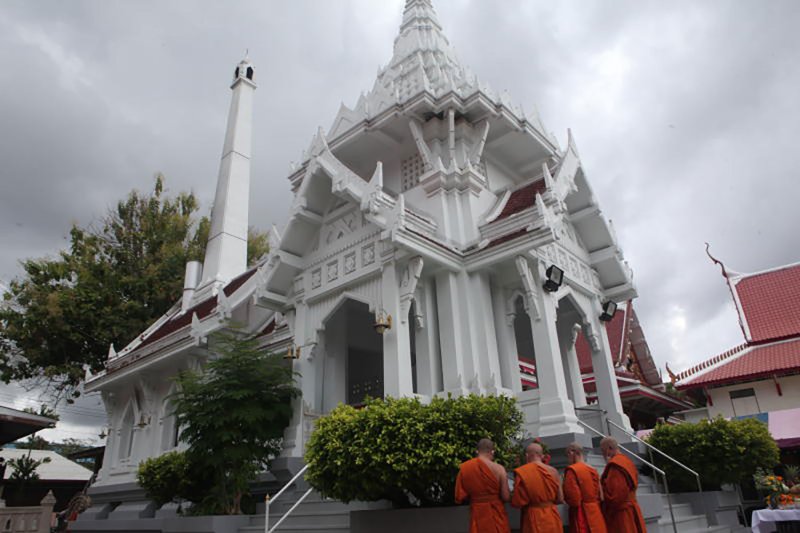
In an unusual incident, the Chonburi region of Thailand witnessed an unconventional act by a burial worker, who returned to a gas station with a corpse to prove his urgent need for diesel. This came after his request to fill three containers with the essential fuel for cremation operations was denied, sparking widespread debate about the impact of fuel shortages on various professions.
Social media circulated a live video showing the employee, named Bricha, explaining his situation to the gas station staff. He clarified that he needed the fuel for cremation purposes, but his request was rejected due to distribution restrictions imposed during the current fuel crisis.
Details of the Incident
The story began when Bricha, a 48-year-old burial worker, visited a local gas station in the Ban Puang area, requesting to fill fuel containers. Despite his repeated attempts to clarify that the fuel would be used for cremating bodies, the staff insisted on adhering to the fair distribution policy.
The following morning, Bricha decided to return to the station, but this time with a corpse in a coffin inside a pickup truck. He opened the coffin in front of the station staff to show them that he had no intention of hoarding fuel; rather, he urgently needed it for a cremation.
Background & Context
The diesel shortage in Thailand is attributed to several factors, including rising global oil prices and distribution restrictions. This crisis has affected many sectors, including burial services, which heavily rely on fuel to operate crematories.
Since 2005, Bricha has worked as a burial employee at a local temple, where he depended on fuel to operate the crematories. Over time, the crematories were updated to run on diesel instead of coal, increasing the reliance on fuel in this profession.
Impact & Consequences
This incident highlights the challenges faced by traditional professions amidst economic crises. While officials strive to prevent fuel hoarding, they may struggle to understand the urgent needs of certain professions that require fuel.
Additionally, this incident reflects the social and psychological impacts of economic crises, as individuals find themselves in difficult situations that compel them to take unconventional actions to prove their needs.
Regional Significance
The fuel crisis in Thailand serves as an example of the challenges that Arab countries may face in the future, especially given their heavy reliance on oil and gas. Similar crises could lead to significant impacts on vital sectors such as health and public services.
In Arab countries, there may be an urgent need to develop alternative strategies to cope with economic crises, including improving resource efficiency and developing alternative energy sources.
The incident involving Bricha is not just an isolated story; it reflects the challenges that communities may face during economic crises. Countries need to think of innovative solutions to ensure the continuity of essential services without affecting individuals' lives.