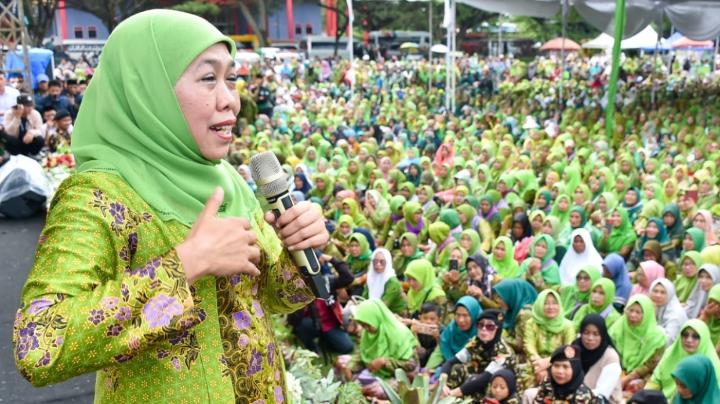
Khawifah Indar Parawansa, the chairwoman of the Muslimat Nahdlatul Ulama, urged women in West Nusa Tenggara to actively participate in local government efforts to prevent early marriage. This call was made during the inauguration of ten new branches of the organization in the city of Mataram, where she emphasized the importance of women's roles in addressing social issues.
Khawifah pointed out that the family represents the fundamental pillar for achieving social stability, asserting that "the family is the first fortress, and if this fortress is weak, the defense of the nation will be fragile." She also called for the necessity of enhancing women's economic and social independence to ensure families can face challenges.
Event Details
During the ceremony, Khawifah highlighted the importance of adapting to the digital age without abandoning cultural identity. She explained that independence includes critical thinking and protecting the rights of women and children, enabling Muslimat Nahdlatul Ulama to contribute effectively to local community development.
Khawifah also addressed the importance of promoting advocacy through actions, not just words, noting that vaccination programs, for example, represent a model for effective advocacy. Statistics have shown that the vaccination rate in West Nusa Tenggara has reached 97% thanks to collaboration with the Global Vaccine Alliance.
Background & Context
The issue of early marriage is a pressing concern in many communities, significantly affecting girls' health and education. In Indonesia, both the government and civil society are striving to address this phenomenon through awareness and educational programs aimed at changing prevailing cultural concepts.
Historically, some communities in Indonesia believed that early marriage was part of tradition, leading to the prevalence of this phenomenon. However, current efforts aim to change these concepts and promote the rights of women and girls.
Impact & Consequences
Khawifah's call is an important step towards enhancing women's roles in society, reflecting the growing awareness of the importance of women's participation in social issues. By strengthening women's roles, positive changes can be achieved in society, contributing to improving living conditions for families.
This call also reflects the global trend towards promoting women's rights, as voices advocating for gender equality increase across various fields. Empowering women can lead to improved education and health in communities, positively impacting sustainable development.
Regional Significance
The issues of early marriage and women's empowerment are common concerns among many Arab and Islamic countries. Successful experiences in Indonesia can serve as a model for Arab nations, where many communities face the same challenges.
Arab countries can benefit from the positive experiences in Indonesia by adopting similar policies that enhance women's rights and work towards changing prevailing cultural concepts regarding early marriage.
Khawifah's call reflects the importance of women's roles in society and highlights the necessity of collective action to address social challenges. By enhancing women's roles, positive change can be achieved that communities need.