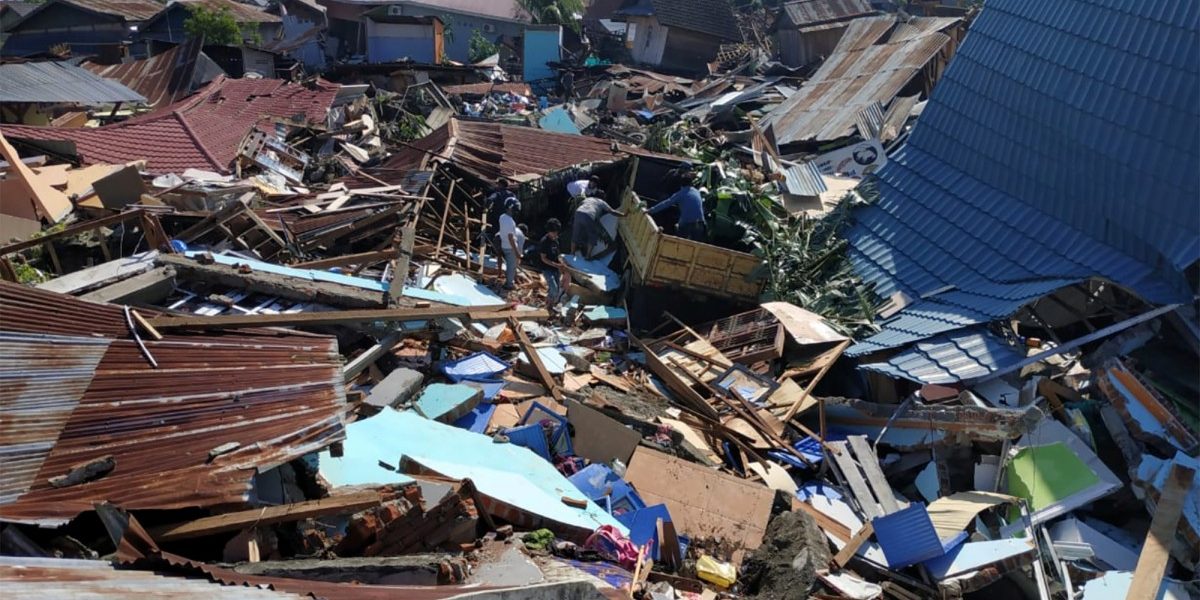
The Indonesian Meteorology, Climatology, and Geophysics Agency (BMKG) announced the termination of the tsunami warning after a 7.6 magnitude earthquake struck the North Maluku and North Sulawesi regions, allowing rescue teams to commence operations in the affected areas. This announcement was made during a press conference held by the agency's head, Tiuk Faisal Fathani, in the capital city of Jakarta.
The earthquake, which occurred on Thursday, was felt by residents in several areas including Ternate, Manado, and Gorontalo, where tsunami waves were detected along some coastlines. BMKG indicated that the warning was lifted at 09:56 AM local time after a series of precise observations of sea water levels.
Details of the Event
The earthquake that struck the Batang Dua area resulted in small tsunami waves being recorded in several locations, with wave heights reaching 0.30 meters in West Halmahera, 0.20 meters in Bitung, and 0.75 meters in North Minahasa. BMKG noted that these waves were within safe limits, contributing to the decision to end the warning.
Following the lifting of the warning, search and rescue teams, in collaboration with government agencies such as the National Disaster Management Agency and the Search and Rescue Agency, began entering the affected areas to assess damage and provide assistance to the impacted populations.
Background & Context
Indonesia is considered one of the most earthquake and tsunami-prone countries due to its geographical location on the Pacific Ring of Fire, where several tectonic plates meet. Historically, the country has experienced numerous devastating earthquakes, prompting it to adopt advanced strategies in early warning and disaster preparedness.
In recent years, the Indonesian government has worked to enhance infrastructure for natural disaster response, including building early warning centers and developing precise monitoring systems. However, challenges remain, as natural disasters require rapid and effective responses to protect lives and property.
Impact & Consequences
Natural disasters such as earthquakes and tsunamis necessitate immediate responses from local and international authorities. Cooperation between government agencies and civil society is vital during such times. BMKG emphasized the importance of the media's role in conveying accurate information to the public, helping to reduce the spread of misinformation.
Fathani also urged citizens to remain calm and follow official information from relevant agencies, stressing the importance of enhancing risk mitigation measures, including building earthquake-resistant infrastructure.
Regional Significance
Although Indonesia is far from the Arab world, natural disasters like earthquakes and tsunamis remind us of the importance of preparedness for natural hazards. Arab countries, especially those located along the Red Sea and Gulf coasts, should take these lessons into account and strengthen their disaster management strategies.
In conclusion, the need for international cooperation in disaster management remains essential, as natural disasters do not recognize borders and affect everyone. Enhancing awareness and preparedness can save lives and reduce damage caused by such events.