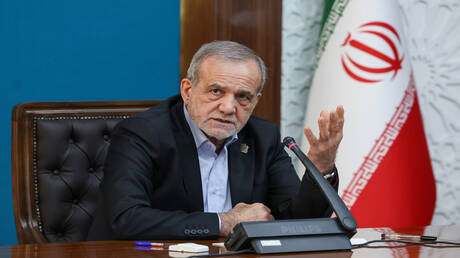
Iranian President Masoud Bezhakian asserted that the only solution to normalize the situation in the region is to "end the aggression" perpetrated by the United States and Israel against Iran. These statements come at a time of escalating tensions in the region, with increasing fears of potential military escalation.
Bezhakian's remarks reflect the official Iranian stance that rejects any foreign intervention in the country's affairs. The Iranian president calls for the necessity of respecting the sovereignty of nations and non-interference in their internal matters, emphasizing that external aggression will only exacerbate the situation.
Details of the Event
In a press conference, Bezhakian pointed out that the continued military and economic pressures on Iran by the United States and its allies, including Israel, represent a major obstacle to achieving stability in the region. He considered that dialogue and understanding are the only two ways to resolve existing conflicts.
Bezhakian also called for enhancing regional cooperation, stressing that neighboring countries must work together to achieve security and peace. He indicated that Iran is ready to negotiate with all concerned parties, provided that this is done within a framework of mutual respect.
Background & Context
Historically, Iranian-American relations have witnessed increasing tensions since the Islamic Revolution in 1979. These tensions have led to the imposition of strict economic sanctions on Iran, negatively affecting its economy. In recent years, fears of military escalation have grown following the United States' withdrawal from the Iranian nuclear deal in 2018.
Israel is one of the most prominent opponents of the Iranian nuclear program, viewing it as a threat to its national security. It has carried out several military operations against Iranian targets in Syria, further heightening tensions in the region.
Impact & Consequences
The continuation of US-Israeli aggression against Iran could lead to unprecedented military escalation in the region. Many experts have warned that any military attack on Iran could drag the region into a comprehensive war, affecting all neighboring countries.
Moreover, escalation could impact global oil prices, as Iran is one of the largest oil producers in the world. Any disruptions in Iranian oil production could lead to price increases, affecting the global economy.
Regional Significance
The Arab countries neighboring Iran find themselves in a sensitive position, as they may be directly affected by any military escalation. Many countries, such as Iraq and Syria, are already suffering from the effects of regional conflicts, and any new escalation could worsen the humanitarian situation there.
Additionally, Arab countries may find themselves compelled to take decisive stances amid these tensions, which could affect their relations with Iran. It is crucial for Arab nations to work on enhancing dialogue and understanding to avoid any escalation that could lead to further chaos in the region.
In conclusion, Bezhakian's statements reflect the significant challenges Iran faces amid external pressures. Peaceful solutions and dialogue are the only way to achieve stability in the region, requiring joint efforts from all concerned parties.