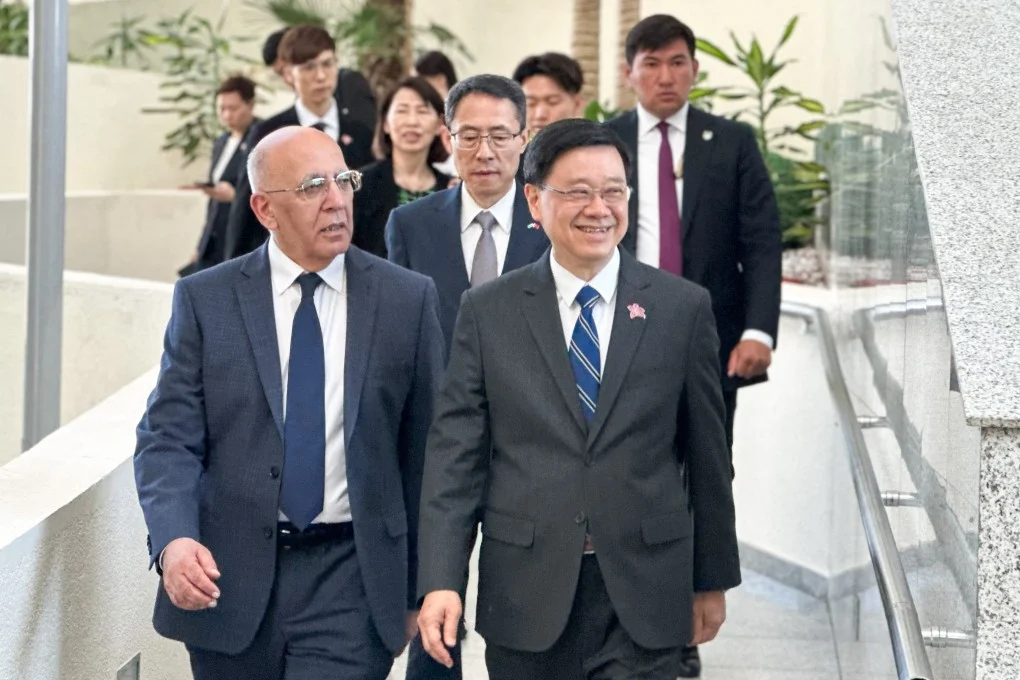
In a move reflecting the desire to enhance academic cooperation, two universities from Hong Kong signed partnership agreements with a leading university in Kazakhstan. These agreements represent a significant step towards strengthening cultural and educational ties between Hong Kong and Kazakhstan, as praised by the city's Chief Executive, John Lee Ka-chiu.
This visit is part of a delegation consisting of 70 individuals, aimed at exploring business opportunities in the Central Asia region. During the visit, the delegation toured Nazarbayev University, one of the prominent universities in Kazakhstan, where Chinese President Xi Jinping announced the Belt and Road Initiative over a decade ago.
Event Details
The three universities aim to enhance cooperation in scientific research and student exchanges, contributing to the development of higher education in both countries. The agreements include academic exchange programs, joint workshops, and research projects aimed at fostering mutual understanding between the two cultures.
This step is part of a broader strategy aimed at strengthening relations between China and Central Asian countries, as Hong Kong seeks to enhance its role as an academic and commercial hub in the region. These partnerships could open new horizons for students and researchers in both nations.
Background & Context
Historically, relations between Hong Kong and Kazakhstan have seen notable development in recent years, with increased investments and cooperation in various fields. Kazakhstan is considered a strategic gateway for China towards Europe, making academic cooperation a part of a broader vision to enhance economic and cultural ties.
It is worth noting that the Belt and Road Initiative launched by the Chinese president aims to enhance infrastructure and trade between China and Central Asian countries, contributing to sustainable development in the region.
Impact & Consequences
These partnerships are expected to enhance cultural and scientific exchanges between Hong Kong and Kazakhstan, contributing to building strong relationships that support economic and social development. Additionally, academic cooperation may help improve the quality of education and develop skills among students in both countries.
Furthermore, this move may encourage more universities in the region to establish similar partnerships, enhancing Hong Kong's position as a leading academic center in Asia.
Regional Significance
Academic relations between countries are an important part of enhancing mutual understanding and international cooperation. Arab countries can benefit from this experience by strengthening academic cooperation with Central Asian countries, contributing to sustainable development in the region.
Moreover, enhancing academic relations can open new avenues for collaboration in scientific research and technology, benefiting Arab countries in their pursuit of development and innovation.
In conclusion, enhancing academic cooperation between Hong Kong and Kazakhstan represents a positive step towards building strong relationships that support development and mutual understanding, opening new horizons for international cooperation.