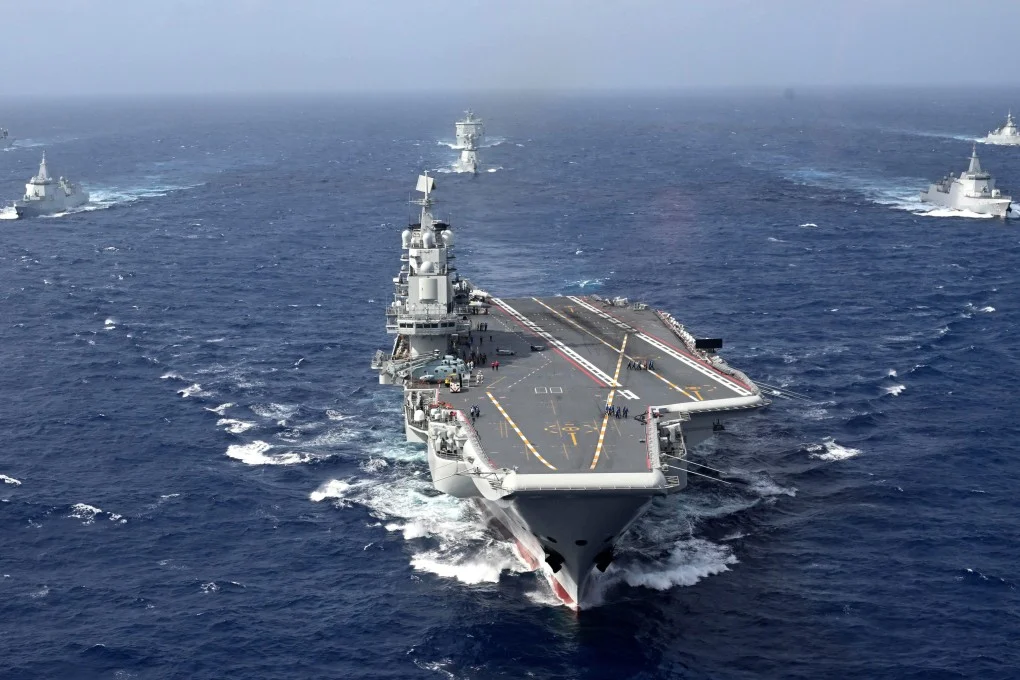
Reports indicate that all three of China's aircraft carriers may soon be able to operate stealthy J-35 fighters, significantly boosting the combat capabilities of the Chinese Navy. Currently, only the most advanced carrier, Fujian, can host these aircraft, as it features an electromagnetic launch system that assists fifth-generation fighters in taking off.
While the other two carriers, Liaoning and Shandong, utilize a traditional launch system based on a sloped deck for takeoff, there are indications that these older carriers may receive upgrades allowing them to operate J-35 fighters as well.
Details of the Development
The J-35 fighters represent the latest advancements in Chinese military aviation, characterized by stealth technology that makes them less detectable by radar. This development reflects China's strategic direction towards enhancing its naval military capabilities, especially amid rising tensions in the Pacific region.
Reports suggest that upgrades to the Liaoning and Shandong carriers may include the introduction of new technologies that enable them to operate advanced fighters. This upgrade could significantly impact the balance of power in the region, allowing China to deploy its air power more effectively.
Background & Context
Historically, China has sought to enhance its naval military capabilities for several years, especially after launching its first aircraft carrier, Liaoning, in 2012. Since then, Beijing has invested heavily in developing its fleet of aircraft carriers and naval fighters.
With the Fujian carrier entering service, China has become one of the few countries capable of operating fifth-generation fighters from aircraft carriers. This development also reflects the increasing competition between China and the United States in the Pacific region, as both nations seek to bolster their military presence.
Impact & Consequences
If China succeeds in upgrading its older aircraft carriers to operate J-35 fighters, it will significantly enhance its ability to conduct complex military operations at sea. This could lead to increased tensions in the region, particularly with neighboring countries concerned about China's military expansion.
Furthermore, enhancing Chinese naval capabilities may influence the strategies of other countries in the region, potentially prompting them to bolster their military capabilities as well. This military competition could lead to an arms race in the Pacific region.
Regional Significance
While this news may seem to pertain only to China, the enhancement of military naval capabilities can impact regional security in the Middle East. Increased tensions in the Pacific may affect the strategies of major powers, including the United States, which has significant interests in the Arab region.
Additionally, any escalation in military tensions could affect oil prices and the global economy, reflecting on Arab countries that rely on oil exports. Therefore, monitoring military developments in China is crucial for Arab nations.
In conclusion, enhancing the Chinese Navy's capabilities through the operation of J-35 fighters on all aircraft carriers could have far-reaching effects on the military balance in the region and the world. Arab nations should closely follow these developments.