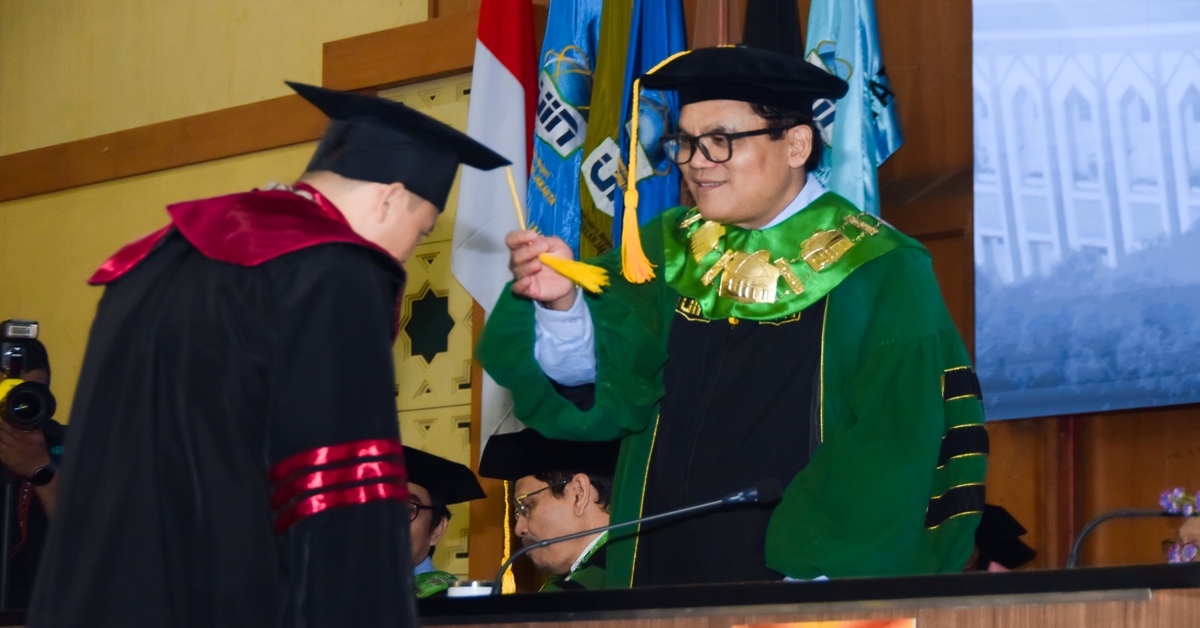
In a move reflecting the commitment of higher education in Indonesia to meet labor market needs, the president of the State Islamic University (UIN) Syarif Hidayatullah in Jakarta, Asib Sabudin Jahar, stated that the quality of the university's graduates has become more competitive and aligned with modern requirements. He noted that these results reflect students' ability to adapt to labor market demands.
Asib explained in his remarks on Thursday that the university is enhancing its educational strategies by updating curricula, increasing practical training opportunities, and strengthening ties with various industries. He emphasized that these efforts aim to prepare graduates not only academically but also skillfully.
Event Details
A graduate tracking study conducted by the university revealed that approximately 49.69% of the class of 2025 secured jobs before graduation, marking a significant increase compared to 44.41% in 2024 and 38% in 2023. These figures reflect an improvement in students' ability to integrate into the job market.
The study also showed that the percentage of graduates who found jobs after graduation stood at 49.72%, a slight decrease from 61.06% in 2024 and 62.71% in 2023. However, this decline does not indicate a weakness in educational quality but rather suggests that more students are able to secure jobs before graduating.
Background & Context
The State Islamic University (UIN) Syarif Hidayatullah in Jakarta was established as part of the Indonesian government's efforts to enhance higher education. The university focuses on providing educational programs that align with Islamic values while emphasizing the development of students' skills across various fields. In recent years, Indonesia has seen an increase in the number of universities striving to meet labor market needs, reflecting a shift in the higher education system.
These efforts are part of a broader national strategy aimed at improving the quality of education in Indonesia, as the government seeks to promote technical and vocational education and increase practical training opportunities for students.
Impact & Consequences
The achievements of the State Islamic University serve as a positive indicator of Indonesian universities' ability to adapt to rapid changes in the labor market. Improving educational quality and increasing practical training opportunities can contribute to reducing youth unemployment rates, which is a significant challenge in Indonesia.
Moreover, these results may encourage other universities to adopt similar strategies, leading to an overall improvement in the country's higher education system. It is crucial for universities to continue developing their curricula and expanding partnerships with the private sector to ensure they meet market needs.
Regional Significance
The experience of the State Islamic University in Jakarta could serve as a model for universities in the Arab region. Many Arab countries face similar challenges in higher education and labor markets, where youth seek jobs that match their skills. Successful experiences in Indonesia can inspire Arab universities to develop educational programs that align with market needs.
In conclusion, this development at the State Islamic University represents an important step towards improving education quality in Indonesia and reflects the commitment of universities to equip students with the necessary skills to succeed in the labor market.