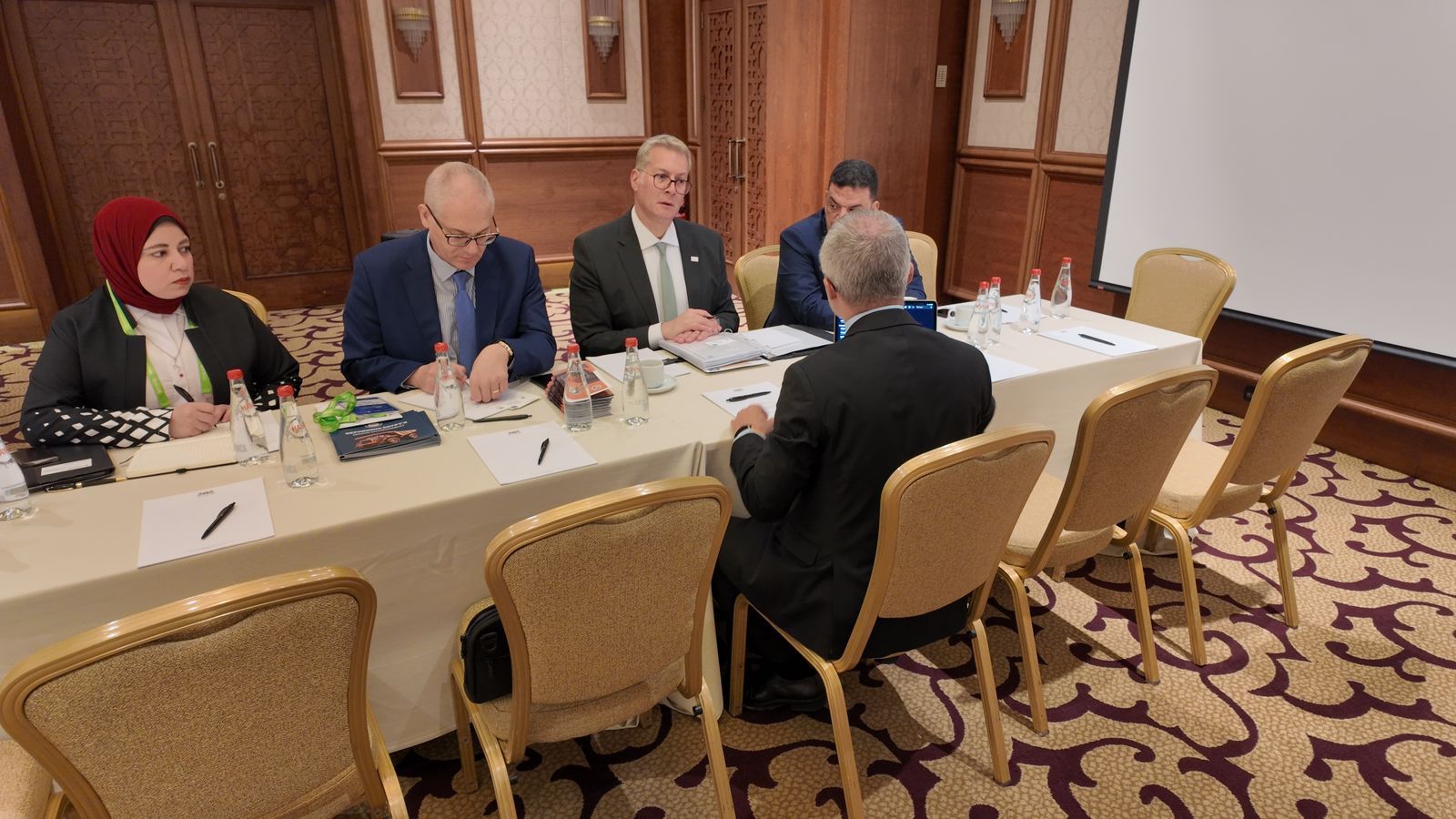
Engineer Karim Badawy, Egypt's Minister of Petroleum and Mineral Resources, met with several major Turkish mining and energy companies to explore ways to enhance cooperation and attract new investments to the mining sector in Egypt. This took place during a series of meetings held on the sidelines of his participation in the Critical Minerals Forum organized by the OECD in Istanbul.
In his meeting with the Turkish company OZ Minerals, Badawy discussed ways to build on the outcomes of previous meetings and enhance technical cooperation and knowledge transfer. He emphasized that Egypt has implemented significant legislative and regulatory reforms that have made it a promising investment destination in the mining sector, leveraging its strategic location and advanced infrastructure.
Event Details
The minister stressed the need to expand value-added projects and not just focus on raw extraction, by supporting manufacturing and processing industries to maximize the economic return from mineral resources. The meeting also addressed the importance of cooperation in training Egyptian personnel and enhancing their skills according to the latest global practices in the industry.
In another meeting with the Turkish gold mining company Toprak, the minister reviewed promising opportunities in Egypt's gold sector, noting that the experience of the Sucre Mine represents a successful model that can be replicated, given Egypt's vast geological potential. He invited the company to visit Egypt to explore available opportunities.
Background & Context
Egypt is considered one of the countries rich in mineral resources, possessing significant reserves of gold and other minerals. The mining sector in Egypt has undergone substantial transformations in recent years, as the government seeks to attract foreign investments and enhance partnerships with global companies.
These meetings come at a time when Egypt is striving to strengthen its position as a regional hub for energy and mining, especially in light of the global shift towards renewable energy and sustainable resources. Reports have indicated that the Egyptian government is working on developing the business environment to attract more investments.
Impact & Consequences
These meetings are an important step towards enhancing economic partnership between Egypt and Turkey, which could lead to increased investments in the mining and energy sectors. Additionally, cooperation in training Egyptian personnel will contribute to improving the efficiency of workers in this vital sector.
These investments are expected to bolster economic growth in Egypt, achieving the government's goals of increasing productivity and improving living standards. Strengthening partnerships with Turkish companies may also open new avenues for collaboration in other fields.
Regional Significance
These steps are part of a broader strategy to enhance economic cooperation between Arab countries and Turkey, contributing to sustainable development in the region. Furthermore, boosting investments in the energy and mining sectors can help achieve energy security for Arab nations.
In conclusion, these meetings represent a new opportunity for Egypt to enhance its position in the regional and international markets, reflecting the government's commitment to developing the mining and energy sectors and achieving sustainable economic development.