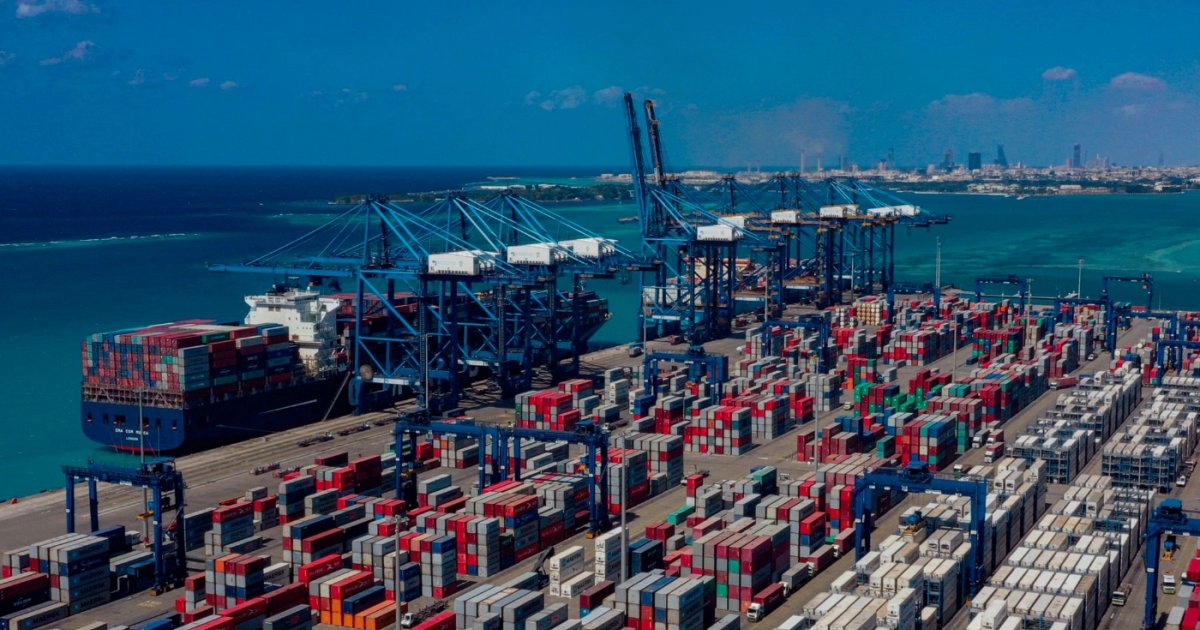
The Saudi Ports Authority (Mawani) has announced the addition of three new shipping services operated by the global shipping company Maersk, which will enhance the capabilities of Jeddah Islamic Port and King Abdullah Port. The newly launched services include WC1, WC2, and BAM Feeder, providing a total capacity of up to 14,400 twenty-foot equivalent units (TEUs). The individual capacity of the WC1 service reaches 4,400 containers, while both WC2 and BAM Feeder can accommodate 5,000 containers each.
These new services will connect Jeddah Islamic Port with major regional and global ports, including Nhava Sheva and Mundra in India, and Salalah in Oman. This development reflects the significance of King Abdullah Port in enhancing logistical connectivity and forming an integrated shipping network that boosts commercial operations efficiency.
Event Details
This initiative comes as part of the efforts of the Saudi Ports Authority to support the objectives of the National Transport and Logistics Strategy, which aims to enhance the Kingdom's position in global performance indicators. Additionally, this initiative contributes to boosting international trade and national exports, reinforcing the Kingdom's role as a global logistics hub connecting three continents.
Saudi ports, especially Jeddah Islamic Port, feature 62 multi-purpose berths, along with a dedicated logistics service area for storage and re-export operations. The port also benefits from a direct truck transport system, facilitating the movement of goods and enhancing operational efficiency.
Background & Context
Historically, Saudi ports have played a vital role in enhancing regional and international trade. Since the launch of Vision 2030, the Kingdom has been striving to develop its logistical infrastructure and enhance its competitiveness in the global market. This step is part of the Kingdom's efforts to expand its commercial activities and attract foreign investments.
The development of ports comes at a time when the world is witnessing a significant shift towards e-commerce and an increasing demand for fast shipping services. Therefore, enhancing the capabilities of Saudi ports will help meet these growing needs.
Impact & Consequences
These new services are expected to contribute to increasing trade movement through Saudi ports, reinforcing their position as a key logistics hub in the region. This step will also support the national economy by increasing exports and enhancing the competitiveness of Saudi products in global markets.
Furthermore, improving connectivity between Saudi ports and international ports will lead to reduced shipping times and transportation costs, benefiting companies and investors in the Kingdom.
Regional Significance
This initiative serves to enhance trade cooperation among Arab countries, as it will facilitate the movement of goods between the Kingdom and neighboring countries. Additionally, strengthening logistical connectivity among Arab ports will help achieve economic integration among Arab nations.
In conclusion, this initiative reflects the Kingdom's commitment to enhancing its position on the global stage as a major supporter of trade and transport, opening new horizons for economic and commercial cooperation in the region.