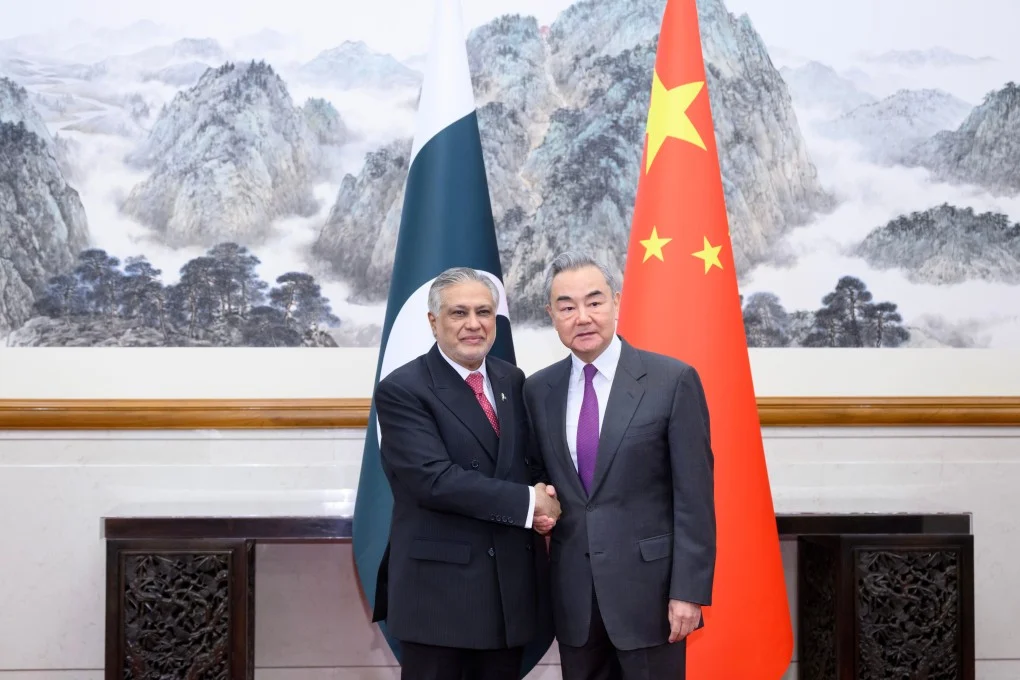
On Tuesday, China announced its intention to enhance 'strategic coordination' with Pakistan as part of efforts to resolve the Iran crisis. This announcement came during the visit of Pakistani Finance Minister Ishaq Dar to Beijing, marking his second visit in three months. This step follows a phone call between Dar and Chinese Foreign Minister Wang Yi, where Beijing reaffirmed its support for Pakistan's role as a mediator in the Iranian dispute.
The spokesperson for the Chinese Foreign Ministry described Pakistan as a 'permanent strategic partner,' reflecting the importance of the relationship between the two countries in the context of regional crises. Through this initiative, China aims to foster dialogue among the parties involved in the Iran crisis, which has raised increasing international concern.
Details of the Event
The visit of Ishaq Dar comes at a sensitive time, as tensions escalate in the Middle East, particularly between Iran and the United States. China has shown significant interest in supporting Pakistan, which it views as a strategic ally, in its mediation efforts. During the recent phone call, Wang Yi expressed appreciation for Pakistan's role in promoting peace and stability in the region.
China seeks to leverage its influence in the region to support dialogue efforts, believing that diplomatic solutions are the only way to end conflicts. Additionally, strengthening relations with Pakistan aligns with China's broader strategy to enhance its presence in South Asia.
Background & Context
Historically, the relationship between China and Pakistan has been robust, with Pakistan being one of China's closest allies in the region. For decades, the two countries have collaborated in various fields, including economics and defense. In recent years, China has increased its investments in Pakistan, particularly through the China-Pakistan Economic Corridor, which aims to improve infrastructure and promote economic growth.
Conversely, Iran faces significant challenges in its foreign policy, especially following the United States' withdrawal from the nuclear agreement in 2018. This withdrawal has escalated tensions in the region, making it essential to have mediators like Pakistan to help ease these tensions.
Impact & Consequences
Strengthening coordination between China and Pakistan could have significant implications for regional dynamics. On one hand, it may help alleviate tensions between Iran and the United States, contributing to regional stability. On the other hand, it could increase China's influence in the Middle East, as it seeks to bolster its role as a global power.
Moreover, China's support for Pakistan as a mediator could enhance Islamabad's standing on the international stage, enabling it to play a more effective role in regional issues. This cooperation could open new avenues for relations between the two countries and promote stability in the region.
Regional Significance
The relationship between China and Pakistan is particularly important for Arab countries, as stability in the Middle East directly impacts security and the economy in the Arab world. If Pakistan succeeds in mediation, it could lead to a reduction in regional tensions, benefiting Arab nations striving for stability.
Furthermore, enhancing relations between China and Islamic countries, including Pakistan, may open new opportunities for economic and political cooperation in the region, strengthening Arab interests in the face of global challenges.