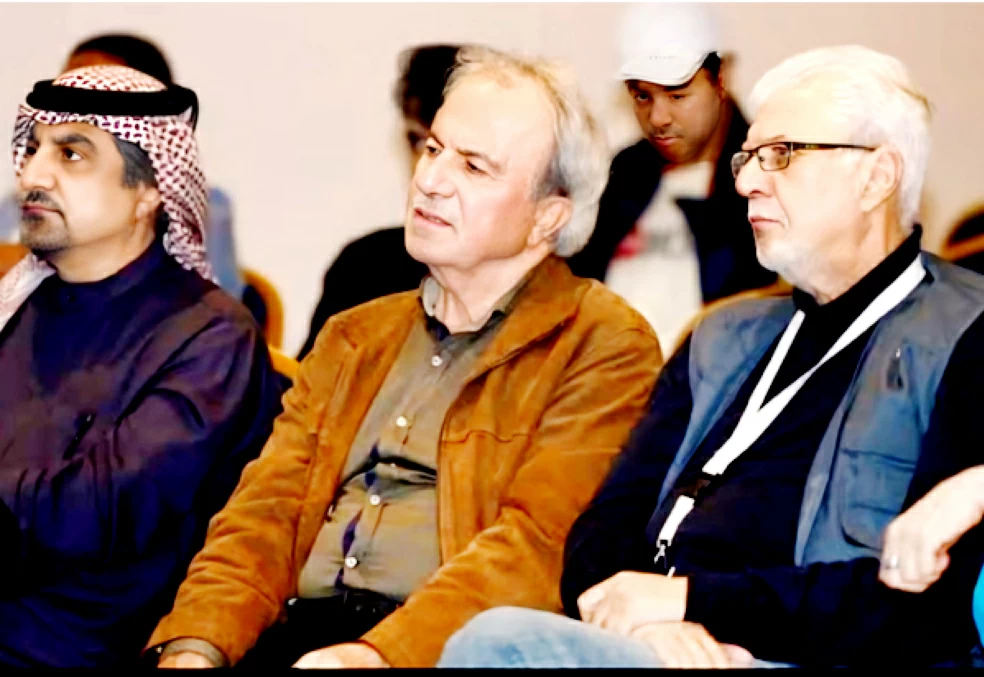
Sediq Abdullah Hatab significantly contributed to the cultural movement in Kuwait through the National Council for Culture, Arts, and Letters, particularly via the 'World of Knowledge' series. His contributions have left a profound impact on the Arab cultural scene.
With the spread of education in the Gulf countries, the opening of universities, the establishment of cultural clubs, and the emergence of government bodies concerned with cultural affairs, the region entered an unprecedented cultural movement. This movement was further enhanced by the emergence of several reputable cultural magazines that aimed to provide a solid intellectual resource through the writings of prominent creators in the Arab world.
Examples of Early Cultural Magazines
Some examples of these early magazines include the monthly 'Oil Caravan' (now known as Al-Qafilah), published by Aramco in Dhahran (the first issue was released in October 1953), the monthly 'Al-Arabi' published by the Ministry of Information in Kuwait (the first issue was released in December 1958), and the monthly 'Al-Manhal' founded by Saudi writer Abdul Quddus Al-Ansari in Medina (the first issue was published in February 1937). Another notable magazine is 'Al-Arab', which later became a quarterly publication, initiated by the renowned scholar Sheikh Hamad Al-Jasser in Riyadh (the first issue was released in October 1966).
Subsequently, the Gulf and Arabian Peninsula witnessed a surge in the number of periodicals and quarterly publications issued by universities, scientific institutions, or ministries of media and culture. Examples include 'Al-Faisal' and 'Gulf Message' from Saudi Arabia, 'Nizwa' from Oman, 'Doha' from Qatar, 'Bahrain Cultural' and 'Arab Gulf Scientific Research' from Bahrain, 'Studies' from the UAE, and 'Gulf and Arabian Peninsula Studies' from Kuwait, among others.
Context and Background
Kuwait, through its National Council for Culture, Arts, and Letters, can be considered the most active in this field, playing a leading and significant role in disseminating knowledge and culture in the Gulf and the Arab world. This is evident in the publications it has consistently issued, which are rich in thought, culture, and high human sciences. The most prominent manifestation of this is the 'World of Knowledge' series, which consists of cultural books published at the beginning of each month since January 1978, aiming to connect the reader with the latest contemporary intellectual and cultural currents.
Another manifestation is the 'World Theater' series, which aims to enhance awareness of theatrical art and enrich it intellectually and literarily by publishing world plays by major playwrights translated from their original language into Arabic. Additionally, there is the 'World of Thought' magazine, which is a peer-reviewed cultural periodical.
Impact and Consequences
Jordanian poet and writer Youssef Abulloz wrote in 'Al-Khaleej' newspaper about the impact of these periodicals, specifically the 'World of Knowledge' series as an enlightening intellectual project. Abulloz states: 'It is truly a cultural phenomenon in the history of literature, sciences, arts, aesthetics, thought, criticism, languages, religions, myths, popular cultures, and global heritage... all printed in a clean, elegant format at prices that are less than symbolic.'
The establishment of this series reflects a noble cultural spirit and a unifying Arab ethos, which is an intrinsic part of Kuwait's nature and the Kuwaiti intellectual. The monthly series reaches all corners of the Arab world, and as soon as it arrives at libraries and kiosks in Arab capitals, it sells out quickly.
Impact on the Arab Region
The 'World of Knowledge' series was founded by Kuwaiti poet Ahmed Mishari Al-Adwani, alongside Egyptian thinker Dr. Fouad Zakaria. When these two Arab luminaries established the series, they were in their early fifties, indicating an early intellectual and cultural awareness. As for Sediq Abdullah Hatab, he played a pivotal role in establishing the series, serving as the dynamo behind it.
Sediq Abdullah Hatab passed away in 2017, leaving behind a profound cultural legacy. He was born in the village of Kafr Sur in the Tulkarm district in 1932 and passed away in Amman, Jordan. Hatab lived and grew up in Jordan before moving to Egypt to continue his university education, where he obtained his degree from Cairo University.
Hatab's contributions to Arab culture are part of the history of modern Arab thought, as he enriched Arab libraries with translated literature and intellectual magazines.