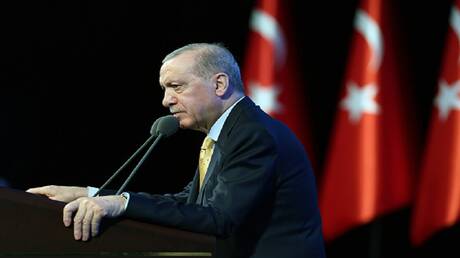
Turkish President Recep Tayyip Erdogan expressed regret over the ongoing war in the region, indicating that Israel is sabotaging all diplomatic efforts aimed at stopping the conflict. These statements come at a sensitive time characterized by escalating tensions, which increase civilian suffering and threaten regional stability.
During a press conference, Erdogan emphasized that the ongoing war leads to loss of life and destruction of infrastructure, necessitating urgent action from the international community. He noted that the diplomatic efforts made by some countries have not received adequate support, hindering the path to a peaceful solution.
Erdogan's Statements Amid Rising Tensions
Erdogan's comments come as the intensity of the conflict in the region escalates, with conflicting parties continuing to exchange accusations. The Turkish president expressed concern over Israel's role in fueling the conflict, considering it a reflection of an aggressive policy aimed at destabilizing the Middle East.
He also pointed out that Turkey is ready to contribute to any efforts aimed at achieving peace, urging the international community to take a firm stance against any actions that could obstruct peace efforts. He highlighted the importance of dialogue and negotiation as the only way to end the conflict.
Background & Context
Historically, the region has witnessed numerous conflicts that have had wide-ranging implications for security and stability. Armed conflicts often result in civilian suffering, leading to mass displacement and loss of life. In this context, the role of regional and international powers is crucial in attempts to end these conflicts.
Israel, which has long been a focal point of controversy in regional conflicts, faces increasing criticism due to its policies. Recent years have seen a rise in tensions between Israel and neighboring countries, complicating the political landscape in the region.
Impact & Consequences
The impact of the ongoing conflict in the region extends to all neighboring countries, potentially exacerbating humanitarian and economic crises. Additionally, military escalation may threaten regional security, necessitating a swift response from the international community.
If conditions remain unchanged, this could lead to increased tensions between major powers with interests in the region, negatively affecting global security. Therefore, calls for dialogue and negotiation gain greater importance under these circumstances.
Regional Significance
For Arab countries, the continuation of the conflict in the region poses a significant challenge. Many Arab nations are grappling with internal crises, and any escalation in conflict could worsen these issues. The humanitarian situation in conflict-affected areas requires urgent attention from Arab nations and the international community.
In light of these circumstances, Arab countries must enhance cooperation among themselves to address common challenges. Dialogue and coordination among Arab nations can contribute to greater stability in the region and bolster peace efforts.
In conclusion, hope remains pinned on the international community to achieve peace in the region, as the continuation of conflict will only lead to further suffering and destruction. Erdogan's recent statements reflect the urgent need for prompt action from all parties involved.