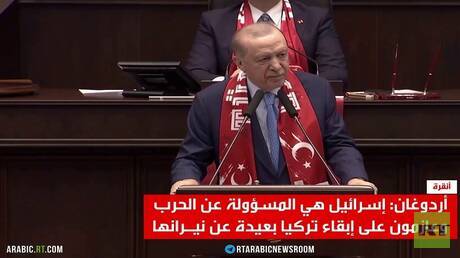
Turkish President Recep Tayyip Erdogan has placed the blame for the war on Iran squarely on Israel, describing it as illegal. These statements come at a sensitive time when the region is experiencing increasing tensions, with fears of military escalation potentially affecting other countries.
Erdogan, who advocates for an active foreign policy, emphasized that Israeli military actions against Iran represent a blatant violation of international law, urging the international community to take a firm stance against such actions. He also pointed out that war only leads to more suffering and destruction, asserting that peaceful solutions are the only way to achieve stability in the region.
Details of the Incident
Erdogan's comments come in the context of escalating tensions between Iran and Israel, with recent months witnessing a series of retaliatory attacks between the two parties. These events have heightened concerns in neighboring countries, particularly amid fears of the repercussions of any military escalation.
Israel, for its part, justifies its military operations as necessary to counter the threats posed by Iran, especially given its support for armed groups in the region. However, these operations may exacerbate the situation and widen the scope of the conflict.
Background & Context
Historically, the relationship between Turkey and Israel has seen numerous fluctuations, with Turkey previously being an ally of Israel before relations soured in recent years. As tensions in the Middle East rise, it has become clear that Turkey seeks to adopt a larger role in the region, especially in light of the challenges posed by major powers.
Iran is also a key player in regional conflicts, striving to enhance its influence in Iraq, Syria, and Lebanon. This influence raises concerns among many countries, including Turkey, which fears negative impacts on its national security.
Impact & Consequences
Erdogan's statements may lead to increased tensions between Turkey and Israel, potentially affecting diplomatic relations between the two countries. At the same time, these remarks could encourage other nations in the region to adopt similar stances, further complicating the situation.
The potential escalation in relations between Iran and Israel could threaten the stability of the region as a whole, possibly leading to new conflicts that affect regional and international security. In this context, the international community must play an active role in mediating disputes and alleviating tensions.
Regional Significance
The ongoing events in the Middle East have significant implications for Arab countries, as any escalation between Iran and Israel could negatively impact security and stability in the region. Arab nations grappling with internal conflicts may find themselves in a difficult position if the situation worsens.
Moreover, Turkish and Israeli positions could influence relations between Arab states and Turkey, with some countries potentially feeling compelled to choose between supporting Turkey or maintaining ties with Israel. This scenario could further complicate the political landscape in the region.
In conclusion, Erdogan's remarks serve as a call for the international community to intervene and halt military escalation in the region. Peaceful solutions are the only way to achieve stability, and all parties involved must work towards this goal.