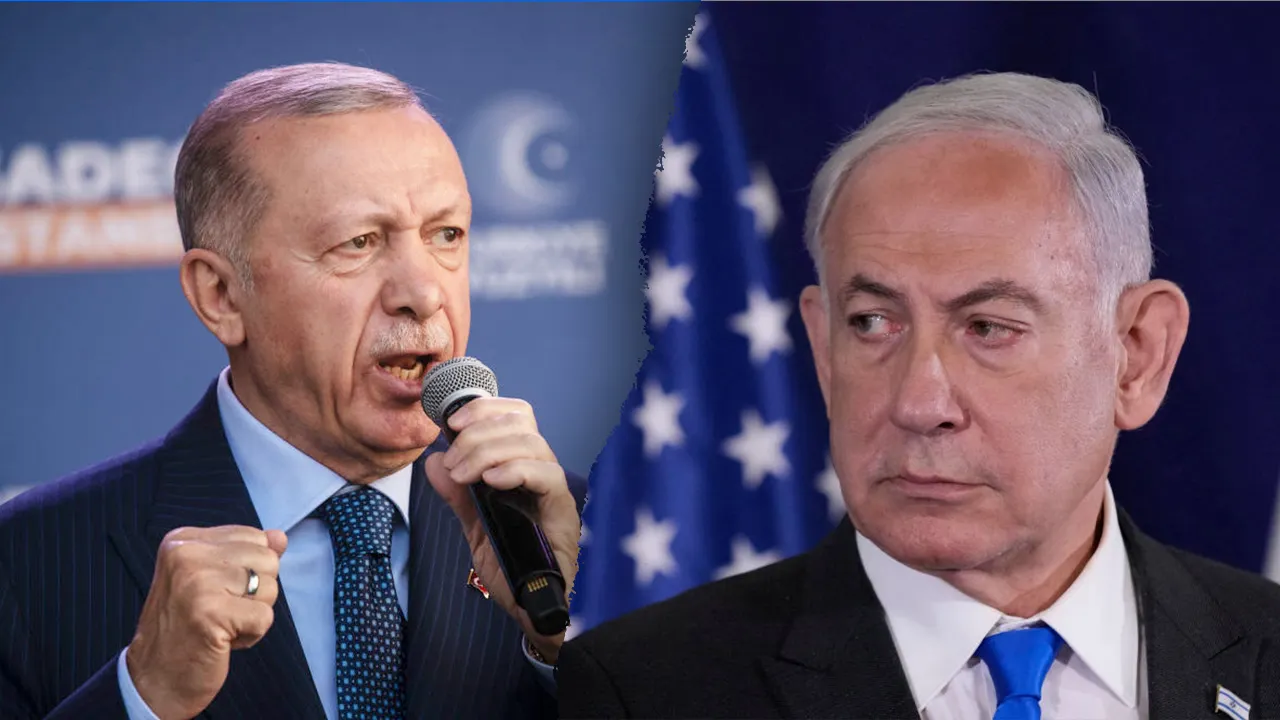
Turkish President Recep Tayyip Erdogan asserted that the Israeli government bears the primary responsibility for the illegal war currently unfolding in the region, emphasizing that actions taken by Tel Aviv have led to a worsening of the humanitarian and political conditions in Palestine. This statement was made during a press conference held in the capital, Ankara, where he discussed the recent developments in the Israeli-Palestinian conflict.
Erdogan pointed out that the Israeli military actions against civilians in Gaza and the West Bank represent a blatant violation of international laws and human rights. He called on the international community to take a firm stance against these violations, stressing the necessity of supporting Palestinians in their struggle for their legitimate rights.
Details of the Event
During the press conference, Erdogan presented a series of evidence proving the Israeli government's involvement in escalating hostilities, emphasizing that this escalation cannot be justified in any way. He also noted that Turkey will continue to support the Palestinian cause on all fronts, including humanitarian and political assistance.
The Turkish president criticized the international community's passive stance regarding the situation in Palestine, arguing that international silence encourages the Israeli government to persist in its violations. He confirmed that Turkey will undertake intensive diplomatic efforts to achieve peace in the region.
Background & Context
Historically, Turkish-Israeli relations have witnessed increasing tensions, particularly following the recent events in Gaza. Turkey, which is considered one of the most prominent supporters of the Palestinian cause, has consistently criticized Israeli policies, asserting that the only solution to the crisis is through dialogue and negotiation.
Erdogan's remarks come at a sensitive time, as calls for solidarity with Palestinians have increased across the Arab and Islamic worlds amidst escalating violence in the occupied territories. Furthermore, many countries have begun to reassess their relations with Israel in light of recent events.
Impact & Consequences
Erdogan's statements could increase pressure on the Israeli government, especially as voices demanding international sanctions against it grow louder. Additionally, Turkey's position may encourage other countries in the region to join efforts aimed at condemning Israeli policies.
Domestically, these statements may affect Erdogan's popularity in Turkey, as support for the Palestinian cause is a fundamental aspect of his foreign policy. Strengthening his position in this context could help bolster his electoral support base.
Regional Significance
Erdogan's statements serve as a call for Arab and Islamic countries to unite in facing the challenges confronting the Palestinian cause. These remarks may also encourage enhanced cooperation among Arab nations in the areas of humanitarian and political support for Palestine.
In conclusion, the Palestinian cause remains a focal point of interest in the Arab world, and Erdogan's statements are part of ongoing efforts to support Palestinian rights. Given the current circumstances, hope remains pinned on the international community to fulfill its role in achieving a just and comprehensive peace in the region.