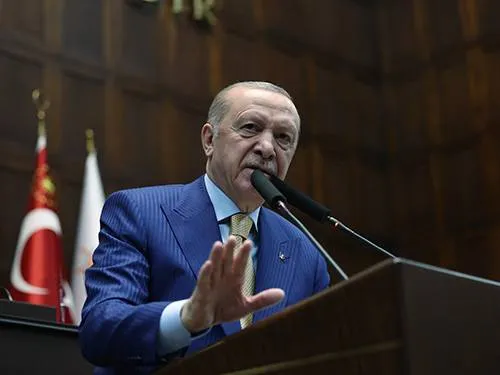
Turkish President Recep Tayyip Erdogan has cautioned that the trajectory of the war in Iran is leading towards a geopolitical deadlock, calling on the international community to intensify efforts to resolve the conflict. This statement was made during a phone call with the Secretary General of the NATO alliance on the occasion of the alliance's 77th anniversary.
Erdogan highlighted that the situation concerning Iran necessitates urgent action from the international community, noting that the U.S.-Israeli war with Iran significantly impacts both regional and international stability. He expressed appreciation for the support NATO provides to Turkey's air defense system, asserting that solidarity at this stage reflects the deterrent strength of the alliance.
Details of the Event
Erdogan discussed the importance of the upcoming NATO summit scheduled to take place in Ankara on July 7 and 8, where he hopes decisions will be made to enhance the alliance's capacity to face future challenges. Since the onset of the war on February 28, NATO defenses have intercepted four ballistic missiles launched from Iran towards Turkish airspace.
Turkey has also been supplied with American-made Patriot missile systems, which were transferred from the alliance's air command in Ramstein, Germany to the Malatya base in eastern Turkey, in addition to the Incirlik base in Adana. These steps reflect NATO's commitment to Turkey's security amid rising tensions in the region.
Background & Context
Concerns are growing over the escalation of the conflict in Iran and its impact on regional security, with Turkish Defense Minister Yasar Guler affirming that Turkey will not ignore any threats to its territory or citizens. He clarified that Turkey possesses the capability and will to confront any threat, whether through national resources or within the framework of NATO.
Guler also noted that conflicts not only lead to loss of life but also harm the global economy. He emphasized the importance of diplomacy in resolving regional crises, stressing that Turkey is one of the few countries capable of establishing dialogue with both regional and Western actors.
Impact & Consequences
Erdogan's statements serve as a clear call for the international community to take action, as the continuation of the conflict could exacerbate humanitarian and economic conditions in the region. Any military escalation could negatively affect stability in neighboring countries, necessitating a swift response from major powers.
At the same time, Turkey's role as a potential mediator in any future negotiations is highlighted, given its geographical position and influence in the region. This role could enhance its status as an effective regional power striving for stability and peace.
Regional Significance
Developments in Iran directly impact regional security, as any escalation could have negative repercussions for neighboring Arab countries. Additionally, the war in Iran may open the door for external interventions that affect the balance of power in the region.
In conclusion, hope remains pinned on the international community to intensify efforts to end the conflict in Iran, as peace and stability in the region require effective international cooperation.