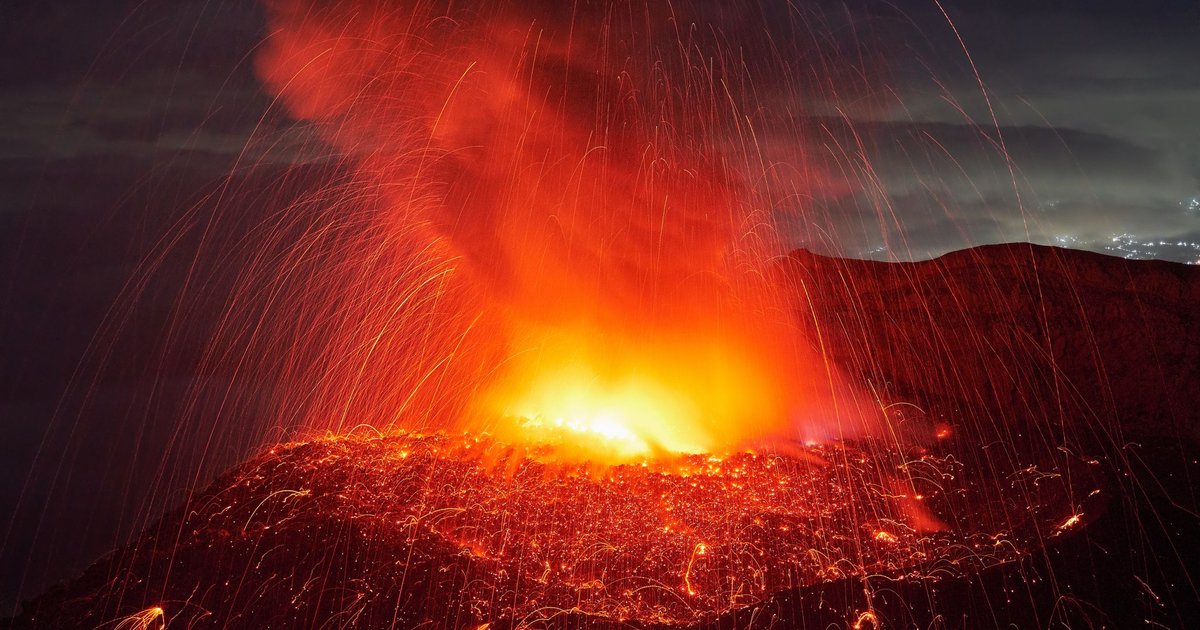
The Semeru volcano, situated on the border between Lumajang and Malang regencies in Indonesia, has shown remarkable volcanic activity, recording four consecutive explosions on Friday morning. These eruptions reached heights of up to 1,200 meters above the volcano's summit, alarming local authorities and residents in the surrounding areas.
The first explosion occurred at 00:32 local time, where no visual sighting of the eruption was reported, but it was recorded on the seismograph with a maximum amplitude of 22 mm and lasted for 155 seconds. This was followed by the second explosion at 04:02, where an ash column was observed rising approximately 1,000 meters above the summit, equivalent to 4,676 meters above sea level.
Details of the Eruptions
After the second explosion, a third explosion occurred at 04:20, with the ash column rising to 1,200 meters above the summit, reaching an altitude of 4,876 meters above sea level. The ash column was noted to be white and gray, with high density drifting towards the west and southwest. This explosion was also recorded on the seismograph with a maximum amplitude of 23 mm and lasted for 169 seconds.
The fourth explosion took place at 05:47, with the ash column again reaching 1,200 meters above the summit, maintaining the previous characteristics in terms of color and density. It was recorded on the seismograph with a maximum amplitude of 23 mm and lasted for 179 seconds.
Background & Context
Semeru volcano, the highest volcano on the island of Java, is one of Indonesia's active volcanoes, located in an area known for significant volcanic activity. Historically, this volcano has experienced several eruptions, making it a subject of research and study by scientists and geologists. In recent years, volcanic activity in the region has increased, necessitating precautionary measures by local authorities.
Currently, Semeru volcano is classified at a volcanic activity level of three (Siaga), indicating an urgent need for close monitoring of the situation. Authorities have issued recommendations for residents to refrain from any activities in the southeastern sector within 13 km of the volcano's summit to avoid potential hazards.
Impact & Consequences
The volcanic eruptions raise significant concerns regarding public safety, as they can lead to lava flows and landslides. Additionally, volcanic ash can affect air quality and pose health risks, particularly for individuals with respiratory issues. Therefore, it is crucial for local authorities to take swift action to secure the areas surrounding the volcano.
Moreover, volcanic activity may impact the daily lives of local residents, including agriculture and tourism. Thus, the local government should be prepared to provide support and assistance to those affected by these natural events.
Regional Significance
Although Indonesia is geographically distant from the Arab world, natural events such as volcanic eruptions remind us of the importance of preparedness for natural disasters. Many Arab countries also face natural hazards, such as earthquakes and sandstorms, necessitating the development of effective strategies to address these challenges.
In conclusion, monitoring volcanic activity at Semeru volcano remains critically important, requiring cooperation between local authorities and the international community to ensure the safety of residents and protect the environment.