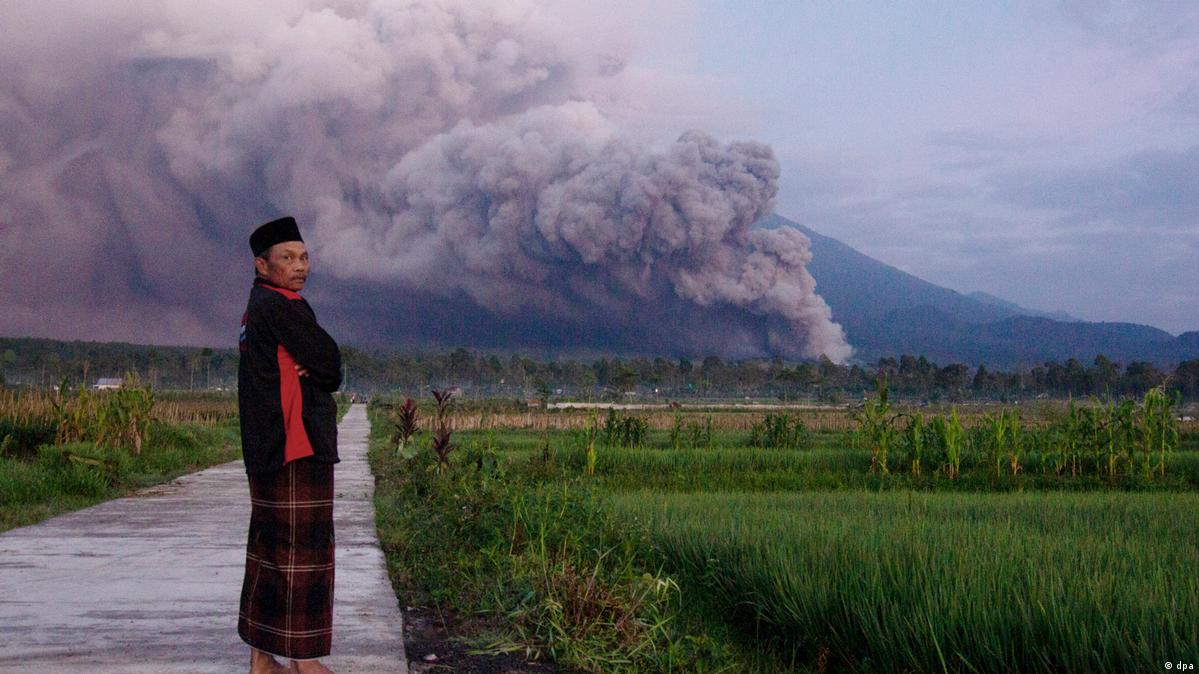
The Gunung Semeru volcano, located in Indonesia, erupted powerfully on Sunday morning, sending ash clouds soaring up to 3,500 meters towards the Besuk Kobokan area. The eruption was recorded at 08:49 local time, with an ash column reaching approximately 800 meters above the volcano's summit, indicating significant volcanic activity.
According to volcanic monitoring reports, the ash column exhibited a color gradient from white to gray, with high density directed towards the southwest. This volcanic activity was recorded on the seismogram with a maximum amplitude of 22 mm, and the eruption lasted for about 4 minutes and 6 seconds.
Details of the Eruption
Gunung Semeru is the highest volcano on the island of Java, standing at 3,676 meters above sea level. The volcano has experienced nine eruptions since midnight, with the most powerful occurring at 01:01, where the ash column rose to 1,000 meters above the summit. Although volcanic activity continues, local authorities have issued warnings to citizens to avoid approaching hazardous areas.
Authorities recommend refraining from any activities in the southeastern sector of the volcano, which extends 13 kilometers from the summit. Additionally, activities are prohibited within 500 meters of the surrounding riverbanks due to the risk of lava and ash flows.
Background & Context
Historically, Gunung Semeru is one of the most active volcanoes in Indonesia, having experienced numerous destructive eruptions in the past. In 2021, an eruption led to the evacuation of many local residents, highlighting the ongoing risks posed by volcanoes in the region. Indonesia, situated on the Pacific Ring of Fire, is prone to volcanic activity due to its tectonic plate movements.
The current eruption raises alarms about potential environmental and health impacts, as ash can affect air quality and pose respiratory risks to nearby populations. The local government is closely monitoring the situation and is prepared to take further actions if necessary.
Impact & Consequences
The eruption of Gunung Semeru is likely to have significant environmental and health implications for the surrounding communities. Ashfall can contaminate water supplies, damage crops, and disrupt daily life. Residents in affected areas may face respiratory problems due to inhaling volcanic ash, which can lead to serious health issues.
Local authorities are actively working to assess the situation and provide assistance to those affected. Evacuation plans are in place, and emergency services are on standby to respond to any developments. The potential for further eruptions remains a concern, and residents are urged to stay informed and heed official warnings.
Regional Significance
This volcanic activity is not only a local concern but also has implications for the broader region. Indonesia is home to numerous active volcanoes, and the government must prioritize disaster preparedness and response strategies to mitigate risks associated with volcanic eruptions. The international community also monitors such events, as they can affect air travel and regional stability.
As the situation develops, it is crucial for residents and authorities to remain vigilant. The history of Gunung Semeru serves as a reminder of the power of nature and the importance of preparedness in the face of natural disasters.