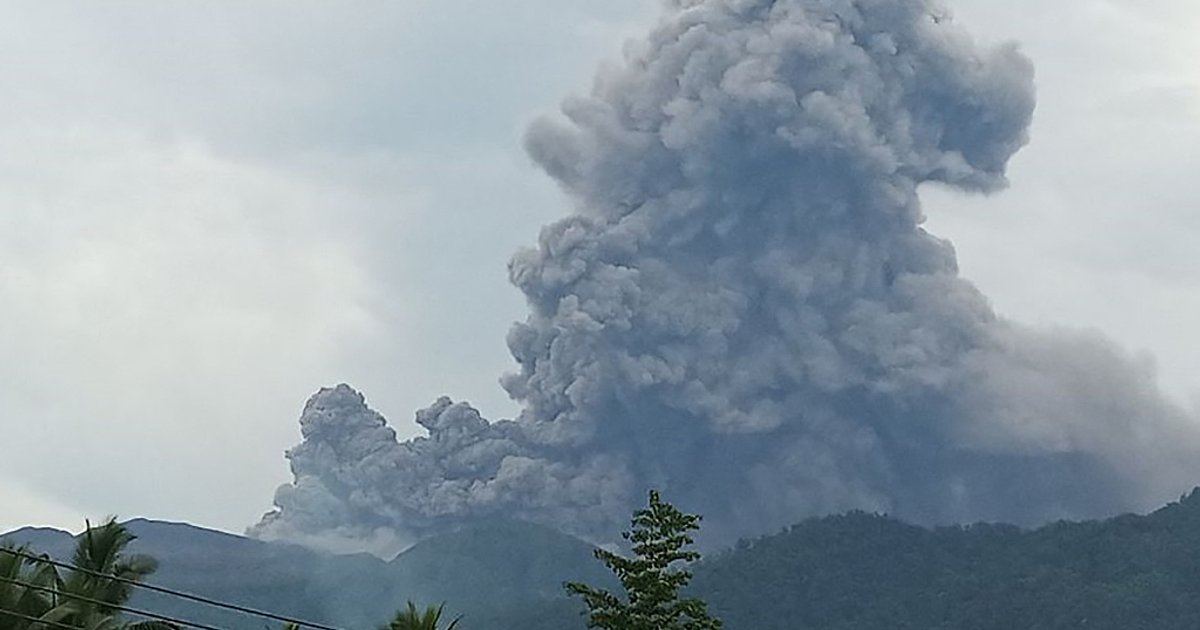
The eruption of Mount Dukono in North Maluku, Indonesia, has raised concerns among local residents as the volcano released volcanic ash that reached a height of 1400 meters above the mountain's summit. The eruption occurred at 11:08 AM local time, prompting authorities to issue warnings to citizens.
Bambang Sugiono, an official at the volcano monitoring center, reported that the ash column was noticeable with a white-gray color and high density, drifting southwest due to the winds. Volcanic activity has also been recorded through seismographs, indicating that volcanic activity is ongoing periodically.
Details of the Eruption
According to available data, the recent eruption of the volcano had a maximum amplitude of 27 mm and lasted for 55.07 seconds. This activity suggests that Mount Dukono remains active, necessitating precautionary measures from nearby residents. The volcano, which rises 1087 meters above sea level, is currently classified at alert level 2 or "caution level," indicating that volcanic activity is above normal levels.
Local authorities have recommended that residents avoid approaching the area of Kawah Malupang Warirang within a 4-kilometer radius from the eruption center. Officials have also warned that volcanic activity could change suddenly, making it essential for residents to remain vigilant.
Background & Context
Mount Dukono is one of the active volcanoes in Indonesia, which is known for its numerous active volcanoes. Historically, the volcano has experienced several eruptions, making it a subject of research and study by scientists. Indonesia is located on the "Ring of Fire" in the Pacific, a region known for seismic and volcanic activity.
Volcanic eruptions are part of a natural cycle occurring in this region, but they pose a significant threat to local populations. In recent years, the country has witnessed several volcanic eruptions, leading to evacuations and property destruction.
Impact & Consequences
Volcanic eruptions pose a direct threat to public health, as volcanic ash can lead to respiratory problems. Therefore, residents living near affected areas are advised to wear protective masks to minimize health risks. Additionally, volcanic ash can impact agriculture and water supplies, leading to negative economic consequences.
These events require a swift response from local government, which is working to ensure the safety of citizens and provide necessary information regarding the situation's developments. Coordination between local authorities and civil society is crucial to mitigate potential risks.
Regional Significance
Although Indonesia is far from the Arab world, natural events such as volcanic eruptions remind us of the importance of preparedness for natural disasters. Many Arab countries, such as Jordan and Lebanon, are located in seismic zones, making it essential to have effective emergency plans in place.
Moreover, climate changes and volcanic activity may affect weather patterns, necessitating special attention from Arab nations to monitor these changes and respond appropriately.