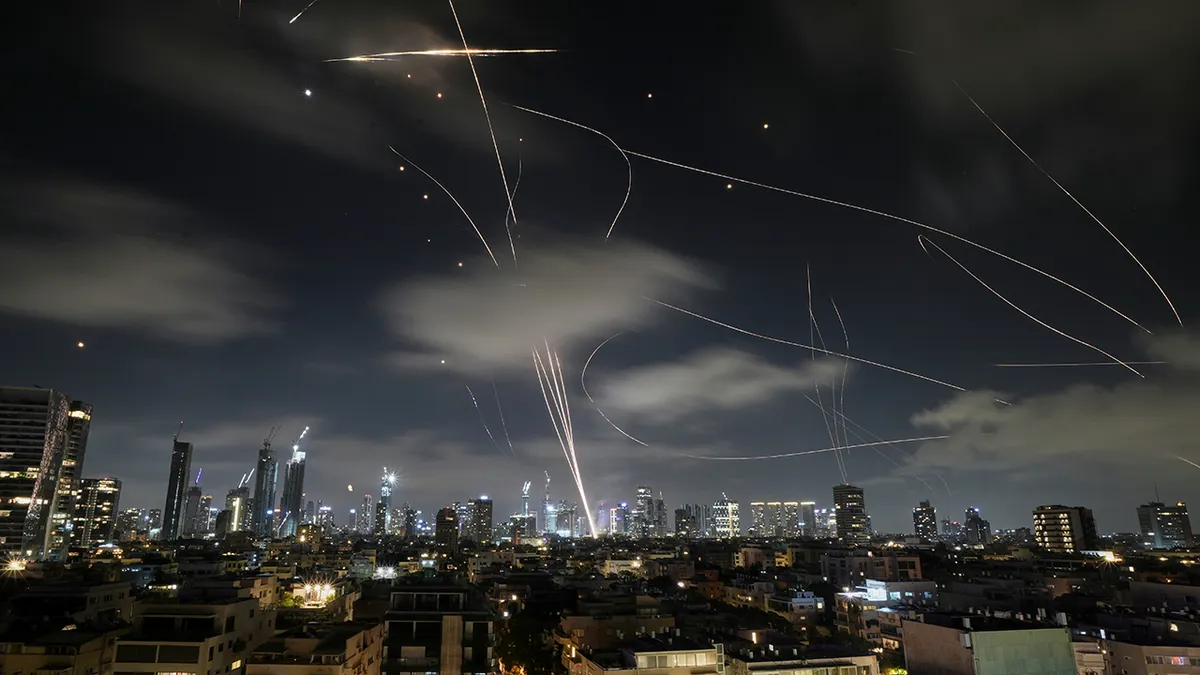
Concerns are mounting over the escalation of the American-Israeli war against Iran, as the scope of targets expands to include civilian facilities and universities, provoking deep anxiety about slipping into an unprecedented humanitarian catastrophe. Many observers have warned that this trend could cement a systematic destruction of the country's scientific future.
In an analytical piece published by the New York Times, the threat from former President Donald Trump was highlighted, who announced via social media that he would target power plants, oil wells, and water desalination facilities in Iran if a swift agreement ensuring the opening of the Strait of Hormuz was not reached. Analyst W.J. Henigan deemed this threat a disgraceful departure from the ethical standards upheld by most previous American administrations.
Details of the Escalation
This escalation comes at a time when military pressures on Iran are increasing, with critics accusing the United States of ignoring ethical standards in armed conflicts. International law experts have pointed out that the deliberate targeting of civilian infrastructure in Iran could constitute a war crime, as international laws prohibit targeting civilians during conflicts.
Robert Goldman, a law professor and director of the War Crimes Research Office at American University in Washington, confirmed that the indiscriminate destruction of civilian infrastructure is a blatant violation of international humanitarian law, which could have catastrophic effects on civilian populations. Additionally, Brian Finucane, a former lawyer at the U.S. State Department, stated that Trump's remarks represent a threat to target civilian objects, which could be considered a war crime.
Background & Context
Historically, military conflicts in the Middle East have seen repeated targeting of civilian infrastructure, leading to serious humanitarian repercussions. Previous wars, such as the conflict in Gaza, have shown how such policies can lead to the destruction of local communities and the disintegration of social fabric.
In this context, The Intercept highlighted the targeting of American-Israeli military campaigns on academic institutions, with two Iranian universities, Isfahan University of Technology and Iran University of Science and Technology, suffering heavy bombardment, raising questions about the justifications for these actions.
Impact & Consequences
Estimates indicate that at least 1,443 civilians have been killed in Iran, including 217 children, since the war began on February 28. The United Nations reported the displacement of approximately 3.2 million Iranians from their homes, reflecting the deteriorating humanitarian situation in the country.
On the other hand, losses are not limited to Iran, as 13 American soldiers have been killed and over 300 others injured, in addition to more than 1,110 people killed in Lebanon due to the Israeli campaign. These figures indicate that the conflict extends beyond Iranian borders, affecting regional stability as a whole.
Regional Significance
These developments serve as a warning to Arab countries, as they may exacerbate humanitarian crises and increase displacement. The rising targeting of civilians and infrastructure could provoke negative reactions from the international community, potentially affecting relations between Arab states and the United States.
In conclusion, these events highlight the urgent need for diplomatic dialogue and the avoidance of military escalation, as the continuation of these policies could lead to dire humanitarian and political consequences in the region.