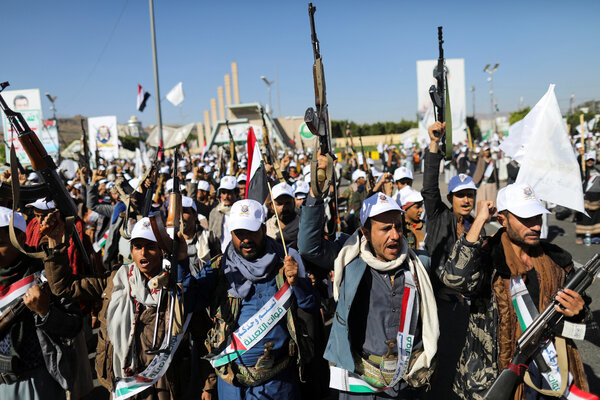
The conflict in the Middle East has continued for the fifth consecutive week, with Israel launching airstrikes on the Iranian capital, Tehran, while Saudi forces managed to intercept around ten drones heading towards its territory. This escalation follows the entry of the Houthis, backed by Iran, into the battlefield, complicating the situation in the region.
In a notable development, the Houthi group announced its formal entry into the war, raising fears of a larger military escalation in the region. The Houthis, who control large parts of Yemen, could have a significant impact on the course of the conflict, especially given the increasing Iranian support for them.
Details of the Incident
In recent days, Israel has conducted airstrikes on sites in Tehran, targeting what is believed to be military installations. These attacks are part of a long-standing Israeli policy aimed at preventing Iran from bolstering its military presence in the region. At the same time, the Saudi air forces have intercepted several drones launched from Yemen, reflecting the increasing threat posed by Iran-backed armed groups.
Houthi attacks on Saudi Arabia are not new, but their formal entry into the conflict could change the rules of the game. The Houthis have declared that they will target Saudi interests, signaling a potential military escalation that could extend to other countries in the region.
Background & Context
The history of the conflict in the Middle East is complex, involving numerous political and religious factors. The Houthis, representing a Shiite group in Yemen, have received significant support from Iran since the onset of the conflict in Yemen in 2015. This support has included weapons and training, making them a formidable military force in the region.
On the other hand, Israel seeks to counter the increasing Iranian influence in the Middle East, especially after signing normalization agreements with some Arab countries. These dynamics make it difficult to predict the course of the conflict, as regional and international interests intertwine in a complex manner.
Impact & Consequences
The recent escalation in the conflict could have serious repercussions for regional security. The entry of the Houthis into the battlefield may encourage other armed groups in the region to take similar steps, increasing the likelihood of new conflicts erupting. Additionally, this escalation could affect oil prices and financial markets, as any military escalation in the region could lead to a rise in oil prices due to supply-related risks.
Moreover, military escalation could impact peace efforts in Yemen, where there have been previous attempts to reach a peaceful resolution to the conflict. The Houthis' formal entry into the conflict may hinder any progress in this direction.
Regional Significance
This escalation in the conflict has direct implications for Arab countries, especially those that share borders with Yemen or are directly affected by regional conflicts. Saudi Arabia, for instance, may find itself compelled to bolster its military defenses, potentially leading to increased tensions in the region.
Other Arab countries may be indirectly affected, as any escalation in the conflict could lead to a flow of refugees and heightened sectarian tensions. It is crucial for Arab nations to closely monitor the situation and work to enhance regional cooperation to address the growing security challenges.