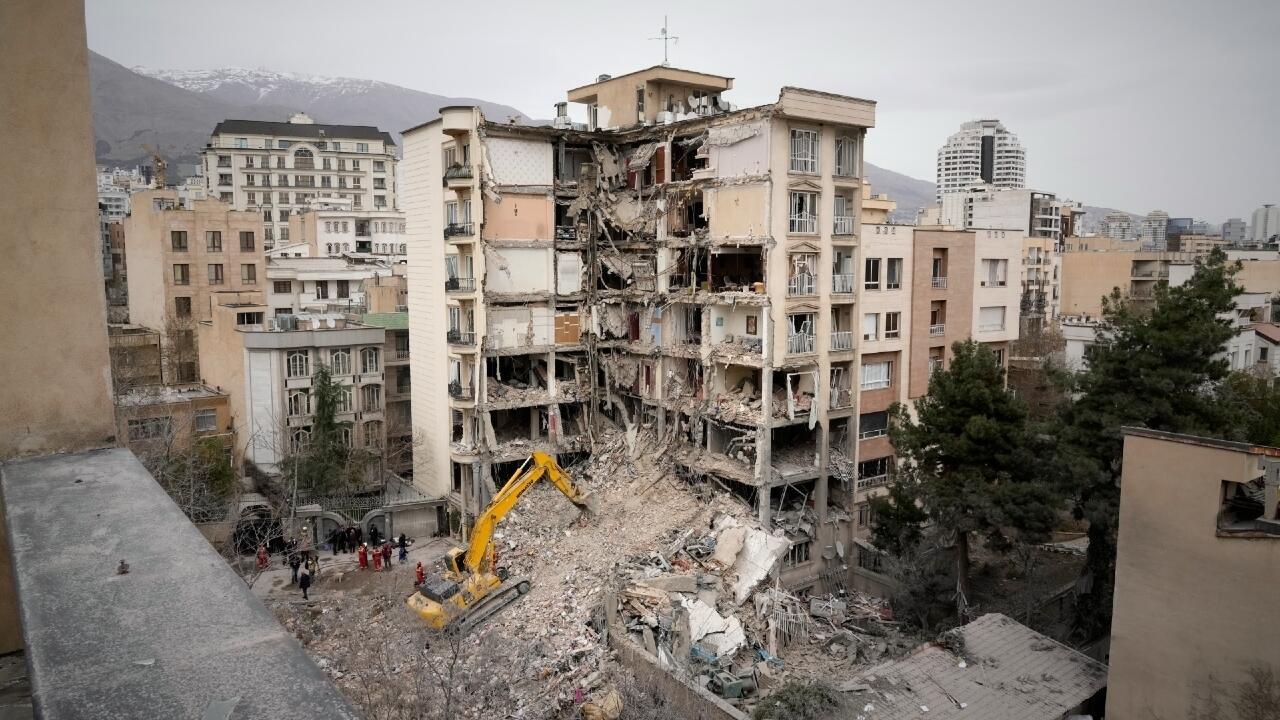
The war raging in the Middle East continues to claim lives, having resulted in the deaths of thousands since the onset of the attack launched by the United States and Israel on Iran on February 28. This was followed by an Iranian response through attacks on Israel and American bases in Gulf countries, leading to escalating confrontations and the opening of new fronts in Lebanon.
According to the Human Rights Activists News Agency (HRANA), based in the United States, the death toll since the beginning of the war has reached 3540 individuals, including 1616 civilians, among them 244 children. These figures are based on field reports and local and medical sources, in addition to data from civil society organizations.
Details of the Conflict
In another report, the International Federation of Red Cross and Red Crescent Societies stated that the US and Israeli airstrikes on Iran have resulted in the deaths of 1900 civilians and injured 20000 others so far. However, questions remain about whether these figures include at least 104 individuals whom the Iranian military claimed were killed when a US submarine sank an Iranian warship off the coast of Sri Lanka on March 4.
In Lebanon, authorities announced that Israeli airstrikes since March 2 have resulted in 1461 deaths, including 124 children. Informed sources have also reported that the number of Hezbollah fighters killed has exceeded 400 since they began their attacks on Israel.
In Iraq, health authorities confirmed the deaths of 108 individuals, including civilians, members of the Popular Mobilization Forces, as well as soldiers from the army and fighters from the Kurdish Peshmerga forces.
Background & Context
Historically, the region has witnessed ongoing tensions between Iran and the United States, where political and military interests overlap. The recent attack on Iran came amid escalating regional conflict, intensifying strife in Lebanon, Iraq, and Gulf countries.
This war is seen as part of a broader struggle between regional powers, with each side seeking to enhance its influence in the area. The mutual airstrikes between Israel and Iran reflect rising tensions, threatening the stability of the entire region.
Impact & Consequences
The repercussions of this war extend beyond humanitarian dimensions, affecting political and economic stability in the region. With the rising death toll, civilians in the affected countries face significant challenges, including displacement and loss of shelter.
The escalation of violence may exacerbate humanitarian crises, necessitating urgent international response. Humanitarian organizations warn that the situation could worsen if immediate actions are not taken to halt the fighting.
Regional Significance
The war directly impacts neighboring Arab countries, where some of these nations are witnessing an influx of refugees and increasing internal tensions. The economic impact will be tangible, as trade and investment in the region will be affected due to instability.
Under these circumstances, the international community must work towards finding diplomatic solutions to the crisis, as the continuation of the conflict will exacerbate humanitarian and economic conditions in the region.