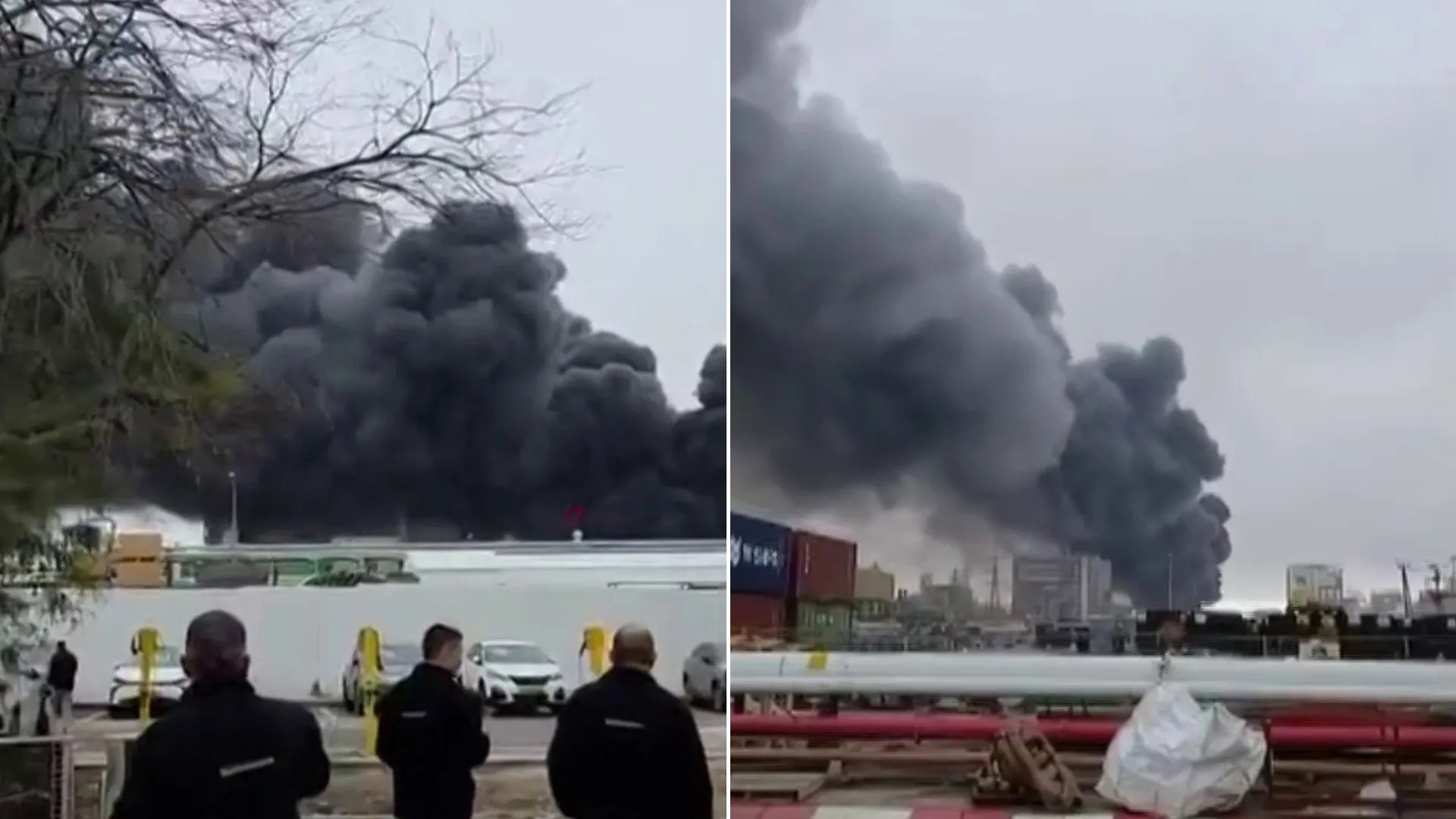
In a rapid escalation reflecting a qualitative shift in the confrontation, the war between Iran and Israel has entered a new phase centered around targeting vital infrastructure. This comes at a time when diplomatic solutions are dwindling, increasing the level of military threats between the two parties.
Suhaib Al-Asa, Al Jazeera's correspondent in Tehran, confirmed that recent Israeli strikes targeted the Isfahan University of Technology for the second time in days, reflecting an increase in the targeting of scientific and industrial institutions within Iran. The attacks also included energy facilities and steel factories, indicating an Israeli intention to strike at the Iranian economic depth.
Details of the Event
In response, Tehran officially announced the targeting of a petrochemical facility inside Israel, describing it as linked to military industries. This step confirms, according to Al-Asa, the transition of the confrontation to targeting military and industrial infrastructure on both sides. Israeli strikes have extended in recent hours to the capital Tehran and the city of Shiraz, where a residential building in northeastern Tehran was targeted, believed to have one of its apartments as a direct target, despite the presence of Arab and international media in the same building.
Al-Asa also clarified that Iran has increased the frequency of its missile attacks to reach "the eighty-sixth wave," indicating unprecedented escalation. Further details regarding the nature of the targets and the types of missiles used are expected to emerge in the coming hours, especially following the attack on Beersheba.
Background & Context
The Iranian rhetoric has become sharper, with the Revolutionary Guard announcing the end of the "eye for an eye" equation, hinting at the imposition of new rules of engagement that go beyond traditional responses. Tehran considers that there is an Israeli expansion in targeting nuclear, economic, and educational facilities, which intensifies the tensions.
In this context, Al-Asa pointed to a near absence of trust between Iran and the United States, despite diplomatic movements in the region. Statements from Iranian officials, including Abbas Araghchi and President Masoud Bezhakian, confirm the lack of any optimism regarding the possibility of reaching a settlement. Furthermore, Parliament Speaker Mohammad Baqer Qalibaf warned that American diplomatic moves could be a cover for ground military action, increasing Iranian fears of a potential military landing on strategic islands, notably Khark Island, which represents a vital artery for Iranian oil exports.
Impact & Consequences
For his part, Antoine Shahada, director of the Israel Studies Program at the Mada al-Carmel Research Center, considered that Israel is proceeding with what he described as expanding the doctrine of the suburb to a more comprehensive level of destruction. He explained that the Israeli government, led by Benjamin Netanyahu, is prepared to bear the current losses, whether economic or psychological, as long as human losses remain within manageable limits. He noted that images of destruction, such as those seen in Beersheba, will not currently affect the decision to go to war unless they expand significantly.
Israel seeks to inflict as much damage as possible on Iranian military and economic infrastructure, even if the goal of regime change is not achieved directly. In this context, researcher Negar Mortazavi clarified that Iran considers its previous restraint in confrontations has encouraged repeated attacks against it, which has prompted it to change its defensive doctrine towards a more stringent deterrence aimed at ending the war in a way that prevents its recurrence in the future.
Regional Significance
These developments serve as an indicator of rising tensions in the Middle East, where confrontations between Iran and Israel may lead to negative impacts on regional security. The increase in military threats could reflect on neighboring countries, heightening instability in the region.
In conclusion, the current escalation appears to be part of an attempt to impose a new deterrence balance, preventing Israel—backed by the United States—from continuing to target Iran, similar to what has occurred in other areas like Gaza and Lebanon.