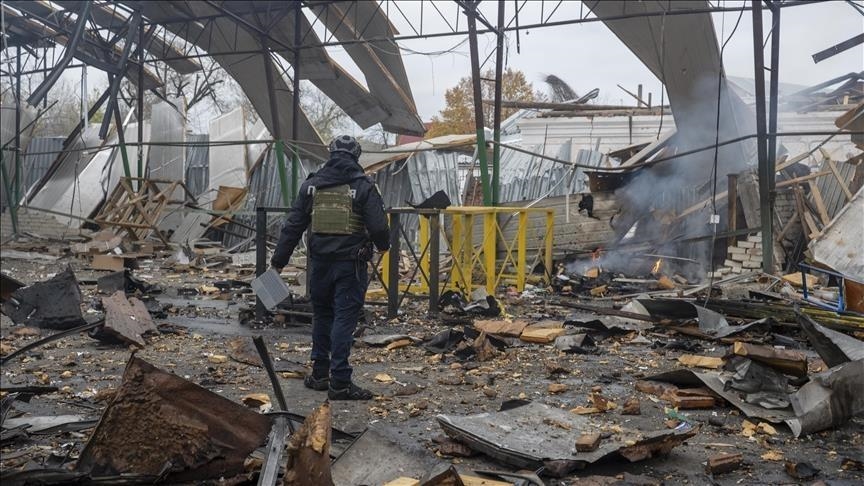
The Leningrad region in Russia has witnessed a significant escalation in drone attacks, with the regional governor reporting that defense forces have shot down approximately 240 drones in just one week. This escalation comes at a sensitive time, as a new fire broke out at the Ust-Luga port, which is considered one of the most important energy ports in Russia, raising concerns about the impact of these attacks on vital infrastructure.
Drone attacks have noticeably increased recently, reflecting rising tensions in the region. Leningrad Governor Alexander Durov confirmed that the attacks have affected not only the ports but also other critical facilities, necessitating heightened security measures to protect these installations.
Details of the Incident
The Leningrad region is one of the strategic areas in Russia, housing many important ports and industrial facilities. The drone attacks targeting this region indicate an escalation in the conflict, believed to be part of the ongoing dispute between Russia and Ukraine. The fire at the Ust-Luga port, a vital center for energy exports, underscores the risks facing Russian infrastructure.
According to reports, the recent attacks have disrupted some operations at the port, raising concerns about the impact on Russian energy supplies. Additionally, the escalation in attacks may provoke military responses from the Russian side, further intensifying tensions in the region.
Background & Context
Historically, the Leningrad region has experienced numerous conflicts and disputes, but the current situation is considered one of the most tense periods. The conflict between Russia and Ukraine, which began in 2014, has significantly affected security in the region. Drone attacks are seen as a new tactic in the conflict, used to deliver precise strikes against strategic targets.
The increased use of drones in modern conflicts reflects technological advancements in warfare, as these aircraft have become effective tools for executing attacks without the need for ground troops. This type of attack poses a significant challenge to national security, as they are difficult to detect and intercept in a timely manner.
Impact & Consequences
The escalation in drone attacks could have serious consequences for security in the region. Russia may take more extensive military measures to protect its vital facilities, potentially leading to a larger escalation in the conflict. The impact on energy supplies could also affect global markets, as Russia is one of the largest energy exporters in the world.
Furthermore, the continuation of these attacks may influence international relations, forcing other countries to reassess their policies towards Russia. Increased military movements could heighten tensions between Russia and Western nations, negatively impacting regional and international stability.
Regional Significance
For the Arab region, the rising tensions in Russia could affect global energy markets, as many Arab countries rely on energy supplies from Russia. Any disruptions in these supplies could lead to price increases, impacting the Arab economy as a whole.
Moreover, armed conflicts in other parts of the world, including the Middle East, may be influenced by developments in the Russian-Ukrainian conflict. It is essential for Arab nations to closely monitor these developments, as they could affect their security and economic strategies.