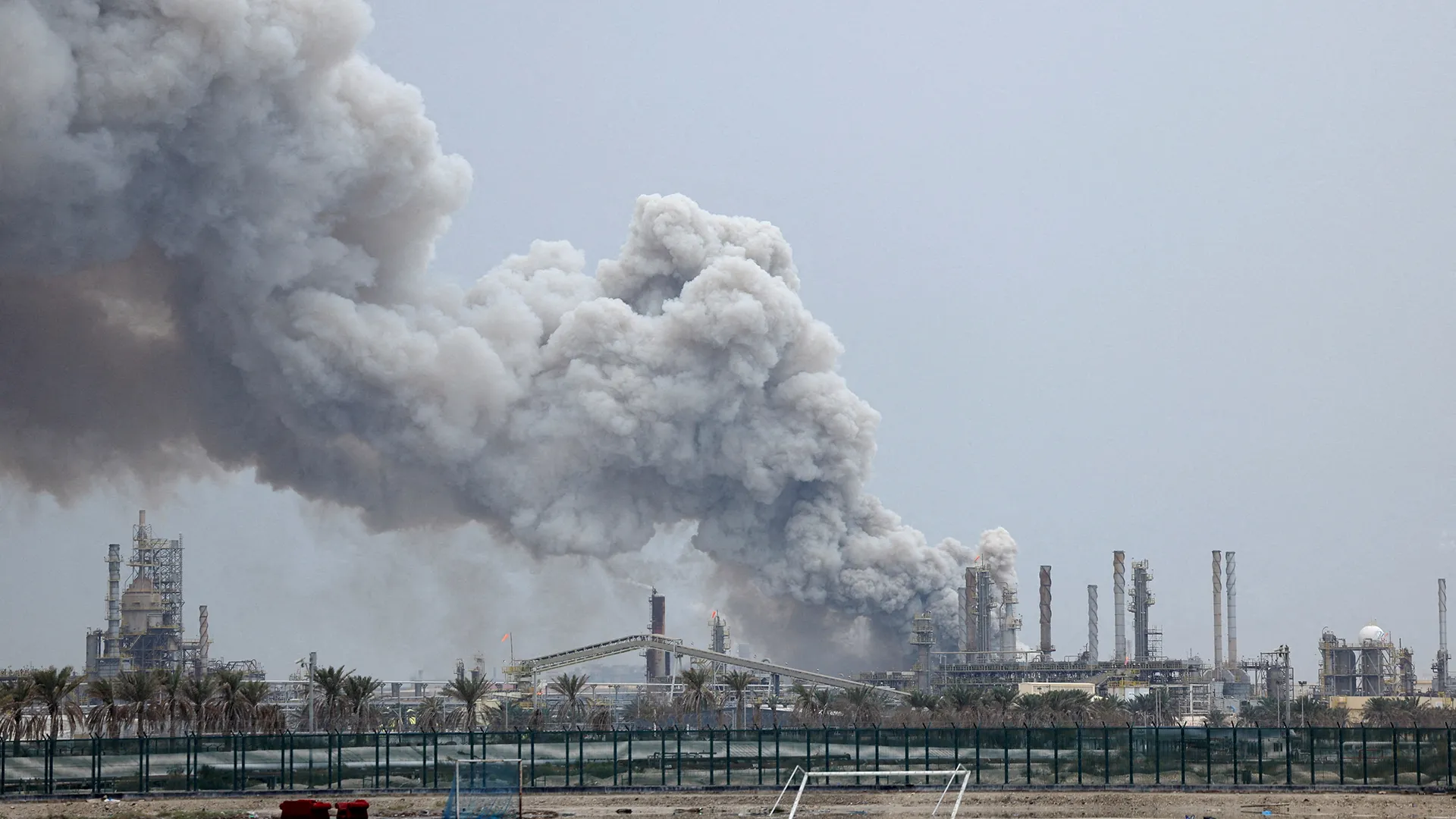
The fears are growing that the Gulf Arab states could become a major battleground in the ongoing conflict between Iran on one side and the United States and Israel on the other. Several political analysts have confirmed that these countries are not only affected by the conflict but are also playing an active role in shaping the future of the region amidst escalating military actions and increasing economic pressures.
As the war enters its second month, questions are rising about its outcomes, given the ongoing military escalation and a murky political horizon. The Gulf dimension is considered one of the key factors in understanding the trajectories of the conflict and its regional and international ramifications.
Details of the Event
In this context, academic Mahjoub Al-Zuwairi pointed out that the war has produced four new facts after a month since its outbreak. The first is the failure of the United States and Israel to create a strategic shock for Iran, which has led to an escalatory Iranian behavior towards the Gulf states. Tehran has shifted to a logic of raising costs by targeting economic structures, negatively impacting stability in the region.
Al-Zuwairi also noted that the United States is waging a war that lacks international legitimacy, as Western partners have begun to withdraw political cover for it, while Washington continues to implement its strategy without considering the interests of its allies.
Context and Background
Under these circumstances, oil market analyst Bashar Al-Halabi warned of serious repercussions for global markets. The involvement of the Houthis in targeting Israel, amidst ongoing tensions in the Red Sea and the Bab el-Mandeb Strait, could lead to a sharp rise in oil prices if markets remain open.
The Red Sea has become a vital artery for the global economy, with the Saudi East-West pipeline playing an important role in transporting oil to the Yanbu port for export to Asia. Any development in this context could significantly raise the level of risks and directly affect market stability.
Consequences and Impact
On the other hand, Saleh Al-Mutairi, head of the Madār studies center, emphasized that discussions about a Gulf division regarding the war are not based on official positions. The Gulf states are the most affected by the continuation of the war, and thus it is illogical for them to support its prolongation. Official statements focus on diplomatic solutions and restraint, reflecting a desire to avoid escalation.
Al-Mutairi also highlighted the importance of protecting oil facilities, stressing that discussions about securing navigation in the Strait of Hormuz without protecting these facilities are incomplete. There is pressure from some allies to push Gulf states towards direct involvement in the war, but Gulf political realism drives the thinking towards the day after and avoiding escalation.
Impact on the Arab Region
For his part, Abdullah Al-Ateibi, a professor of international affairs at Qatar University, stated that all countries with rational calculations seek to de-escalate, which represents the beginning of a path towards a political solution, despite the crisis not being over. The current situation differs from the 2015 agreement, where regional countries were not direct parties at that time, while today the hostilities encompass the entire region.
Therefore, it is essential to involve regional countries in any future agreement and to remove the pressure tactics used by Iran. Al-Ateibi also proposed internationalizing the Strait of Hormuz to place it under international guardianship, making any Iranian escalation a confrontation with the international community, not just with the Gulf states.
In conclusion, the situation in the Gulf remains complex, as political and economic interests intertwine, necessitating urgent diplomatic moves to avoid greater escalation that could threaten the stability of the region.