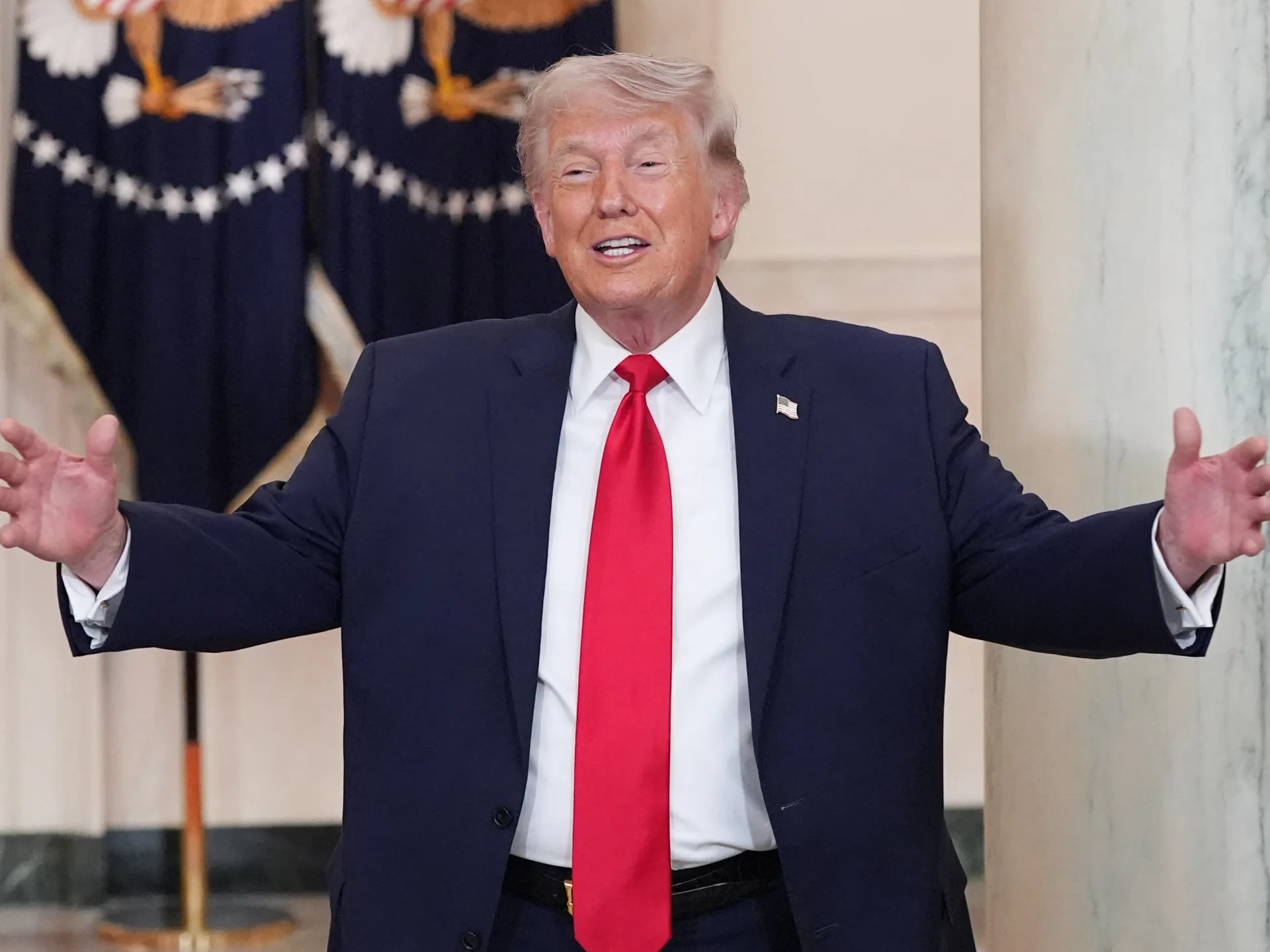
International tensions are escalating in the context of the U.S.-Israeli war on Iran, where a new concept of conditional friendship is emerging between Washington and its European allies. U.S. President Donald Trump, who views NATO as a "paid membership card," faces criticism from Europeans who believe that the alliance is based on the principle of "all for one."
In an episode of the program "Above Authority" aired on April 3, 2026, host Nazih Al-Ahdab pointed out that Trump has set a limit for those who do not pay their full contributions to NATO, describing the alliance as a "paper tiger." This comes at a time when Washington is seeking support from allies to protect the Strait of Hormuz from Iranian threats.
Details of the Situation
The Iranian nuclear file remains complex and open to multiple possibilities. Discussing a complete end to the nuclear program is akin to "announcing the closing of a theater while the backlights are still on and the curtain is half-raised," suggesting that the story is not yet closed, but merely has a new title. Each party can claim it is nearing its objectives, with one asserting it has disrupted the program while the other insists it has retained its capabilities.
Data indicates that the Iranian nuclear stockpile has not been erased; rather, it may have been divided, relocated, or hidden in various places, shifting the confrontation from targeting fixed facilities to a game of chasing moving or concealed materials.
Background & Context
Regarding the duration of the U.S.-Israeli war on Iran, Trump has informed his aides that it will last only 4 to 6 weeks. This statement reflects a promotional logic aimed at "selling the war" to the public as a quick-preparation meal, with delicious results and light on the U.S. budget.
However, Al-Ahdab believes that Trump thinks he can dismantle the complex crises of the Middle East in a short time frame, making the six-week deadline merely a political wish ceiling to escape the nightmare of eternal wars that haunts American politicians.
Impact & Consequences
Conversely, calls in Iran are emerging to lower the conscription age or "support" to 12 years, reflecting a disconnection from human logic, as school bags for children are being replaced with military aid bags, pulling them into the calculations of political profit and loss.
Another segment of the episode highlighted the blatant violations against journalists, with the assassinations of Fatima Fatouni and Ali Shaib, reporters for Al-Manar and Al-Mayadeen channels, during an Israeli raid in southern Lebanon. This systematic targeting of the press reflects a shift from military conflict to an assault on journalism itself.
Regional Significance
Concerns are growing that these tensions could lead to greater escalation in the region, as the targeting of journalists reflects a deterioration in freedom of expression and heightens tensions among various parties. Additionally, a potential war against Iran could significantly impact security and stability in the Middle East.
In conclusion, the current situation requires the international community to take serious steps to avoid military escalation and work towards finding peaceful solutions to the complex crises in the region.