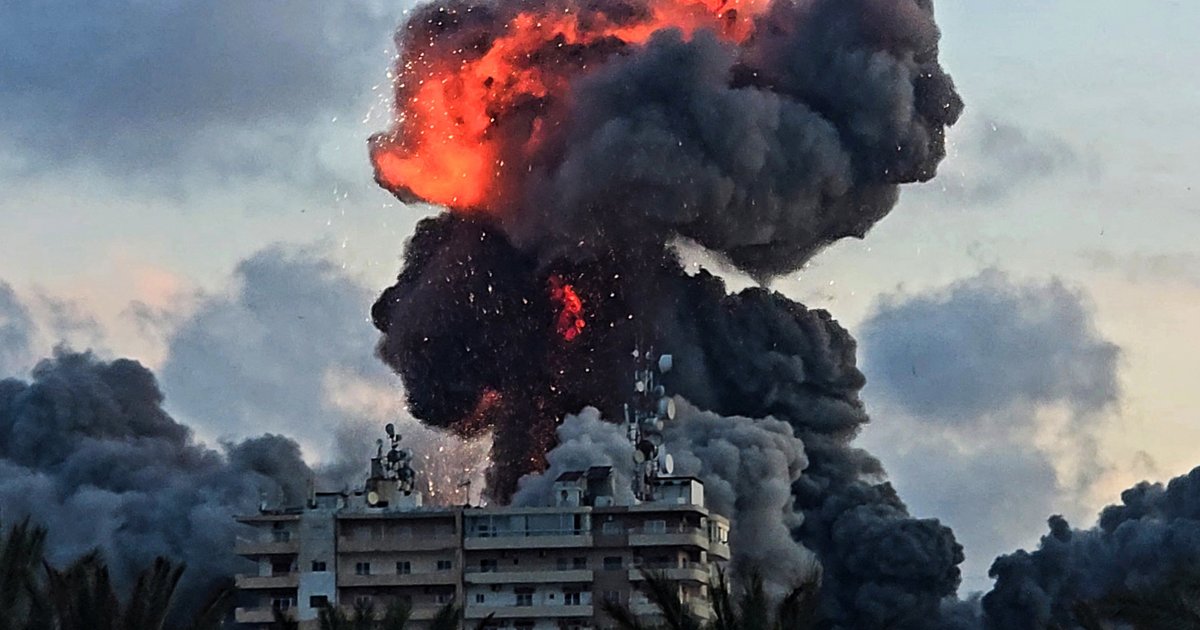
Israeli airstrikes persistently target cities in southern Lebanon, with the Israeli forces striking Nabatieh and Sidon, leading to the death of a Lebanese soldier. These attacks occur at a time when Israel has issued evacuation orders for residents in border areas, further escalating tensions in the region.
Reports indicate that the airstrikes have targeted both military and civilian objectives, resulting in the destruction of several facilities and significant damage to infrastructure. Al Jazeera correspondents noted that the bombardment is part of an increasing escalation by Israel, as Israeli forces attempt to expand their military operations within Lebanese territory.
Details of the Incident
On Thursday, Israeli warplanes launched multiple strikes on the cities of Nabatieh and Sidon, causing panic among residents. Lebanese military sources confirmed the death of a soldier during these attacks, reflecting the rising violence in the area. Additionally, Israeli authorities have issued evacuation orders for populations near the border, increasing anxiety among citizens.
This escalation follows a period of rising tensions along the Lebanese-Israeli border, where the area has witnessed repeated clashes between Israeli forces and armed groups. Analysts have suggested that these attacks may be part of a broader Israeli strategy aimed at undermining Hezbollah's capacity to conduct military operations against it.
Background & Context
Historically, the Lebanese-Israeli border has experienced recurrent tensions for decades, with the region being the stage for numerous armed conflicts. In 2006, a devastating war erupted between Israel and Hezbollah, resulting in hundreds of casualties and thousands of displaced individuals. Since then, the border has remained a sensitive area, with periodic clashes occurring between the two sides.
These events are part of a larger conflict between Israel and its allies on one side, and Hezbollah and Iran on the other. These dynamics continue to affect stability in the region, making it challenging to reach lasting solutions to the conflict.
Impact & Consequences
Analyses indicate that the recent escalation may exacerbate humanitarian conditions in southern Lebanon, where many residents live under difficult circumstances. The increase in military operations could also impact regional stability, raising the likelihood of a broader conflict erupting in the area.
Moreover, the military escalation may affect relations between Lebanon and Western countries, as the Lebanese government could face greater pressure to control the situation. This could further exacerbate the economic and social crises that Lebanon is already experiencing.
Regional Significance
The current events in southern Lebanon are part of a larger picture of conflict in the Middle East, where regional and international interests intersect. These developments could influence regional security, especially amid rising tensions between Iran, the United States, and their allies.
Additionally, the situation in Lebanon may impact neighboring countries, as an influx of refugees could worsen humanitarian crises in nations like Syria and Jordan. Therefore, the current events necessitate greater international attention to ensure that conditions in the region do not deteriorate further.
In conclusion, the situation in southern Lebanon remains tense, with increasing fears of further escalation. Urgent international efforts are required to alleviate tensions and ensure the protection of civilians in the region.