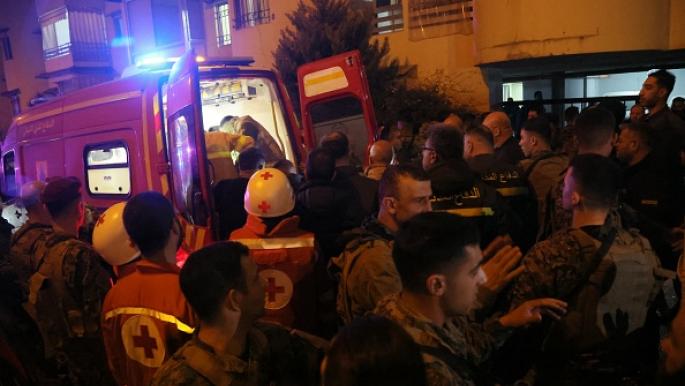
The Israeli occupation has intensified its bombardment of Lebanon, focusing attacks on the capital Beirut and southern areas, leading to dozens of casualties, including children and women. This escalation comes at a sensitive time marked by increasing tensions in the region, as the occupation seeks to achieve its military and political objectives through these attacks.
In response to these assaults, Hezbollah has targeted military gatherings and sites in the north, reflecting the rising intensity of the conflict between the two sides. Reports indicate that the Israeli bombardment has targeted civilian areas, prompting widespread condemnation from the international community, which has called for a cessation of hostilities and the protection of civilians.
Details of the Incident
The Israeli military operations in Lebanon continue, with attacks concentrated on residential neighborhoods and vital facilities, resulting in the destruction of numerous homes and infrastructure. Local sources have reported that the bombardment has led to the deaths of several civilians, including children and women, exacerbating the suffering of the population under the dire humanitarian conditions they face.
Images circulated on social media show the extensive destruction caused by the bombardment, with many buildings and public facilities damaged. This escalation occurs amid increasing regional tensions, heightening residents' fears of escalating violence.
Background & Context
Historically, Lebanon has witnessed numerous armed conflicts, particularly with the Israeli occupation that began in 1982. These conflicts have resulted in widespread destruction and the displacement of many residents. In recent years, tensions between Hezbollah and Israel have increased, especially following the war that erupted in 2006.
These events are part of the ongoing conflict in the region, where each side seeks to achieve its strategic goals. Such conflicts have exacerbated the humanitarian situation in Lebanon, necessitating urgent international intervention to protect civilians.
Impact & Consequences
The military escalation significantly impacts the humanitarian situation in Lebanon, where residents suffer from severe shortages of food and medicine. The continued bombardment increases the suffering of displaced individuals and refugees in the country, requiring an urgent response from humanitarian organizations.
Moreover, this escalation could exacerbate regional tensions, as other powers may intervene in the conflict, complicating the situation further. The continuation of fighting threatens stability across the entire region and increases the likelihood of new conflicts erupting.
Regional Significance
The situation in Lebanon serves as an indicator of the rising tensions in the region, reflecting the ongoing conflicts in Lebanon's neighboring countries. The escalation of violence in Lebanon could affect relations between Arab nations, especially amid existing political tensions.
Additionally, the situation in Lebanon may impact regional security, potentially leading to heightened tensions between regional and international powers. The need for comprehensive dialogue to resolve conflicts in the region has become more urgent than ever.