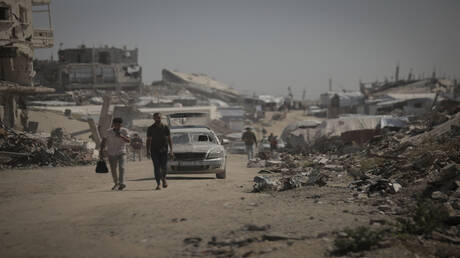
Gaza has witnessed significant military escalation in recent hours as the Israeli army intensifies its operations in the region. This escalation comes amid increasing security tensions, raising concerns among local residents and international observers.
Recent developments indicate that the Israeli army has conducted airstrikes on several locations in Gaza, targeting what are believed to be sites affiliated with Hamas. These airstrikes have resulted in civilian casualties, complicating the humanitarian situation in the area.
Details of the Incident
According to local sources, the Israeli airstrikes targeted residential areas and civilian facilities, leading to the destruction of several homes and significant damage to infrastructure. Reports have indicated that Israeli warplanes have flown over Gaza, causing panic among the residents.
At the same time, Palestinian factions responded by launching rockets towards Israeli territory, activating the Iron Dome air defense system. It has been reported that some of these rockets fell in uninhabited areas, preventing casualties.
Background & Context
These events occur within the context of escalating tensions between Israel and Palestinian factions, with recent weeks witnessing several rounds of violence. The intensity of clashes has increased following a series of arrests carried out by Israeli forces in the West Bank, provoking angry reactions from Palestinians.
The humanitarian situation in Gaza remains dire, as residents suffer from acute shortages of food and medicine, alongside a deterioration of essential services due to the ongoing blockade. These conditions make it difficult for residents to live with dignity, increasing tensions in the region.
Impact & Consequences
The recent military escalation could exacerbate the already dire humanitarian conditions in Gaza, with expectations of increasing numbers of displaced individuals and casualties. Additionally, the continuation of military operations may hinder international mediation efforts aimed at achieving a ceasefire between the involved parties.
On the other hand, this escalation may affect Israel's relations with Arab countries, as military operations in Gaza are viewed as a violation of human rights. There may be increasing pressure on the Israeli government from the international community to limit the use of force against civilians.
Regional Significance
The situation in Gaza remains a focal point in the Arab-Israeli conflict, affecting relations between Arab states and Israel. The current escalation may evoke memories of past events, such as the wars that have plagued the region, heightening concerns about stability in the Middle East.
Furthermore, the ongoing violence in Gaza could impact peace efforts in the region, as the international community seeks a lasting solution to the conflict. It is crucial that both international and local efforts converge to achieve a comprehensive ceasefire that ensures the rights of all parties and contributes to improving humanitarian conditions in Gaza.
The situation in Gaza remains tense, with ongoing military escalation threatening to increase humanitarian suffering. It is essential that both international and local efforts are combined to achieve peace and stability in the region.