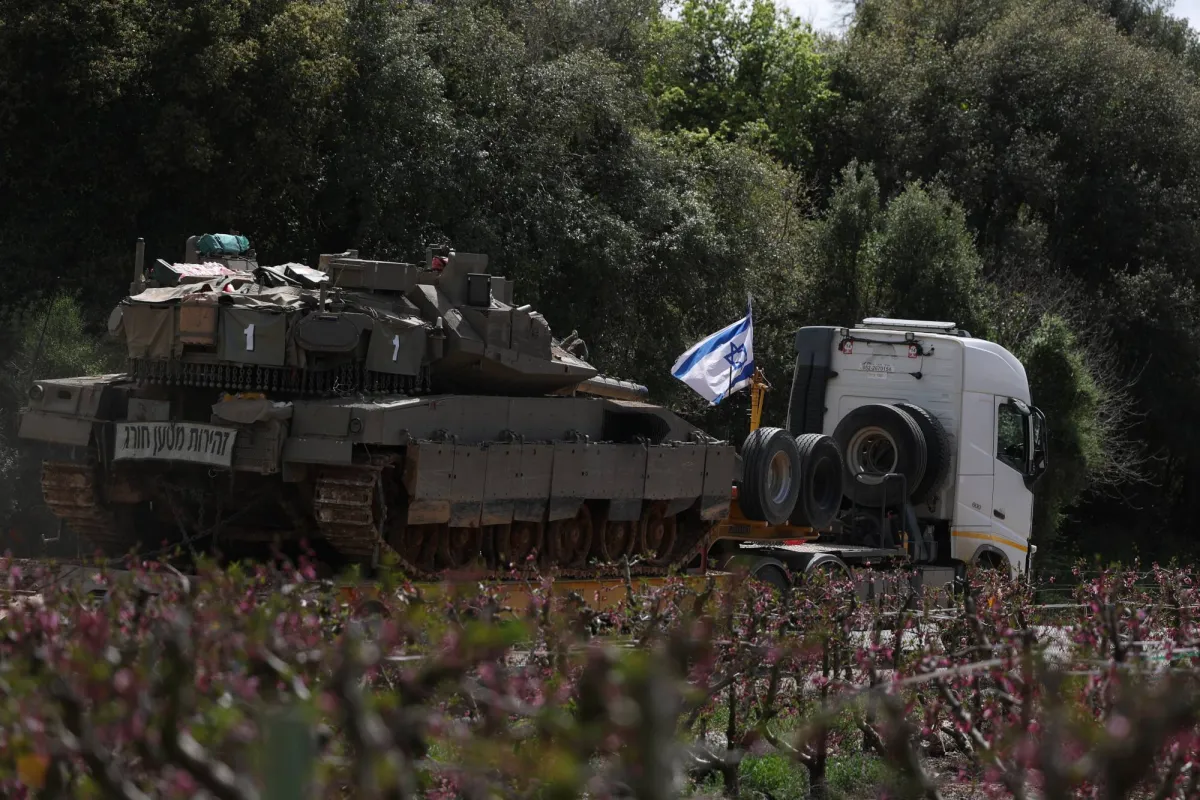
Intensive Israeli airstrikes in the Western Bekaa Valley indicate a significant shift in military operations as Tel Aviv seeks to expand its engagements into more sensitive geographical areas. This escalation coincides with rising tensions in southern Lebanon.
The region witnessed a series of airstrikes on Monday and Tuesday night, which resulted in the closure of major roads, leading to widespread paralysis in movement. These strikes targeted areas between Sahemour and Himr, Himr and Labaya, as well as Qalya and Dalfah, reflecting an Israeli attempt to reshape the conflict map in the south and east.
Details of the Incident
In a provocative move, Israeli army spokesperson Avichai Adraee issued an urgent warning to residents of the towns of Zalaya, Labaya, Himr, Sahemour, and Qalya, calling for immediate evacuation towards Qaraoun. A source familiar with the ground situation confirmed that Israeli focus is directed towards towns in southern Western Bekaa adjacent to the southern districts, due to their strategic importance.
These areas are considered an extension of the Litani River and oversee vital routes extending towards Jezzine and Hasbaya, regions that were under Israeli occupation before 2000. In this context, retired Brigadier General Bassam Yassin explains that controlling the commanding heights in this area gives Israel a battlefield advantage, thus redrawing its deployment map to resemble what it was before the Israeli withdrawal from southern Lebanon.
Background & Context
Yassin recalls the experience of 1982, when Israeli forces reached Beirut before gradually withdrawing in 1985, where they were stationed along what is known as the Mountain Line. He points out that this model is being reintroduced today through efforts to establish a strip of depth ranging between 8 and 10 kilometers inside Lebanese territory.
These developments coincide with a comprehensive Israeli escalation, as Israeli warplanes have expanded their targeting range to include new areas such as Al-Mansouri, Al-Taybah, and Tulin, reflecting an Israeli strategy aimed at achieving military superiority in the region.
Impact & Consequences
In terms of battlefield scenarios, Yassin expects that Bint Jbeil will be the focal point of the primary battle in the initial phase, as Israeli forces aim to encircle the city from multiple directions. Should the battles of Al-Khiam and Bint Jbeil be resolved, the likely direction will be towards expansion into the Western Bekaa.
These developments come at a time when the Lebanese army has decided to reposition itself, withdrawing from several predominantly Christian villages in the far south, which has sparked angry reactions from residents who insisted on staying in their land, considering the absence of security forces a threat to their existence.
Regional Significance
These events raise fears of a larger escalation in the region, as tensions between Israel and Hezbollah continue to grow. Additionally, Israeli statements regarding the establishment of a security zone within southern Lebanon evoke memories of previous models of destruction and evacuation, as seen in Rafah and Beit Hanoun during past wars.
In light of these circumstances, the scene remains open to multiple possibilities, necessitating careful monitoring of the military and political developments in the region.