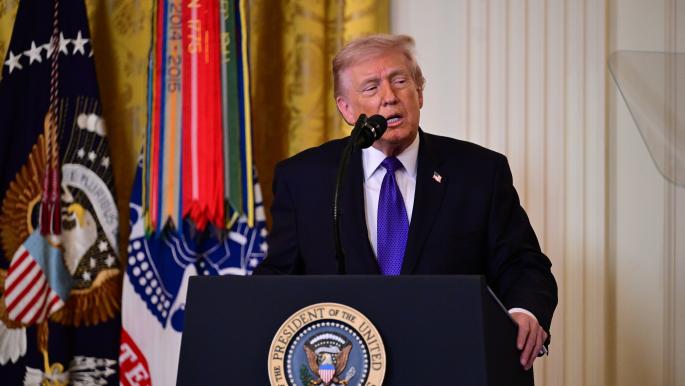
The military and political costs for Washington are escalating as the war against Iran continues, with the U.S. administration facing increasing pressures due to military escalation in the region. Despite these pressures, President Donald Trump persists in issuing conflicting statements regarding the war's objectives, further increasing the ambiguity surrounding the U.S. strategy in the Middle East.
The war against Iran, which began a month ago, has led to heightened tensions in the region, with increased military operations and mutual threats between the two sides. While Washington seeks to bolster its military presence in the Gulf, it faces significant challenges both domestically and internationally.
Details of the Conflict
Since the onset of the war, military reports have indicated that the financial costs of the conflict are rising significantly, with substantial budgets allocated to support military operations. Additionally, political pressures on Trump from members of Congress have increased, demanding clarification on the strategic objectives of this war.
At the same time, U.S. forces in the region are facing escalating threats from Iran-backed militias, which heightens the risks for American soldiers. Military officials have noted that these threats could lead to further escalation in the conflict, placing the U.S. administration in a precarious position.
Background & Context
Historically, U.S.-Iranian relations have seen increasing tensions since the Islamic Revolution in 1979. Economic sanctions and military pressures have exacerbated the situation, making war a viable option on the table. However, the current military escalation comes at a sensitive time, as attention turns toward the upcoming U.S. presidential elections.
Iran is a key player in the Middle East, wielding significant influence in Iraq, Syria, and Lebanon. Consequently, any military escalation against Iran could provoke unexpected reactions from its allies, further complicating the situation in the region.
Impact & Consequences
The potential ramifications of this war could be far-reaching, as it may lead to destabilization across the entire region. Furthermore, the continuation of the war could negatively impact the U.S. economy, as military costs rise and domestic investments decline.
Moreover, escalating tensions could result in increased oil prices, affecting the global economy. Experts have warned that any military escalation could ignite a broader conflict, threatening both regional and international security.
Regional Significance
For Arab countries, the continuation of the war against Iran could lead to serious repercussions. Gulf states, for instance, may find themselves in direct confrontation with Iran, increasing instability in the region. Additionally, the conflict may affect relations between Arab states and Iran, exacerbating sectarian and political divisions.
Ultimately, the question of the future of U.S.-Iranian relations remains unresolved, as risks increase with the continuation of the war. The U.S. administration must reassess its strategy in the region, especially in light of growing internal and external pressures.