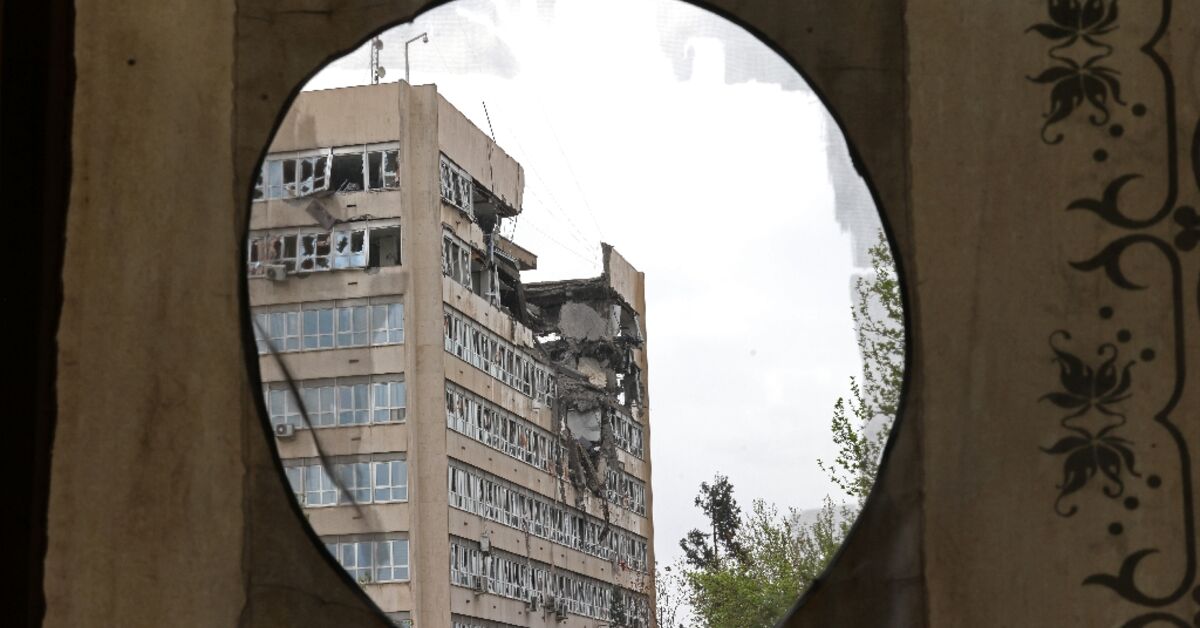
Tehran witnessed a new military escalation on Tuesday, as Iran showed no signs of backing down with the deadline set by U.S. President Donald Trump for reopening the Strait of Hormuz approaching. Trump warned that the U.S. would destroy Iranian infrastructure if ships were not allowed to pass through this strategic corridor.
These developments come at a sensitive time, as tensions between Iran and the United States have notably increased. The deadline set by Trump expires at midnight GMT, heightening tensions in the region.
Details of the Event
Reports indicate that the new strikes targeting Tehran are part of Iran's reactions to American threats. Trump stated that Iran's failure to respond to his demands would lead to what he termed a "complete destruction" of the country's vital infrastructure. These statements come at a time when Iran is grappling with increasing economic and political crises.
The Strait of Hormuz is a vital point for oil transportation, with approximately 20% of total global oil exports passing through it. Therefore, any military escalation in this area could significantly impact global oil markets.
Background & Context
Historically, Iranian-American relations have seen increasing tensions since the Islamic Revolution in 1979. Since then, the United States has imposed multiple economic sanctions on Iran, significantly affecting its economy. In recent years, these tensions have escalated notably, especially after the U.S. withdrew from the Iranian nuclear agreement in 2018.
Iran considers the Strait of Hormuz part of its sovereignty and views any American threats towards this strategic corridor as a violation of its sovereignty. This situation creates a highly tense environment, as both parties seek to achieve their interests amid rising tensions.
Impact & Consequences
If these tensions continue, they could lead to greater military escalation in the region, threatening the stability of Gulf countries. Any military action could also affect global oil prices, potentially leading to increased energy costs worldwide.
Furthermore, military escalation could have significant political repercussions, as major powers may be compelled to intervene to resolve the conflict. This intervention could have far-reaching effects on international relations in the region.
Regional Significance
Neighboring Arab countries, such as Saudi Arabia and the United Arab Emirates, are on high alert due to these tensions. Any military escalation could directly impact the security and stability of these nations.
At the same time, some armed groups in the region may exploit these tensions to enhance their influence, further complicating the security situation in the area.
In conclusion, the situation in Tehran appears to be heading towards further escalation, requiring the international community to take urgent steps to avoid military escalation that could have dire consequences for the region and the world.