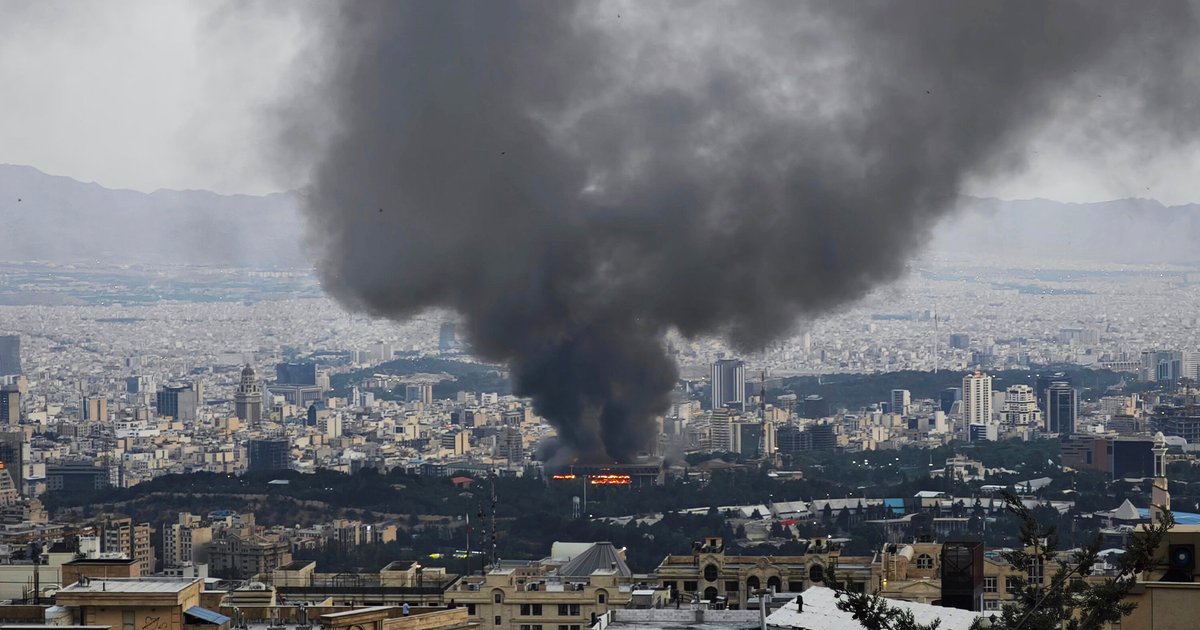
The military escalation between Israel and the United States on one side and Iran on the other has caused a new crisis in the Middle East, threatening regional stability and impacting diplomatic and economic relations. This escalation comes at a sensitive time, as tensions in the region are increasing and the situation appears to be becoming more complex.
Over the past month, the region has witnessed a series of airstrikes carried out by Israeli forces with the support of the United States, leading to a violent reaction from Iran, which launched missiles at military targets. These events have not only escalated the fighting but have also heightened political tensions between major powers in the region.
Details of the Event
In recent weeks, Israel has conducted airstrikes on Iranian sites in Syria, targeting what is believed to be military facilities used by Tehran. In response, Iran retaliated by launching missiles at American military bases in the region, resulting in injuries to several American soldiers. This military escalation raises concerns about the possibility of a comprehensive war breaking out in the region.
The military tensions are not the only cause for concern; the economic dimensions of this crisis are becoming increasingly apparent. Oil prices have risen significantly due to Iran's threats to close the Strait of Hormuz, which is considered one of the most important shipping routes in the world. These developments could impact the global economy, especially amid current economic crises.
Background & Context
Historically, relations between Iran and Israel have been tense, as Israel views Iran as an existential threat due to its nuclear program and its support for armed groups in the region. In recent years, tensions have escalated significantly, especially after the United States withdrew from the Iranian nuclear deal in 2018. This withdrawal led to the imposition of severe economic sanctions on Iran, exacerbating the crisis.
At the same time, Iran is seeking to enhance its influence in the region by supporting its allies such as Hezbollah in Lebanon and the Houthis in Yemen. These complex dynamics make it difficult to predict the course of events in the future, as regional and international interests increasingly overlap.
Impact & Consequences
The military escalation between Iran and Israel has significant implications for regional security. It may lead to increased divisions among Arab states, as their positions towards Iran vary. Some countries, such as Saudi Arabia and the UAE, may find themselves compelled to strengthen their alliances with the United States to counter the Iranian threat, while others may seek to maintain diplomatic relations with Tehran.
Moreover, the military escalation could affect peace efforts in the region, particularly amid the Israeli-Palestinian conflict. Any escalation of violence could exacerbate the humanitarian situation in Gaza and the West Bank, complicating international mediation efforts.
Regional Significance
For Arab countries, the escalation in Iran represents a significant challenge. Regional security heavily depends on the stability of relations among major powers in the region. Any escalation could lead to a flow of refugees and increased internal tensions in Arab countries, impacting their political and economic stability.
In conclusion, it seems that the Middle East is on the brink of a new phase of conflict, with military and economic tensions on the rise. It is essential for Arab states to enhance cooperation among themselves to face common challenges and avoid slipping into new conflicts that could have dire consequences for all.