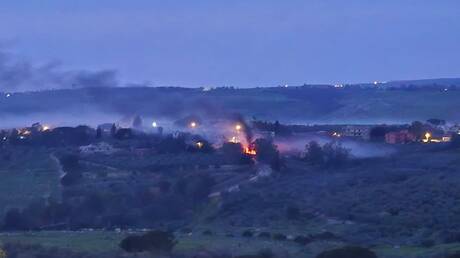
Military tensions are escalating sharply between Hezbollah and Israel along the Lebanese border, with repeated airstrikes in southern Lebanon and the Bekaa Valley, leading to civilian casualties. This escalation comes at a sensitive time, as regional tensions increase, raising fears of a worsening conflict. Israeli airstrikes target sites believed to belong to Hezbollah, while the group responds by launching rockets towards occupied territories, intensifying border tensions.
In recent hours, Israeli warplanes have conducted a series of airstrikes on areas in southern Lebanon, targeting sites believed to be used for storing weapons or launching rockets. Local sources reported several powerful explosions, resulting in widespread destruction of property and casualties among civilians.
Details of the Incident
In response, Hezbollah announced its targeting of Israeli sites with rockets, asserting that these responses are part of defending Lebanon. Images circulated on social media show the devastation caused by Israeli airstrikes, reflecting the scale of the military escalation. The situation is dynamic, with both sides exchanging fire, and the potential for further escalation remains high.
As the conflict unfolds, the humanitarian impact on the local population is becoming increasingly severe. Reports indicate that many civilians are trapped in conflict zones, facing the threat of violence and displacement. The international community is urged to intervene to prevent further deterioration of the situation.
Background & Context
Historically, the Lebanese-Israeli border has witnessed recurring tensions, especially since the July 2006 war. Hezbollah, which considers itself a resistance movement against Israeli occupation, continues to bolster its military capabilities, raising concerns for the Israeli government. The current escalation occurs within a broader context of regional tensions, including crises in Syria and Palestine.
The political situation in Lebanon, which is grappling with economic and social crises, complicates matters further. The Lebanese government faces significant challenges in maintaining security, opening the door for military escalations that could have serious ramifications for regional security.
Impact & Consequences
The current military escalation could exacerbate humanitarian conditions in Lebanon, where many residents already live in difficult circumstances. Israeli airstrikes may lead to the displacement of populations from affected areas, increasing the burdens on the Lebanese government. The potential for civilian casualties is high, and the ongoing violence could further destabilize the region.
Moreover, these events may impact relations between Lebanon and Israel, with growing fears of a new war erupting. The escalation could negatively affect peace efforts in the region and complicate negotiations surrounding unresolved issues, further entrenching divisions.
Regional Significance
This military escalation is not merely a local event; it has far-reaching implications for the entire Arab region. The tensions between Hezbollah and Israel could lead to greater polarization in the region, with some parties potentially exploiting the situation to enhance their influence.
Neighboring Arab countries are monitoring the situation with concern, as any escalation could affect their stability. Amid multiple crises facing the region, it is crucial to address these tensions cautiously to avoid worsening conditions.
In conclusion, the situation along the Lebanese-Israeli border remains tense and requires close monitoring by the international community. The current military escalation could have long-term implications for security and stability in the region.