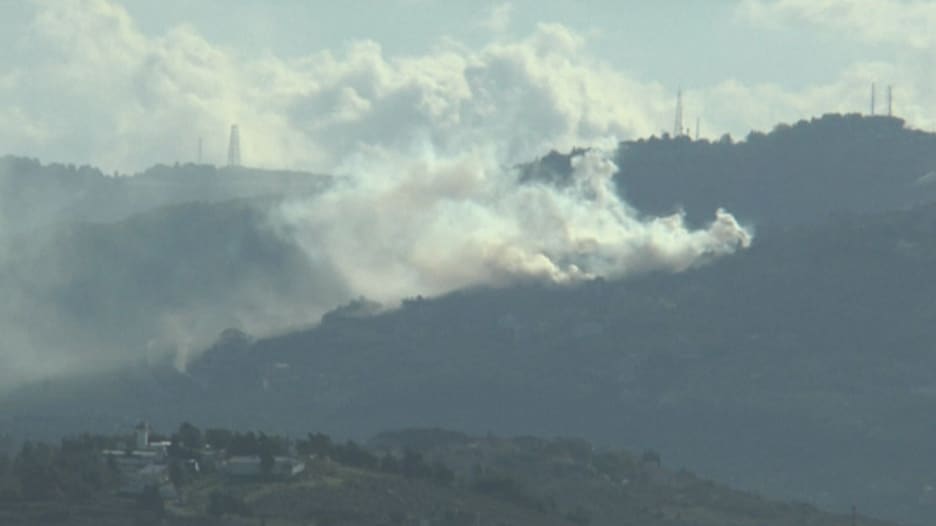
The Lebanese-Israeli border is witnessing a significant military escalation, with Israeli airstrikes targeting southern Beirut while Hezbollah conducts operations against Israeli forces in border areas. This escalation comes at a sensitive time, as tensions in the region have been rising following a series of rapid events.
In recent hours, news reports have documented intensive Israeli airstrikes on targets in southern Beirut, which is considered a stronghold of Hezbollah. These strikes are a response to operations carried out by the party against Israeli forces in border areas, further heightening tensions between the two sides.
Details of the Incident
Local sources reported that the Israeli airstrikes targeted sites believed to be used for storing weapons and ammunition, in addition to other military locations. In response, Hezbollah announced the execution of qualitative operations targeting Israeli military vehicles and sites in settlements near the border, resulting in injuries among Israeli forces.
This escalation occurs amid a state of military mobilization on both sides, with Israel bolstering its military presence along the border, while reports indicate that Hezbollah may have prepared new military plans to confront any potential escalation.
Background & Context
Historically, the Lebanese-Israeli border has witnessed numerous armed conflicts, especially since 2006 when the July War broke out. Since then, both sides have maintained a state of ongoing tension, exchanging accusations of incitement and aggression.
In recent years, tensions have intensified due to the political situation in Lebanon and the impacts of the Syrian conflict, with Hezbollah becoming part of the broader regional struggle. Additionally, the exchanged statements between political and military leaders on both sides increase the likelihood of military escalation.
Impact & Consequences
The current escalation could have serious implications for regional security, as it may lead to a larger escalation involving other countries in the region. Furthermore, the continuation of Israeli airstrikes could contribute to increasing public discontent in Lebanon, potentially affecting the stability of the Lebanese government.
Moreover, this escalation may increase pressure on the international community to intervene and contain the situation, especially in light of the humanitarian and economic crises facing Lebanon.
Regional Significance
This escalation is part of a broader conflict in the region, which includes multiple issues such as the Israeli-Palestinian conflict and crises in Syria and Iraq. The international community is closely monitoring developments, as any escalation could affect the stability of neighboring countries and complicate the situation in the Middle East.
In conclusion, the situation on the Lebanese-Israeli border remains tense, with the possibility of further escalation in the coming days. It requires careful monitoring by the international community to ensure that conditions do not deteriorate to dangerous levels.