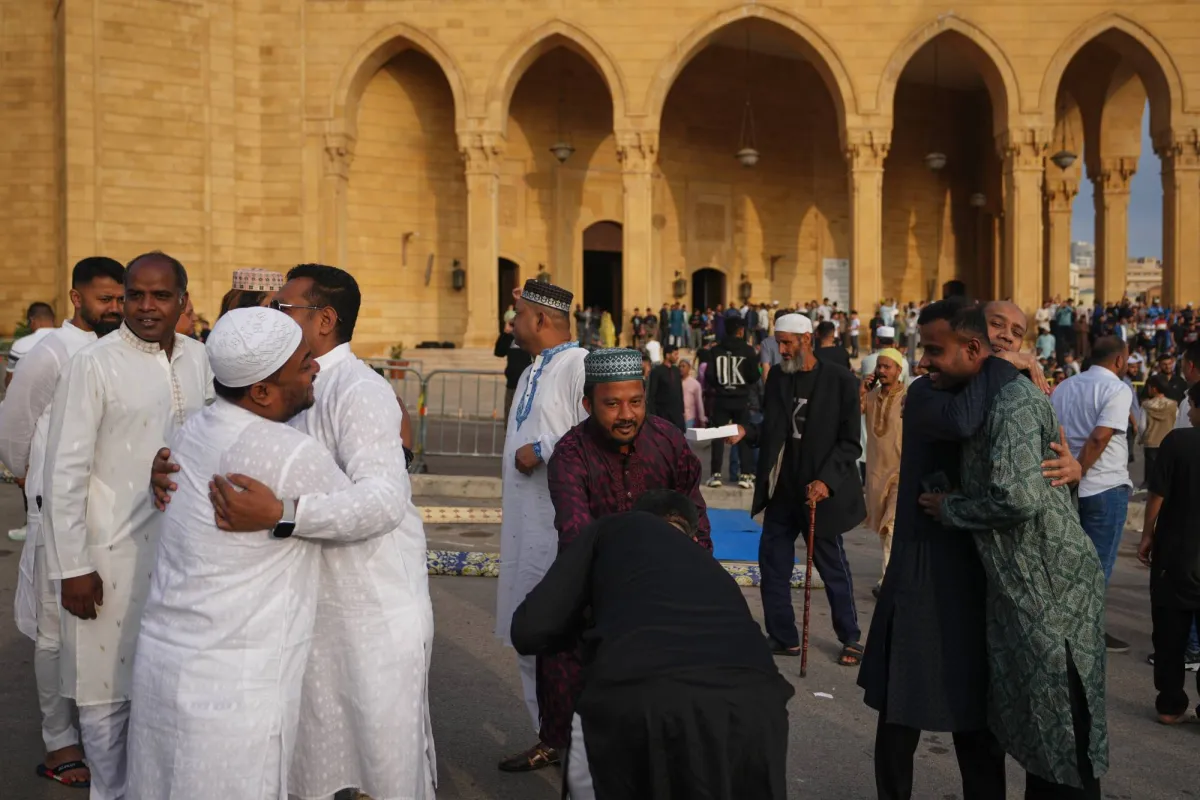
Lebanese Prime Minister Nohad Machnouk has pledged to build a strong and just state to uplift Lebanon, amidst military escalation in the southern regions of the country, where Hezbollah continues its insistence on fighting until the liberation of territories occupied by Israel. This commitment comes at a time when the Lebanese government is seeking to conduct direct negotiations with the Israeli side to end the ongoing conflict and achieve stability in the south.
In a tweet on the platform "X", Machnouk congratulated the Lebanese people on the occasion of Eid al-Adha, noting that the holiday comes at a time when Lebanon is experiencing its most difficult circumstances due to war and destruction. He emphasized the importance of holding onto hope and confidence in the ability of the Lebanese to achieve their goal of building a strong and just state.
Details of the Event
A Lebanese military delegation has departed for Washington in preparation for a security discussion with the Israeli side at the Pentagon, where meetings are scheduled for next Friday. Before their departure, the delegation met with President Joseph Aoun and Army Commander General Rodolphe Hekel, who provided them with the necessary directives. This move comes at a time when Hezbollah is facing military escalation, with a member of the party's political council, former minister Mahmoud Qamati, confirming that a ceasefire will not be achieved unless the Israeli occupation in the south is ended.
Qamati added that Hezbollah has entered the battle to achieve liberation and the return of prisoners and displaced persons to their villages. He also indicated that resistance will remain rooted in Lebanon, and no one will be able to disarm it, which he considers a protection for the homeland.
Background & Context
Historically, Lebanon has witnessed multiple conflicts, the most notable being the civil war that lasted from 1975 to 1990, which left deep scars on the social and political fabric of the country. Since then, security and political conditions remain fragile, especially with Hezbollah as a significant military and political force. The ongoing conflict with Israel also persists, as the occupied Lebanese territories remain a prominent issue between the two sides.
The Lebanese government is currently striving to achieve stability through negotiations with Israel, but this path faces significant challenges, particularly with Hezbollah's continued military escalation. At the same time, Lebanon is grappling with a severe economic crisis, further complicating the internal situation.
Impact & Consequences
The continuation of military escalation in southern Lebanon may exacerbate humanitarian and economic conditions in the country. Any escalation could negatively impact the Lebanese government's efforts to achieve stability and affect relations with the international community. Meanwhile, Hezbollah's insistence on fighting may increase tensions with Israel, potentially dragging the country into a broader conflict.
On the other hand, the government's success in conducting negotiations with Israel could contribute to achieving some stability, but this requires internal consensus and cooperation among various political factions in Lebanon.
Regional Significance
The situation in Lebanon is part of the larger picture of crises in the Arab region, where regional and international interests intersect. The ongoing conflict in Lebanon could affect the stability of neighboring countries, especially with regional powers seeking to enhance their influence in the area. Any escalation in Lebanon may also reflect on the situations in Palestine and Syria, complicating the regional landscape further.
In conclusion, the situation in Lebanon remains complex, with political, military, and economic dimensions intertwined. Building a strong and just state requires collective efforts from all parties and genuine cooperation to achieve stability and peace in the country.