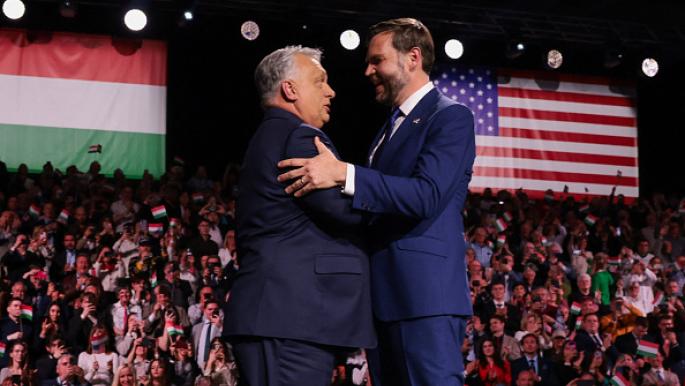
The political landscape in Hungary is witnessing a significant escalation in rhetoric as the date for the upcoming elections approaches. The United States has entered the fray by announcing its public support for Prime Minister Viktor Orbán, which has elicited mixed reactions within European circles.
This American backing comes at a sensitive time, as Orbán seeks to bolster his electoral position amid increasing criticism from both the opposition and the international community. Polls indicate that Orbán is facing substantial challenges, particularly with rising calls for political and economic reforms.
Details of the Event
In an unprecedented move, the United States has expressed its support for Orbán, highlighting the importance of stability in the Hungarian government amid the challenges the country faces. This endorsement comes at a time when fears are escalating regarding the decline of democracy in Hungary, where human rights organizations have accused the government of authoritarianism and suppressing dissent.
These developments coincide with rising tensions between Hungary and the European Union, as Brussels has criticized Orbán's policies related to immigration and human rights. Several European nations have expressed concern over the potential impact of U.S. support on the future of democracy in Hungary.
Background & Context
Historically, Hungary has undergone significant political transformations since the fall of the communist regime in the early 1990s. Orbán has managed to consolidate his power since taking office in 2010, implementing constitutional amendments that have sparked widespread controversy. As elections draw near, Orbán aims to leverage foreign support to strengthen his position among voters.
Hungary is considered one of the European countries facing major challenges in the realm of human rights and civil liberties. Orbán's policies have drawn sharp criticism from international organizations, making the country a focal point of political debate in Europe.
Impact & Consequences
The U.S. support for Orbán could exacerbate tensions between Hungary and the European Union, with Brussels potentially taking punitive measures against the Hungarian government. Additionally, this backing may encourage Orbán to continue his controversial policies, further deepening divisions within Hungarian society.
On the international stage, this situation could affect relations between the United States and Europe, as this move might be seen as an interference in the internal affairs of an EU member state. These developments may also raise concerns in other countries experiencing similar political conflicts.
Regional Significance
Although events in Hungary may seem distant from the Arab region, their impact could extend to countries facing similar political challenges. U.S. support for a leader like Orbán may embolden some regimes in the region to take similar steps to consolidate their power.
Moreover, these developments could pave the way for dialogue regarding democracy and human rights in the region, as Hungary's experience might serve as a lesson for countries striving to balance political stability with civil liberties.
In light of the escalating political tensions in Hungary, the question remains about how U.S. support will influence the future of democracy in the country. Upcoming events will determine the trajectory of Hungarian politics and its repercussions on the European and international stage.