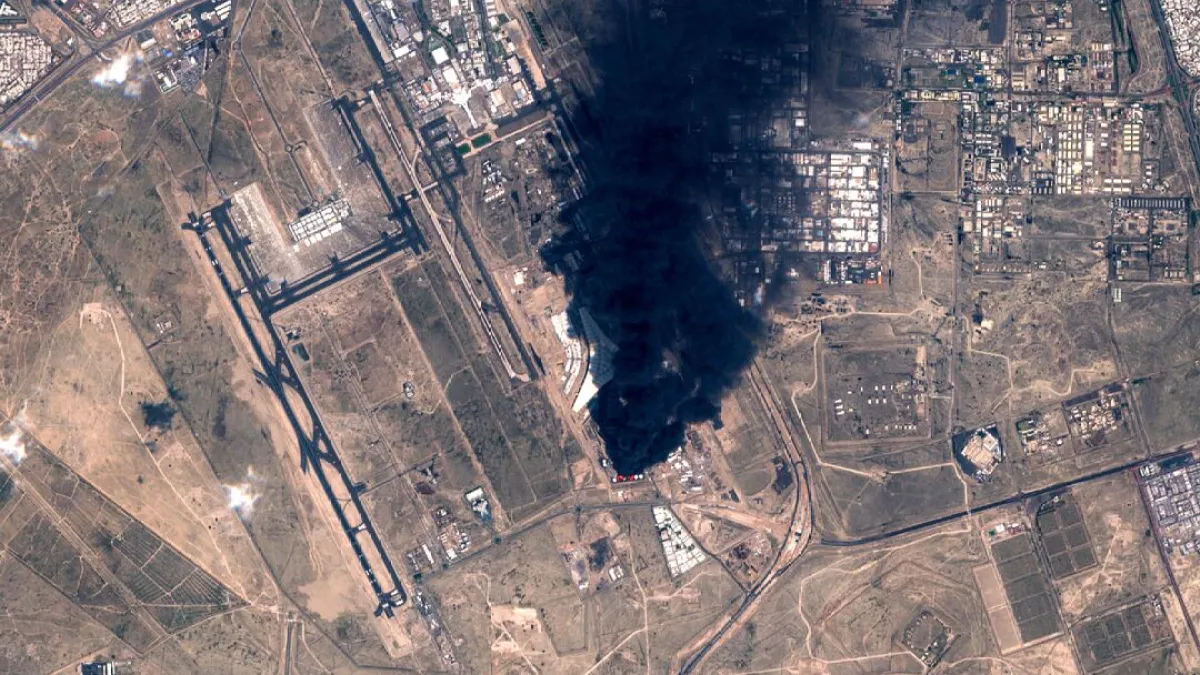
The relations between Iran and Gulf countries are undergoing a radical transformation amid escalating regional conflict, placing Gulf nations at the heart of the confrontation. Analysts are monitoring the war's effects on security and energy, emphasizing that the outcomes of the conflict will reshape regional relations.
In the program "Understanding Attempts," participants confirmed that the current war is no longer traditional; it has evolved into a multidimensional conflict, intertwining geopolitical calculations with equations of energy and security. Experts indicate that Gulf countries have become the main arena of influence, targeted by strikes that carry messages extending beyond geography.
Event Details
Othman Ay Farah opened the episode by questioning the future of Gulf-Iranian relations, pointing to the significant transformations imposed by the confrontation on regional balances. For his part, Abdel Qader Fayez, a journalist and expert on Iranian affairs, provided an analysis of the nature of the conflict, asserting that the current war has no taboos, as Iran views the confrontation as an existential battle.
Fayez explained that Iran perceives Gulf countries as an "American pain point" and is working to "distribute pain" not only economically but politically and socially, aiming to pressure the United States and the international system. He affirmed that what is happening falls within the doctrine of "asymmetric warfare" that Tehran has adopted since the 1990s.
Background & Context
Historically, relations between Iran and Gulf countries have been marked by ongoing tensions, especially following the Iranian Revolution in 1979. With the escalation of regional disputes, these relations have become more complex, as political and economic interests intertwine. Gulf countries view Iran as an existential threat, while Tehran seeks to enhance its influence in the region.
In recent years, Iranian attacks on military and civilian facilities in Gulf countries have increased, leading to heightened tensions. Experts have noted that these attacks reflect deeper strategic objectives within the Iranian military doctrine.
Impact & Consequences
Analyses predict that the outcomes of this war will lead to a reshaping of regional balances, where relations between Iran and Gulf countries will become purely political, with a decline in social and economic dimensions. Analysts indicate that the current phase compels Gulf countries to redefine the rules of engagement and transition to a controlling actor.
Salih Al-Mutairi, head of the "Madar" Center for Studies, warned that targeting civilian facilities undermines the justifications for targeting military bases, reflecting the presence of deeper strategic objectives. In this context, Al-Mutairi emphasized the need to establish clear red lines amid Iran's attempts at "blackmail."
Regional Significance
The current crisis between Iran and Gulf countries serves as a real test for regional relations, highlighting the need for a review of the Gulf's strategic relations, particularly with the United States. Experts indicate that this war could lead to a reevaluation of regional and international alliances.
Moreover, any Iranian-American agreement could come as a significant surprise, given the widening gap between the two sides. Analysts assert that the nature of the current war is "zero-sum," where victory for one side means defeat for the other. As the conflict continues, the future remains uncertain, necessitating Gulf countries to take proactive steps to protect their interests.