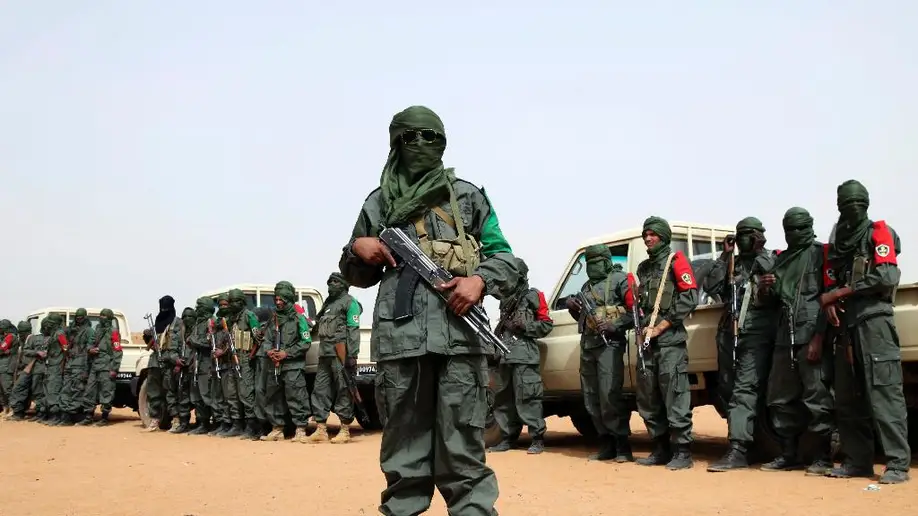
Mali is experiencing a state of security chaos after a series of coordinated attacks that occurred on Saturday, where jihadists allied with Tuareg rebels targeted vital sites belonging to the ruling military council. These attacks, considered unprecedented in their intensity, have led to heightened tensions in the country, prompting government forces to intensify their military operations in an attempt to regain control.
In the aftermath of these attacks, official sources announced the death of the defense minister, raising concerns about the government's ability to confront the increasing security challenges. Reports have indicated that the Tuareg rebels have managed to seize control of the city of Kidal, reflecting the deteriorating security situation in the region.
Details of the Attacks
The attacks that took place on Saturday followed a period of relative calm, during which jihadists and Tuareg rebels exploited the vulnerability of government forces. The assaults targeted multiple military sites, resulting in numerous casualties among government troops. At the same time, reports showed that the rebels had seized large quantities of weapons and ammunition.
Government forces continue their attempts to regain control over the areas they have lost, with military reinforcements deployed in Kidal and its surrounding regions. However, the Malian army faces significant challenges in confronting these armed groups, which possess extensive experience in warfare operations.
Background & Context
Historically, Mali has suffered from armed conflicts for years, with increasing tensions between the government and armed groups, including Tuareg rebels and jihadist factions. These conflicts have exacerbated the humanitarian situation in the country, where millions suffer from shortages of food, water, and essential resources.
In recent years, the Malian government has sought international support to address these challenges, but efforts have not yielded the desired results. Additionally, foreign military interventions, including those from France and the United Nations, have not been sufficient to halt the escalation of violence.
Impact & Consequences
There are growing concerns that these attacks could worsen the security situation in Mali, potentially negatively impacting stability in the African Sahel region. The escalation of violence may also lead to the displacement of more populations, increasing the burdens on neighboring countries hosting refugees.
Furthermore, the continuation of these conditions could hinder development efforts in the country, as the government lacks the necessary resources to meet citizens' needs. The deterioration of the security situation may also affect foreign investments, exacerbating the economic crisis.
Regional Significance
The situation in Mali is of particular importance to Arab countries, as it can affect regional security. The rise in violence in Mali could encourage extremist groups in other parts of the Arab world, threatening stability in countries like Algeria and Libya.
Moreover, the humanitarian crises resulting from conflicts in Mali may lead to refugee flows towards Arab countries, increasing the challenges these nations face in managing migration.
In conclusion, the security situation in Mali remains alarming, requiring urgent international response to ensure the country's stability and meet the needs of its citizens.