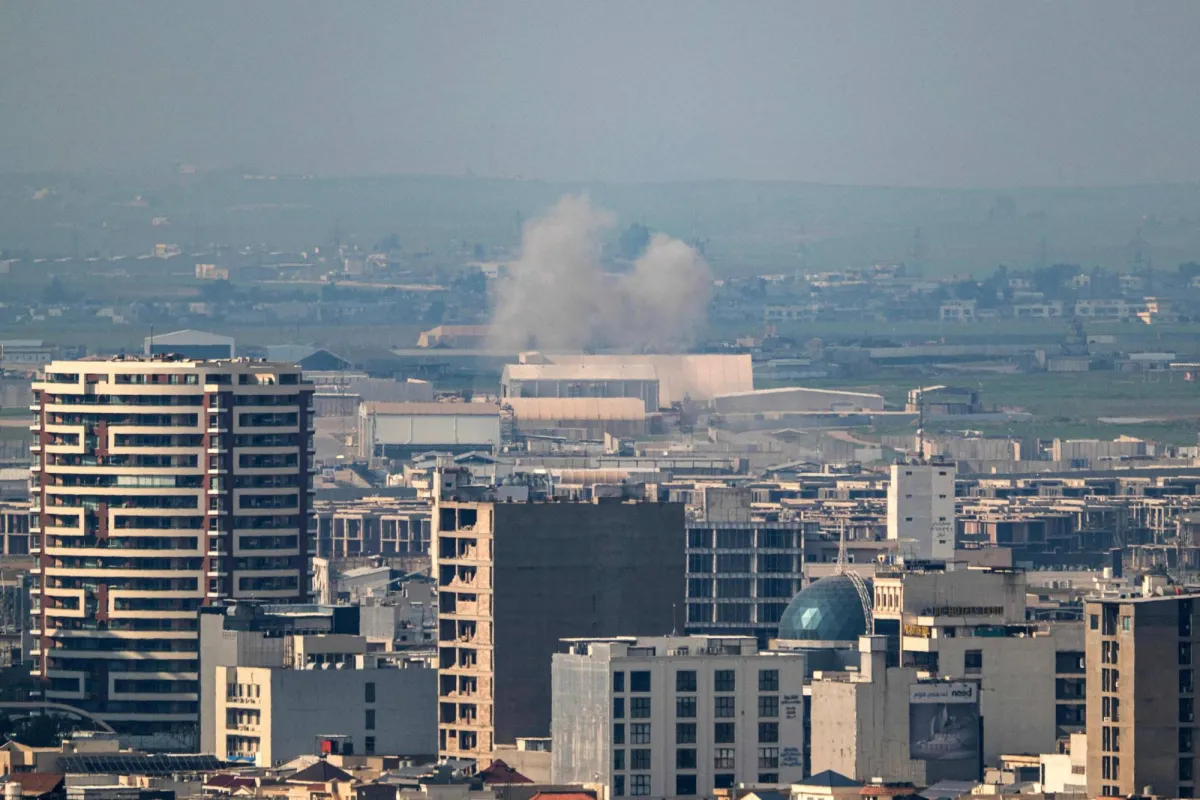
Security tensions are escalating on the Iraq-Syria border, where a series of drone attacks have been recorded in recent days, prompting both Baghdad and Washington to enhance security coordination to prevent further deterioration of the situation. The recent attacks, which targeted the Al-Tanf military base in southern Syria, come at a sensitive time as the region experiences increasing military escalation.
In detail, the Syrian official news agency (SANA) reported that units of the Syrian army managed to repel a drone attack launched from Iraqi territory, targeting the Al-Tanf base. This attack is the second of its kind within days, following the launch of at least seven rockets from the Rabia area west of Mosul towards a U.S. military base in northeastern Syria.
Details of the Incident
On February 12, Damascus announced the receipt of the Al-Tanf base and securing its surroundings in coordination with Washington, where Syrian forces were deployed at the triangular border area between Syria, Iraq, and Jordan. This step reflects an unprecedented level of field coordination between the two sides. In a related context, Iraqi sources confirmed the issuance of arrest warrants against an armed group accused of being involved in the attacks on the American base.
In parallel with these events, the Kurdistan Region of Iraq witnessed a series of drone attacks, with security sources reporting that the air defense systems of the international coalition intercepted several drones in Erbil and Duhok. Remnants of the drones fell in scattered areas without causing human casualties, except for limited material damage.
Context and Background
These developments come at a sensitive time, as the Kurdistan Region of Iraq has seen military escalation since the outbreak of the war between the United States and Israel on one side and Iran on the other, with the region facing drone and rocket attacks that resulted in the deaths of 14 people. This escalation has prompted Baghdad and Washington to form a joint coordination committee to enhance security cooperation and prevent attacks, as part of the strategic partnership between the two countries.
At the same time, this coordination has sparked angry reactions from armed factions, such as the "Hezbollah Brigades," which announced an extension of the deadline to suspend targeting the U.S. embassy in Baghdad. This escalation reflects the recent diplomatic tensions experienced in Baghdad, where the Ministry of Foreign Affairs summoned representatives from the United States and Iran to deliver them protest notes.
Implications and Effects
These developments indicate an expansion of cross-border attacks, placing the Iraqi government in a difficult position as it seeks to balance its international commitments with domestic pressures. The security escalation could exacerbate the situation in the region and increase fears that Iraqi territory could become an open arena for settling scores.
The formation of the joint coordination committee between Baghdad and Washington reflects the depth of the strategic partnership between the two countries and their ability to contain tensions despite the challenges posed by the ongoing war in the region. This cooperation could have significant implications for the future of security relations in the area.
Impact on the Arab Region
The repercussions of these events extend beyond Iraqi borders, reflecting the rising tensions in the region as a whole. Repeated attacks could destabilize neighboring countries, threatening regional security. Furthermore, the continuation of these attacks may provoke reactions from neighboring states, complicating the security situation in the region.
In conclusion, the security situation on the Iraq-Syria border appears to be heading towards further complexity, necessitating intensive international and regional efforts to ensure stability and prevent worsening conditions.