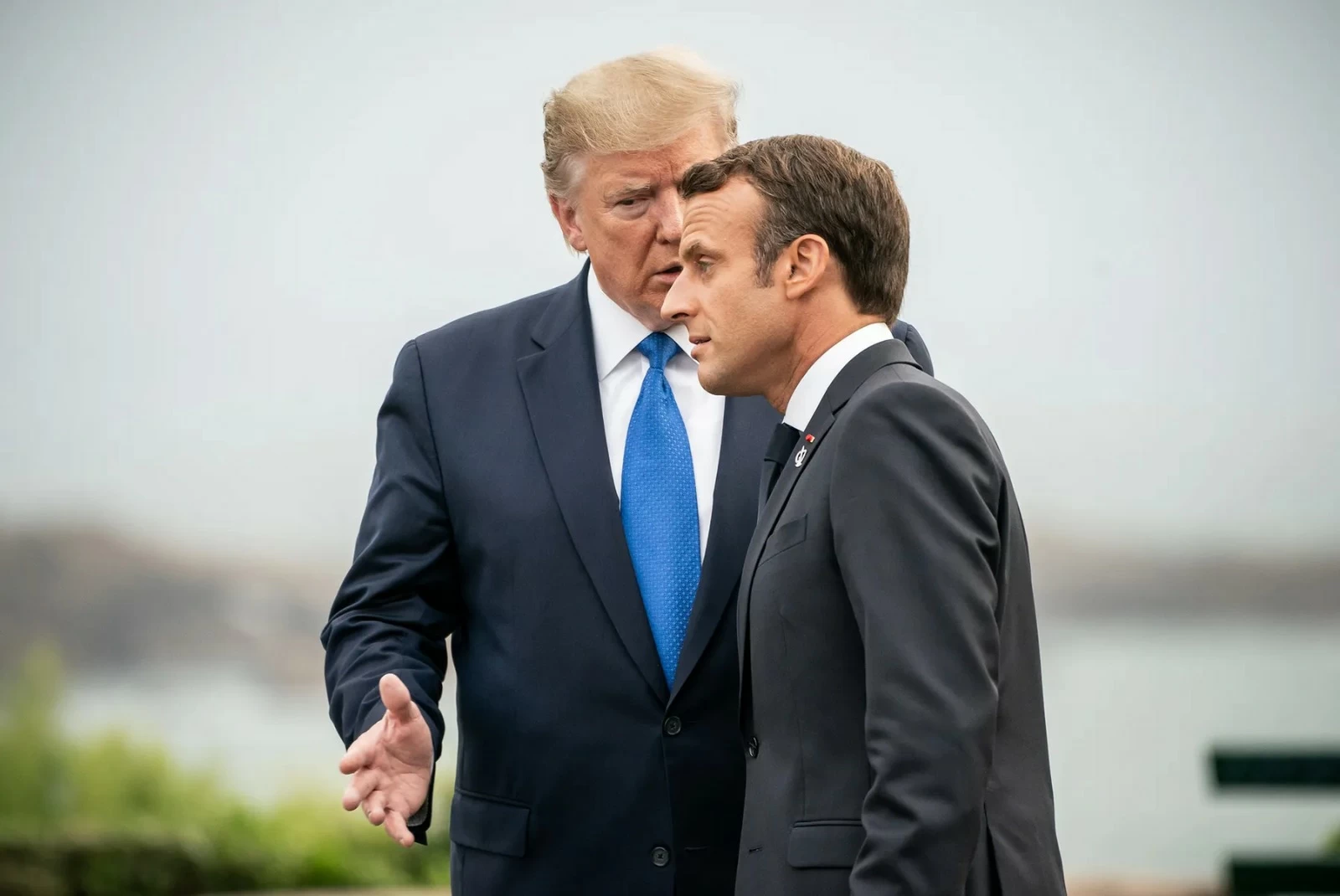
Recent statements by French President Emmanuel Macron against U.S. President Donald Trump regarding the Iran war have ignited new tensions between Europe and the United States. This comes after weeks of ongoing criticism from Trump directed at European leaders, prompting Macron to respond strongly, reflecting a growing sense of challenge within Europe.
During his visit to South Korea, Macron harshly criticized Trump, accusing him of adopting an unserious approach to the war and launching unhelpful attacks on NATO. Macron stated, "When we are serious, we do not say the opposite of what we said the previous day," indicating that the war affects men and women on the battlefield and civilians who are being killed.
Details of the Incident
According to the New York Times, this explicit display of anger from Macron is notable, especially coming from a leader who has prided himself on his ability to handle Trump with diplomacy. However, these remarks reflect escalating tensions across the Atlantic, as Europe has previously attempted to reconcile its deep reservations about the military campaign with a desire not to provoke Trump.
Tensions are rising regarding the use of European airspace and military bases, as several countries have refused to allow American or Israeli aircraft to pass through or be used for offensive missions. Even traditional U.S. allies, such as Britain, are publicly discussing the necessity for Europe to provide its own security without relying on America.
Context and Background
In a related context, European leaders rejected Trump’s call for military control over the Strait of Hormuz, which Iran has effectively closed. Macron emphasized that controlling the strait would take a long time and expose passing ships to Iranian attacks, rendering this option unrealistic.
Despite the insults directed at Europe by Trump, European leaders have tried to avoid turning the matter personal. However, the rift between Macron and Trump appeared more bitter due to comments related to Macron’s wife, prompting an angry response from Macron to Trump’s derogatory remarks.
Implications and Effects
Concerns are growing among European officials regarding the cumulative impact of Trump’s repeated criticisms of NATO, with the spokesperson for the German Chancellor noting that this is not the first time Trump has done so, raising questions about the future of the alliance. These tensions have led to a deterioration in relations between Macron and Trump, which had begun with a historic handshake in 2017.
It is worth noting that the relationship between Macron and Trump has significantly deteriorated following the Israeli strike on Iran in 2025, where Trump accused Macron of "always being wrong." Nevertheless, France's refusal to engage more deeply in the war has brought their relationship to a new low.
Impact on the Arab Region
These developments indicate a new phase of tension in the relations between the United States and Europe, as European countries have become bolder in expressing their rejection of American policies. This distancing could reshape international alliances, especially if the war in Iran continues and its political and economic repercussions escalate globally.
Ultimately, these tensions may impact security and stability in the Arab region, where fears are rising regarding the escalation of conflicts and their effects on the global economy.