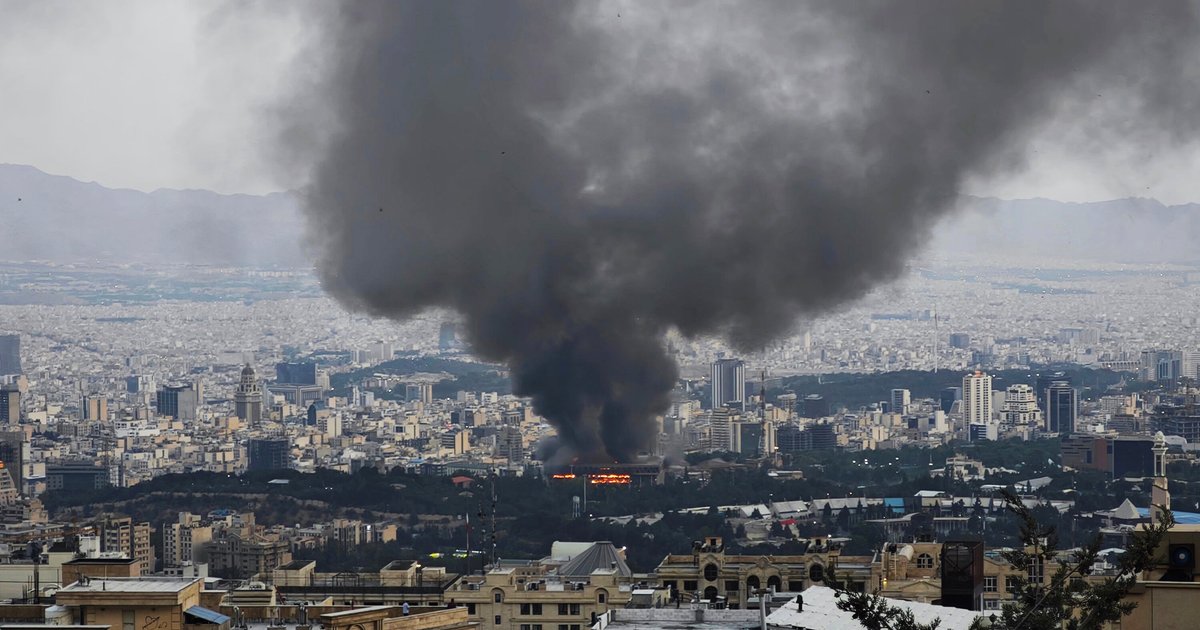
The Trump administration faces increasing challenges in managing military escalation in Iran, raising fears of a comprehensive war in the region. This comes amid rising tensions between Washington and Tehran, prompting questions about future US strategy.
Recently, the United States has bolstered its military presence in the Gulf region, a move seen by some as a show of force, while others view it as an unjustified escalation that could lead to catastrophic outcomes. Many observers have pointed out that these steps could provoke military responses from Iran, which has repeatedly asserted that it will not remain passive in the face of any aggression.
Details of the Event
Reports indicate that the recent escalation between the United States and Iran began after Trump withdrew from the Iranian nuclear agreement in 2018, which aimed to reduce nuclear tensions in the region. Since then, Washington has imposed a series of economic sanctions on Tehran, exacerbating the economic and social conditions in Iran.
Recent events, including attacks on oil tankers in the Gulf, have heightened tensions, with the United States accusing Iran of being behind these attacks, a claim that Tehran has vehemently denied. In this context, the Trump administration seeks to build alliances with Gulf countries to counter Iran's growing influence.
Background & Context
Historically, relations between the United States and Iran have been tense since the Islamic Revolution in 1979. These relations have witnessed numerous crises, including the hostage-taking of American diplomats in Tehran, the Iran-Iraq War, and the Iranian nuclear program. However, the current escalation represents one of the most dangerous phases in these relations, with increasing fears of a comprehensive war that could affect the stability of the entire region.
In recent years, the Trump administration has attempted to pursue a policy of maximum pressure on Iran, leading to worsening conditions. This approach has drawn widespread criticism from some European allies, who believe that dialogue is the optimal solution to ease tensions.
Impact & Consequences
If the situation continues to escalate, it could have dire consequences for regional and international security. Any direct military confrontation between the United States and Iran could destabilize Gulf countries and increase oil prices, impacting the global economy.
Moreover, any escalation in the conflict could lead to a flow of refugees from the region to neighboring countries, increasing pressures on governments in those countries. There are also concerns that the conflict could exacerbate sectarian disputes in the region, further complicating the situation.
Regional Significance
The Arab countries neighboring Iran are among the most affected by any potential escalation. Countries like Iraq, Syria, and Lebanon may find themselves at the heart of the conflict, potentially worsening the humanitarian and security conditions in these nations. There are also fears that any war could increase Iranian influence in the region, threatening the interests of Arab countries.
In conclusion, the most important question remains: how will the Trump administration handle this escalating crisis? Amid internal and external challenges, the administration may find itself in a real predicament, requiring it to make difficult decisions that could impact the future of US-Iran relations.