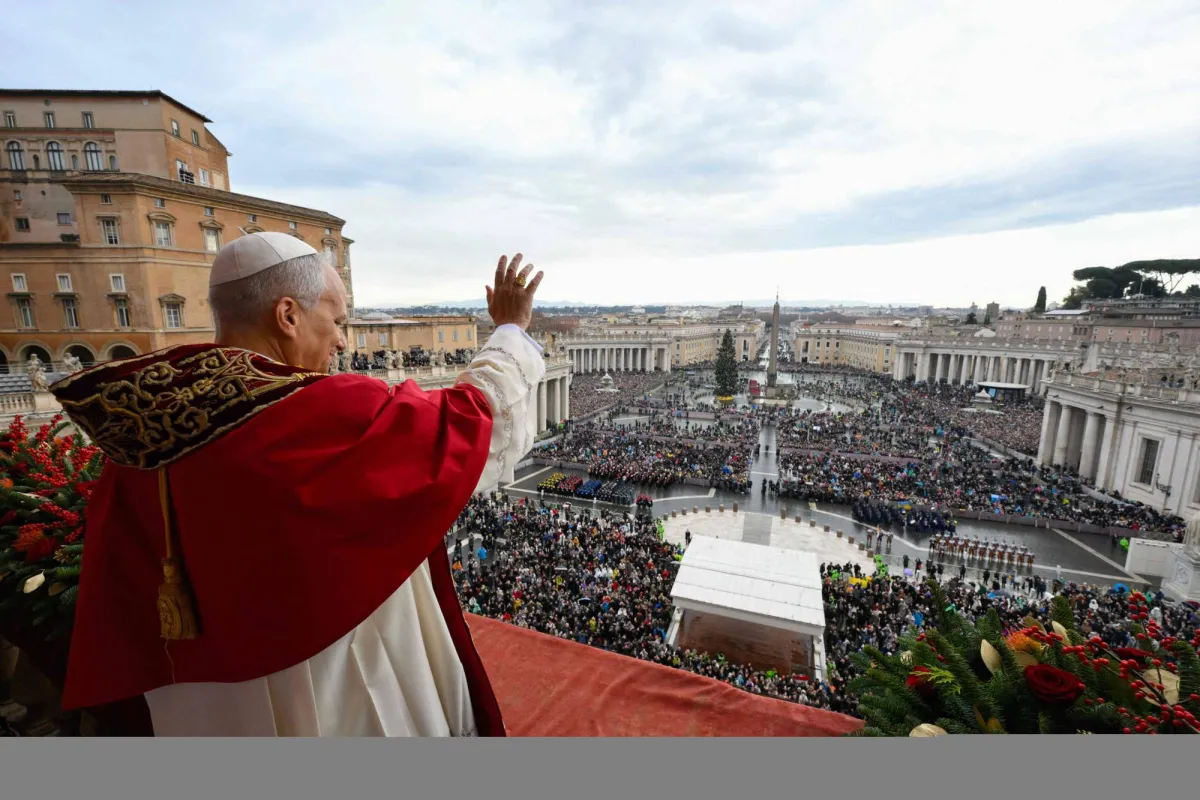
Tensions are escalating between the Vatican and the White House following recent statements made by Pope Leo XIV, who strongly criticized the idea of "preemptive war" and called for efforts towards peace in the Middle East, urging reliance on international institutions.
Pope Leo XIV, regarded as the first American pope in the history of the Catholic Church, took an unprecedented step by reinstating the tradition of carrying the cross during the Stations of the Cross on Good Friday, a tradition that has not been practiced for 24 years. The Pope explained that this return aims to emphasize Christ's suffering and the Church's participation in the pains of the people.
Details of the Event
The Pope listened to a sermon prepared by Brother Francesco Patton, who served as the custodian of the Holy Land, where the sermon addressed issues of authority and its use. Patton emphasized that every leader must be accountable to God for how they exercise power, whether in waging wars or stopping them, or in inciting violence or promoting peace.
At the end of the sermon, Patton called for remembering the victims of wars and massacres, indicating that these individuals are part of the Church's prayers. These positions come at a time when relations between the Vatican and the U.S. administration have been strained since President Donald Trump took office, with these relations resembling a form of "remote confrontation."
Background & Context
The roots of the tension between the Vatican and the U.S. administration trace back to the positions of the late Pope Francis, where there were disagreements on various issues, including immigration and the environment. With the arrival of Leo XIV, these tensions have intensified, especially following the recent sermon, which was seen as a direct criticism of the prayers offered by several evangelical missionaries for Trump.
In that sermon, the Pope pointed out that humanity suffers from violence and brutality, and that Christ came to purify us from idols and sins. Observers considered these statements as a call for humility and serving others instead of seeking power and authority.
Impact & Consequences
Many observers expect that these statements will lead to further escalation in relations between the Vatican and the U.S. administration, especially given the increasing influence of extremist evangelical circles in the current government. The Vatican's Secretary of State, Cardinal Pietro Parolin, warned of the dangers of the collapse of international law if countries are allowed to wage preemptive wars based on their own criteria.
These statements come at a sensitive time, as the Vatican seeks to enhance its role as a mediator for peace in international conflicts, while the U.S. administration faces internal and external challenges related to foreign policy.
Regional Significance
The Arab region is significantly affected by these tensions, as the Vatican plays an important role in promoting interfaith dialogue. The Pope's call for peace in the Middle East may contribute to easing tensions between Arab states and Israel, especially amid ongoing crises in the region.
In conclusion, the question remains open regarding how relations between the Vatican and the White House will evolve, and whether these statements will lead to changes in U.S. policy towards the Middle East.