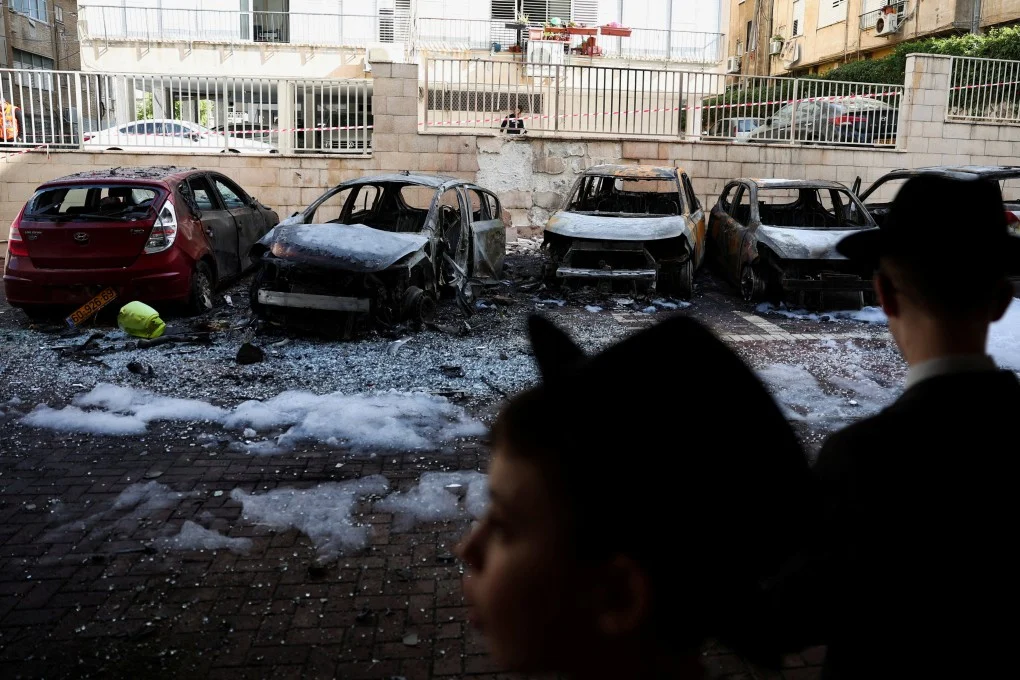
Tensions persist in the Middle East as the United States and Israel have launched a series of attacks on Iran, resulting in the deaths of over 25 individuals. In response, Iran has fired missiles at Israel and some of its Arab neighbors in the Gulf, intensifying the ongoing conflict.
This escalation occurs as the deadline set by President Donald Trump for Iran to reopen the Strait of Hormuz approaches, a vital corridor for global oil trade. Amid these tense circumstances, a new proposal for a 45-day ceasefire has been put forward, with mediators seeking to de-escalate the volatile situation.
Details of the Situation
The Iranian capital, Tehran, has witnessed violent explosions, with the sounds of warplanes flying at low altitudes for extended periods. Clouds of black smoke have risen near Azadi Square following one of the airstrikes. This military escalation comes at a sensitive time, raising fears that the conflict could escalate to unprecedented levels.
Reports of damage to civilian facilities are emerging, with local sources indicating that the attacks targeted residential areas, resulting in injuries among civilians. This escalation reflects the growing instability in the region and raises questions about the future of relations between Iran and the United States.
Background & Context
Historically, relations between Iran and the United States have been marked by ongoing tensions since the Islamic Revolution in 1979. American economic sanctions have exacerbated conditions in Iran, prompting the country to enhance its military capabilities. In recent years, the intensity of conflict in the region has increased, particularly with the emergence of extremist organizations and internal conflicts in neighboring countries.
The Arabian Gulf is considered one of the most sensitive regions in the world, through which approximately 20% of the world's oil passes. Therefore, any military escalation in this area could significantly impact the global economy and lead to rising oil prices.
Impact & Consequences
The new ceasefire proposal is seen as an important step, but it comes in an atmosphere charged with hostility. If accepted, it could provide an opportunity for de-escalation; however, if attacks continue, it may lead to greater escalation and increase the likelihood of a full-scale war in the region.
On the other hand, the continuation of the conflict may affect relations between Arab states and Iran, as positions among Arab nations towards Tehran vary. Some countries seek to enhance cooperation with Iran, while others prefer to adopt a hostile stance.
Regional Significance
The ongoing tensions between these two regional powers highlight the fragility of security and stability in the region. The potential for conflict not only threatens the immediate area but also has broader implications for international relations and global economic stability.
In conclusion, the situation remains precarious, and the international community must closely monitor developments to prevent further escalation and seek diplomatic solutions.