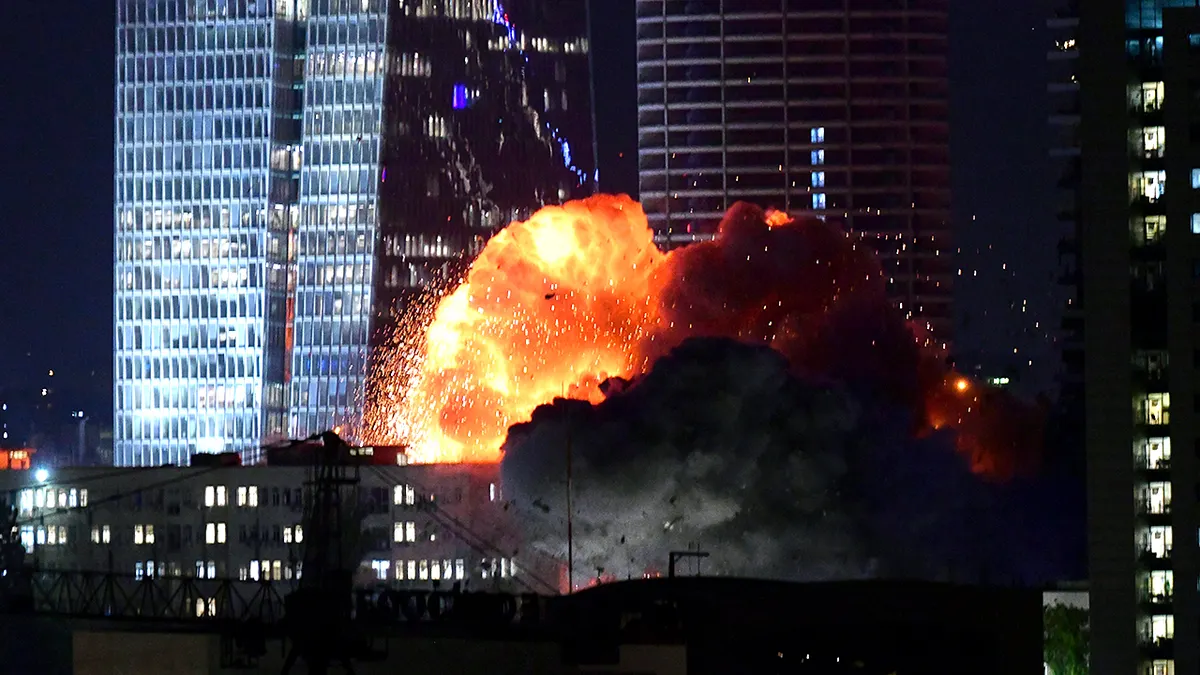
In a serious escalation of tensions in the Gulf region, the United States and Israel conducted military strikes on Iran on February 28, 2026, leading to the deaths of thousands and the destruction of numerous vital facilities. These attacks resulted in the death of Ayatollah Ali Khamenei, Iran's Supreme Leader, further heightening tensions in the area.
In response to these assaults, Iran launched attacks on US military bases in Middle Eastern countries and imposed strict restrictions on navigation in the Strait of Hormuz, which is considered one of the most crucial waterways in the world for transporting oil and natural gas.
Details of the Incident
The military escalation effectively closed the Strait of Hormuz, resulting in approximately 1,900 commercial vessels being detained in the area. Iran halted the movement of ships linked to the US and Israel, forcing many vessels to raise their sails in open waters while waiting for permission to pass.
At the same time, Tehran confirmed that it would only allow ships coming from friendly nations, such as Russia, China, India, Pakistan, and Iraq, to transit through the strait. Iranian Foreign Minister Abbas Araghchi stated that the country would not permit the passage of vessels it considers hostile.
Background & Context
Historically, the Strait of Hormuz has been a focal point in regional conflicts, with about 20% of the world's total oil exports passing through it. The area has witnessed recurring tensions between Iran and Western nations, especially following the US withdrawal from the Iranian nuclear deal in 2018.
These current events are part of a series of conflicts rooted in geopolitical struggles in the Middle East, where Iran seeks to enhance its influence in the region while the United States and its allies aim to undermine that influence.
Impact & Consequences
These developments significantly affect global oil markets, with oil prices rising sharply due to fears of supply disruptions. Additionally, the closure of the Strait of Hormuz could lead to increased shipping and insurance costs, negatively impacting the global economy.
Furthermore, the escalation of military tensions may exacerbate humanitarian crises in the region, where many countries are suffering from the effects of ongoing conflicts. These events could also increase divisions among Arab nations, as their positions towards Iran and the United States vary.
Regional Significance
Arab countries neighboring Iran, such as Saudi Arabia and the UAE, are among the most affected by these events. These nations are closely monitoring the situation's developments and may take measures to bolster their national security amid rising tensions.
Moreover, these events could impact relations between Arab states and Iran, with some countries potentially seeking to enhance cooperation with the United States in facing Iranian threats, while others may strive to maintain dialogue channels with Tehran.