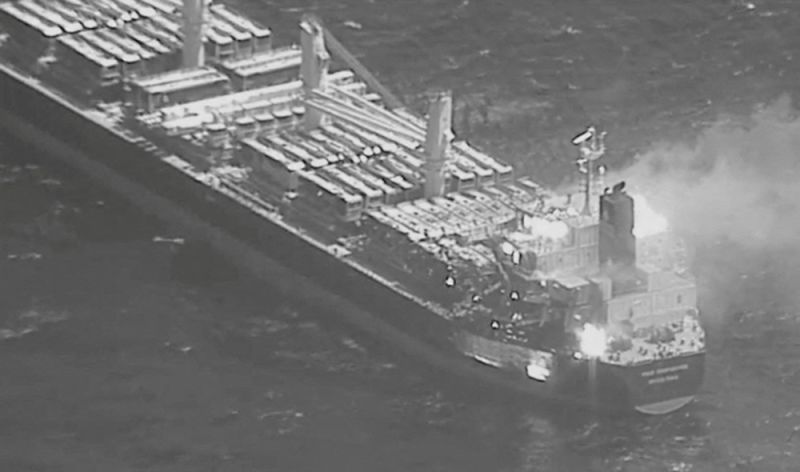
Informed sources have reported that the missile attack carried out by the Houthis in recent days represents a serious escalation in the regional conflict, threatening the stability of vital maritime routes. This attack occurs at a time when tensions between Iran and the United States are escalating, placing the region at new risks.
The Houthi attack, which took place in the Red Sea, targeted commercial vessels, raising concerns about the safety of navigation in one of the world's most important maritime corridors. This escalation not only threatens maritime security but also has implications for the global economy, which heavily relies on these routes.
Details of the Incident
The Houthi attack followed a series of threats issued by Houthi leaders, who confirmed their intention to continue targeting ships crossing the Red Sea. Several countries condemned this attack, stating that it constitutes a blatant violation of international laws and complicates the situation in the region.
Reports indicate that the Houthis have received increasing military support from Iran, reflecting the growing cooperation between the two parties amid escalating regional tensions. This cooperation could lead to further escalation in the region, threatening both regional and international security.
Background & Context
Historically, the region has witnessed an escalation in armed conflicts, with Iran playing a pivotal role in supporting armed groups such as the Houthis. Since the onset of the civil war in Yemen, Iran has sought to enhance its influence in the region by supporting the Houthis, leading to heightened tensions with other Arab countries.
In recent years, the Red Sea has become a strategic area, with a significant portion of global trade passing through it. Any threat to these maritime corridors could have negative repercussions on the global economy, making it essential to take urgent measures to protect these routes.
Impact & Consequences
The recent Houthi escalation could lead to increased tensions between Iran and Western countries, particularly the United States. The U.S. may take military or diplomatic steps in response to this escalation, potentially intensifying the conflict in the region.
This attack could also affect global oil prices, as any threat to navigation in the Red Sea could lead to price increases due to concerns over supply disruptions. This situation could negatively impact the global economy, which is still recovering from the effects of the COVID-19 pandemic.
Regional Significance
For Arab countries, the Houthi escalation represents a direct threat to national security. Gulf countries, in particular, may feel increasing concern over this escalation, as any intensification in Yemen could have security and economic repercussions in the region.
Moreover, this attack could strengthen the Houthis' position within Yemen, potentially exacerbating the conflict in the country and increasing the suffering of civilians. It is crucial for Arab nations to unite in facing this challenge and ensuring regional stability.
In conclusion, the recent Houthi attack represents a serious escalation in the regional conflict, threatening maritime security and the global economy. It is essential for the concerned countries to take urgent steps to protect maritime navigation and ensure regional stability.