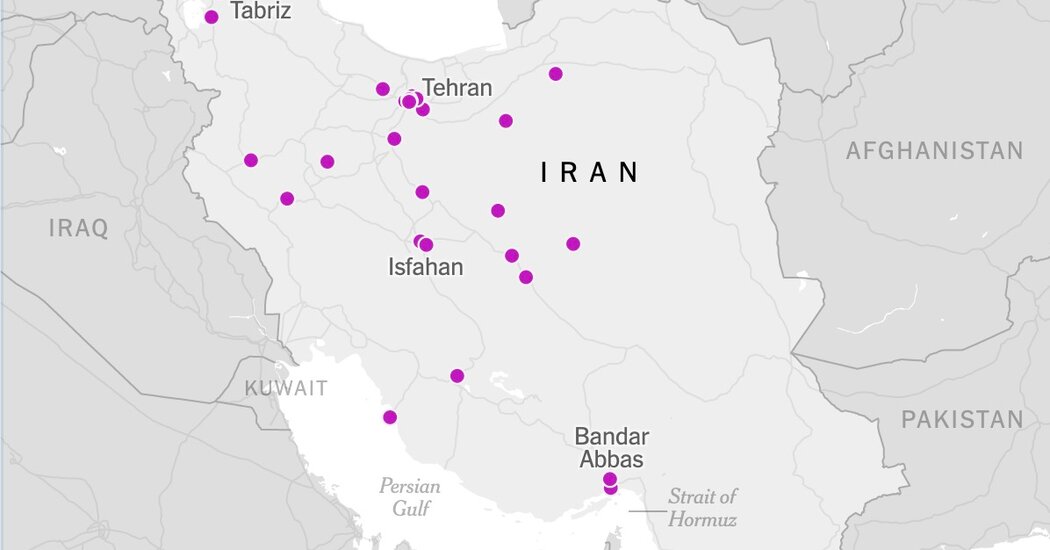
The tense situation in Iran persists as the Iranian government refuses a ceasefire proposal amidst increasing military escalation. While international mediation efforts continue, military forces are targeting Iranian nuclear facilities, raising serious concerns about a potential nuclear disaster.
In this context, recent attacks have targeted the Bushehr nuclear power plant, leading to heightened warnings about the possibility of a nuclear leak. These developments come at a sensitive time when the international community is seeking a peaceful resolution to the conflict, but military escalation seems to hinder these efforts.
Details of the Incident
Reports indicate that the attacks on Iranian nuclear facilities have caused significant damage, increasing fears regarding the safety of the country's nuclear installations. Iranian sources have confirmed that the attacks directly target Iran's ability to develop its nuclear program, which is considered a threat to regional and international security.
In response, U.S. President Donald Trump announced his readiness to launch new strikes against Iranian power stations, escalating tensions between the United States and Iran. These statements come at a critical time as Iran attempts to strengthen its position in negotiations with major powers regarding its nuclear program.
Background & Context
Historically, relations between Iran and the United States have seen increasing tensions since Washington's withdrawal from the nuclear agreement in 2018. Since then, the United States has imposed strict economic sanctions on Iran, negatively impacting the Iranian economy and exacerbating internal conditions.
Iran seeks to enhance its nuclear capabilities as a means of leverage in negotiations, while Western powers view this program as a threat to regional security. These dynamics have led to a continuous escalation of the conflict, making it difficult to reach a peaceful solution.
Impact & Consequences
The consequences of military escalation in Iran extend beyond its borders, potentially affecting the stability of the entire region. Any further escalation could lead to the outbreak of a large-scale military conflict, threatening regional security and increasing civilian suffering.
Moreover, fears of a nuclear disaster resulting from attacks on nuclear facilities could provoke strong international reactions, potentially disrupting diplomatic efforts. The continuation of this situation may place the region in a prolonged state of instability.
Regional Significance
Neighboring Arab countries are on high alert due to the military escalation. Any escalation in the U.S.-Iran conflict could directly impact security in the Gulf, threatening the interests of Arab nations and increasing sectarian tensions in the region.
Furthermore, the ongoing tense situation may lead to a flow of refugees from Iran to neighboring countries, increasing pressure on these nations. The current situation requires Arab countries to take proactive measures to ensure their stability and security.
In conclusion, the situation in Iran remains a focal point of global attention, with growing concerns about the implications of military escalation on regional and international security. The need for a peaceful resolution remains urgent, but current conditions make achieving that difficult.