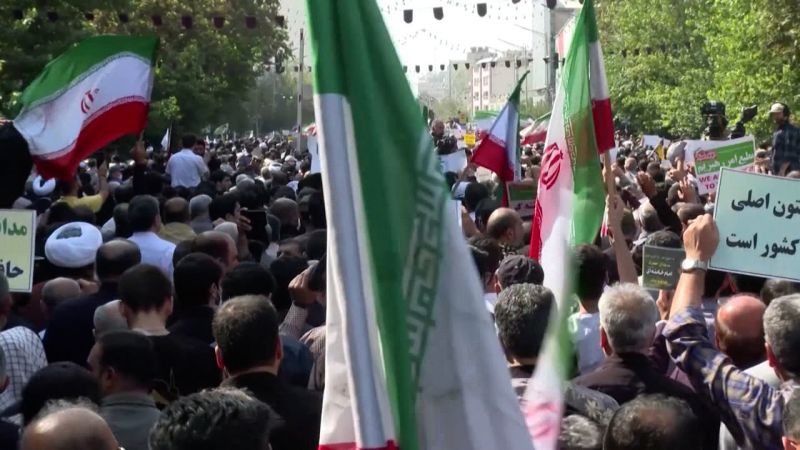
Iran is currently witnessing a notable escalation in internal tensions, raising fears of an outbreak of a comprehensive war that could affect the stability of the entire region. Public protests against the government, which began due to economic and social crises, are increasing daily, putting the Iranian regime in a precarious position.
These events coincide with a rise in the severity of repression by the authorities, as excessive force has been used against demonstrators, resulting in numerous casualties. These tense conditions could lead to an internal conflict that may drag the country into a civil war, which is alarming the international community.
Details of the Events
In recent weeks, major Iranian cities such as Tehran, Isfahan, and Shiraz have witnessed massive demonstrations demanding political and economic reforms. Protesters express their dissatisfaction with rampant corruption and the government's mismanagement of crises, including the water crisis and unemployment. Reports have shown that many young Iranians are participating in these protests, reflecting their desire for change.
In response, the Iranian government has resorted to repressive measures, arresting many activists and journalists, in addition to cutting off internet access in some areas to prevent the organization of protests. These harsh measures may exacerbate the situation and increase public anger.
Background & Context
Historically, Iran has witnessed numerous popular protests, but the current situation is considered one of the most severe. Part of the reasons for the protests stems from economic crises exacerbated by international sanctions imposed on the country, along with the impacts of the COVID-19 pandemic. These factors have led to a decline in living standards and an increase in poverty rates.
There are also political factors playing a role in fueling the protests, as many Iranians feel that the government does not represent their interests, increasing their frustration. In recent years, Iran has also seen a rise in regional conflicts, complicating internal situations further.
Impact & Consequences
If the situation continues to deteriorate, Iran may face a civil war that could affect the stability of the entire region. This war could lead to the disintegration of the country and an increase in sectarian conflicts, threatening regional security. Additionally, the repercussions of this war may include a flow of refugees to neighboring countries, increasing the pressures on those nations.
Moreover, regional and international powers may exploit the situation to their advantage, further complicating matters. The conflict in Iran could lead to external interventions, intensifying tensions in the region.
Regional Significance
Iran is a key player in regional politics, and any internal disturbances could directly affect neighboring Arab countries. Conflicts in Iran could lead to increased tensions in Iraq, Syria, and Lebanon, where groups are linked to the Iranian regime.
Arab countries may also face new challenges in dealing with the influx of Iranian refugees, increasing economic and social burdens. In this context, Arab nations must be prepared to confront any repercussions that may arise from the tense situation in Iran.
In conclusion, the situation in Iran remains under observation, as any escalation could lead to catastrophic results not only for the Iranian people but for the entire region.