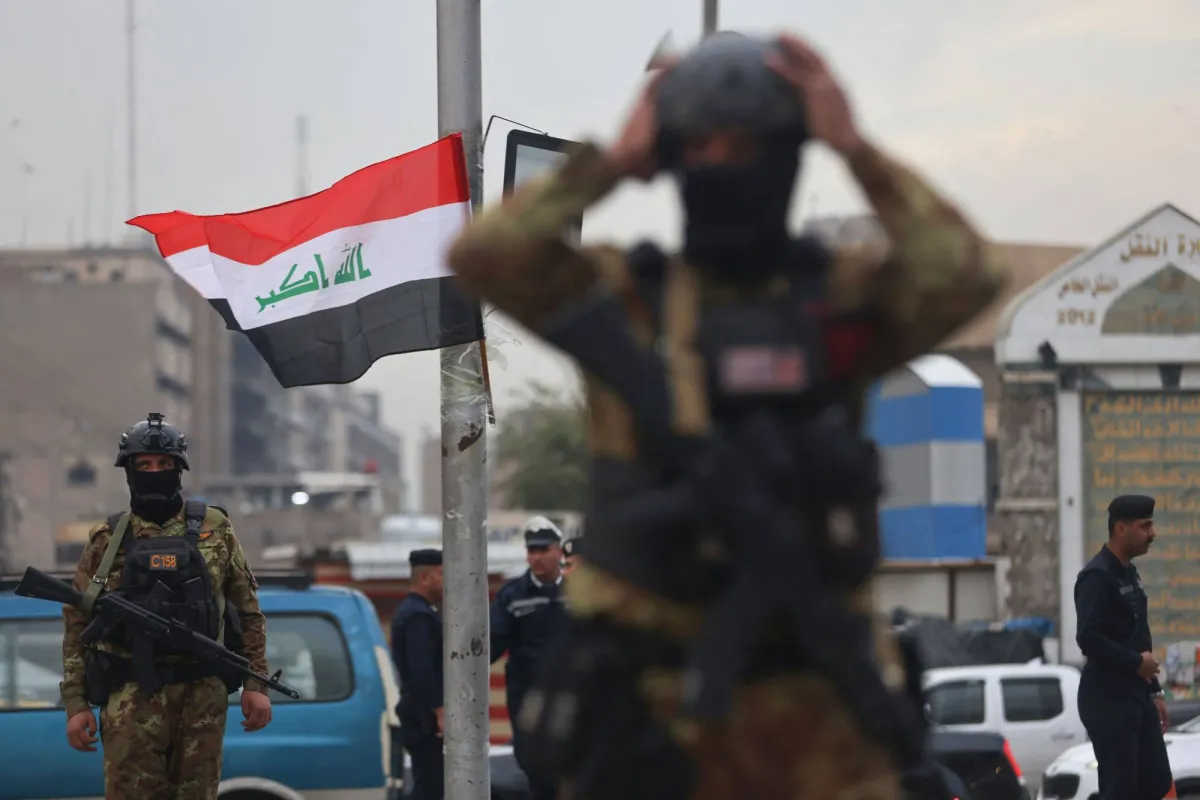
The Iraqi government sought to contain the fallout from escalating regional tensions on Friday, after the United States issued sharp security warnings regarding the possibility of attacks on its interests within Iraq. Prime Minister Mohammed Shia' al-Sudani stressed the necessity of pursuing those involved in attacks and incidents of foreign kidnappings, affirming that law enforcement will be carried out "without red lines."
This move comes at a time when the repercussions of the ongoing confrontation between the United States and Israel on one side, and Iran on the other, are expanding on the Iraqi scene. These repercussions are manifested through missile and drone attacks, as well as humanitarian and economic consequences, including the extension of the closure of Iraqi airspace for an additional week.
Details of the Incident
In response to a statement issued by the US embassy in Baghdad, which urged American citizens to leave the country immediately, the Iraqi Foreign Ministry confirmed that Iraq "is not a party to the conflict and does not wish to be part of it." The ministry added that it is committed to a policy of "staying away from" the conflict.
The US embassy warned of the possibility that "Iran-aligned militias" might carry out attacks in the near future, reflecting the sensitivity of the regional phase and concerns about the confrontation spilling over into Iraq. In this context, the Iraqi Foreign Ministry confirmed that what is happening represents "individual attempts" that do not reflect state policy, indicating that some parties or individuals may take unilateral actions "contrary to state directives."
Background & Context
The Iraqi government faces increasing pressures due to its geographical position and the sensitivity of its relationships with both Washington and Tehran. In this framework, al-Sudani chaired a security meeting at the headquarters of the Ministry of Interior's intelligence agency, attended by high-ranking security leaders, to follow up on challenges related to targeting diplomatic missions and vital installations, as well as the issue of kidnapping foreign nationals.
During the meeting, the Prime Minister emphasized the "necessity of taking the utmost measures" to pursue those involved, asserting that "law enforcement will not face any red lines," regardless of the responsible party. He also called for enhancing intelligence efforts and raising readiness levels to confront threats, especially with the intensification of conflict in the region.
Impact & Consequences
The fate of Shirley Kittleson, the kidnapped American journalist, remains shrouded in uncertainty, amid the absence of any official announcement from a responsible party regarding the incident. This situation highlights the challenges faced by Iraqi authorities in maintaining security and preventing the recurrence of attacks on foreign interests.
Observers believe that Baghdad's characterization of these acts as "individual" aims to avoid placing direct responsibility on the state and to maintain a delicate balance in its foreign relations, especially with the United States and Iran. Concurrently, a security source reported that an airstrike targeted a gravel factory in the al-Rutba district in western Anbar province, where "unknown" warplanes carried out the attack in the early hours of Friday, without any reported casualties or significant material damage.
Regional Significance
On the humanitarian front, a report from the International Organization for Migration indicated that regional tensions have cast a shadow over displacement movements within Iraq. The report noted the displacement of 90 families within Sulaimaniyah province as of March 24, due to fears of drone strikes.
Baghdad and Erbil also recorded limited cases of displacement among residents who left areas affected by missiles or airstrikes. As part of precautionary measures, the Iraqi Civil Aviation Authority decided to extend the suspension of air traffic in the country's skies for an additional 7 days, reflecting the extent of fears regarding the escalation of military operations.
This intertwined scene places the Iraqi government before a highly challenging test, which consists of preventing the country from turning into an open battlefield while maintaining a balance in its relations with regional and international powers.