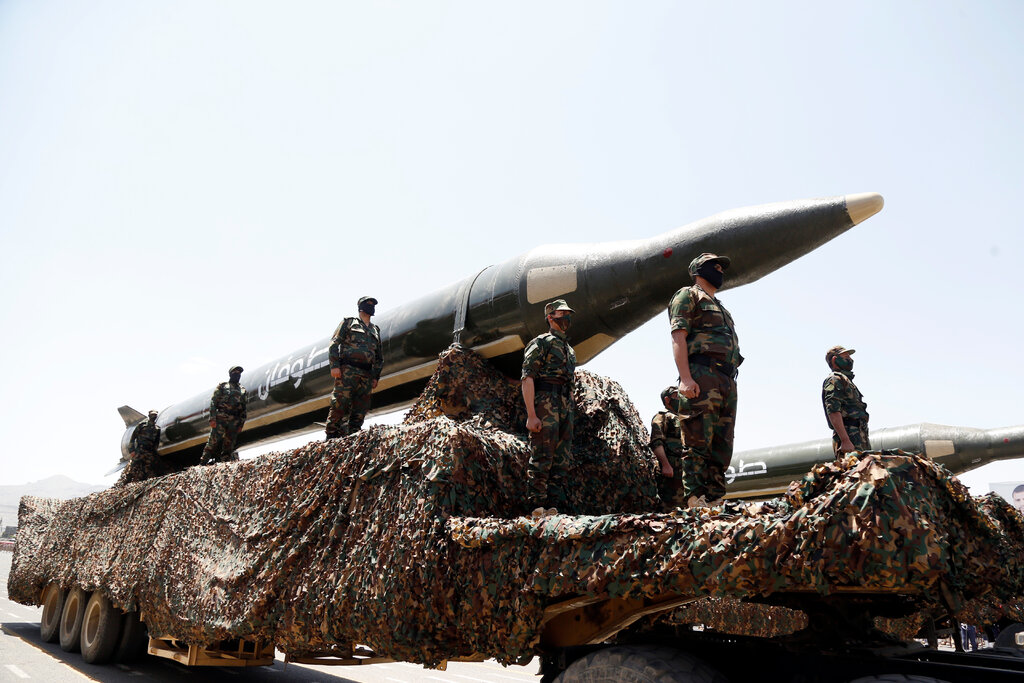
The involvement of the Houthis in the ongoing conflict in the Middle East to support Iran against the U.S.-Israeli military campaign threatens to exacerbate the global maritime shipping crisis. The risks are particularly pronounced in the Bab el-Mandeb Strait, which is considered a vital strategic passage, raising concerns about its impact on global trade.
These developments come at a time when global markets are suffering from a worsening energy crisis due to the closure of the Strait of Hormuz, one of the most important maritime routes for oil exports. This closure has led to rising oil prices and increased pressure on the global economy, further amplifying the importance of other maritime passages such as Bab el-Mandeb.
Details of the Situation
Reports indicate that the Houthis have intensified their military activity in the region, threatening the safety of commercial vessels passing through the Bab el-Mandeb Strait. Experts have noted that this escalation is part of the Houthis' support for Iran in the face of U.S. and Israeli military pressures, complicating the security situation in the area.
Maritime shipping through the Bab el-Mandeb Strait is essential for transporting oil, gas, and essential goods to global markets, and any threat to this passage could lead to significant disruptions in international trade. Shipping companies have warned that any escalation in hostilities could negatively impact shipping costs and delivery times.
Background & Context
Historically, the region has experienced ongoing tensions due to political and military conflicts, with the Houthis being part of the broader struggle between Iran and its allies on one side, and the United States and its allies on the other. These conflicts have contributed to increased tensions in vital maritime corridors, affecting global trade flows.
In recent years, the region has witnessed an escalation in maritime attacks, with armed groups targeting commercial vessels in an attempt to pressure major powers. These incidents have demonstrated how regional conflicts can impact the global economy, necessitating greater international attention to protect maritime routes.
Impact & Consequences
These developments are likely to lead to rising oil prices in global markets, as many countries rely on imported oil. Additionally, any threat to the Bab el-Mandeb Strait could result in increased shipping costs, negatively affecting local prices and increasing inflationary pressures.
Moreover, these crises may exacerbate humanitarian conditions in countries affected by the conflict, as many nations face shortages of essential resources due to trade disruptions. Therefore, any escalation in the conflict could have widespread repercussions on food security and energy in the region.
Regional Significance
Arab countries are directly affected by these crises, with many Gulf nations being among the largest oil importers. Consequently, any rise in prices or disruptions in shipping could have negative effects on their economies.
Furthermore, the deteriorating security situation in the region may impact foreign investments, increasing the economic challenges faced by Arab nations. Thus, the need for diplomatic solutions to resolve conflicts in the region has become more urgent than ever.
In conclusion, recent events highlight the importance of protecting vital maritime corridors in the region, as any escalation in the conflict could lead to widespread repercussions for global trade and regional security.