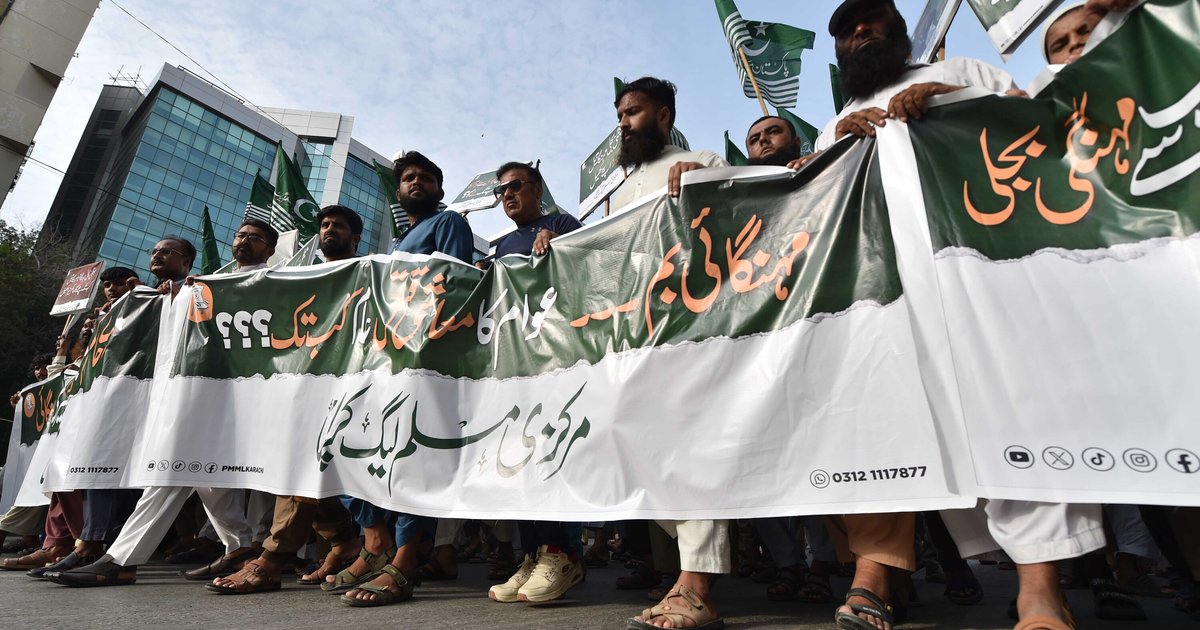
Pakistan is currently engulfed in a rising political crisis, with several cities witnessing large-scale protests against the current government. These protests, which began several weeks ago, reflect a deep-seated dissatisfaction with the economic and social policies adopted by the government, exacerbating the situation in the country.
These protests coincide with a deterioration in economic conditions, as inflation rates have surged significantly, impacting citizens' purchasing power. Additionally, the security situation in the country is becoming more complex, with an increase in incidents of violence and terrorism in certain areas, further heightening tensions in the Pakistani streets.
Details of the Protests
Protests have reignited in several Pakistani cities, including the capital Islamabad and the city of Karachi, where thousands of citizens have gathered demanding improvements in living conditions. Security forces have used tear gas to disperse protesters in some areas, resulting in injuries among demonstrators.
The protesters' demands range from improving basic services such as education and healthcare to calling for the resignation of the current government. Some demonstrators have pointed out that the government has failed to fulfill its promises to address the economic and social crises plaguing the country.
Background & Context
Historically, Pakistan has witnessed numerous political and social crises, with governments succeeding one another without achieving actual stability. Since the country's independence in 1947, Pakistan has faced significant challenges related to corruption, poverty, and social discrimination. With each crisis, public protests have increased, reflecting citizens' dissatisfaction with government policies.
In recent years, economic crises have worsened due to multiple factors, including rising oil prices, declining foreign investments, and security crises. All these factors have contributed to creating an unstable environment, making the current protests a reflection of despair and frustration among the Pakistani people.
Impact & Consequences
These protests could lead to radical political changes in Pakistan, as the government may be compelled to take urgent steps to address the protesters' demands. If the protests continue, we may witness an escalation of violence, which could impact political and security stability in the country.
Moreover, these events could affect Pakistan's international relations, potentially leading to a reassessment of foreign aid and international support. Neighboring countries and the international community are closely monitoring the situation, as stability in Pakistan has direct implications for regional security.
Regional Significance
The situation in Pakistan is of particular importance to the Arab region, especially in light of shared security challenges. Unrest in Pakistan could lead to increased tensions in neighboring areas, affecting regional security. Additionally, the economic crises in Pakistan may impact trade relations with Arab countries, necessitating greater attention from Arab governments.
In conclusion, the current protests in Pakistan reflect a state of public discontent towards government policies and could lead to radical changes in the political landscape. It is crucial to closely monitor the developments of the situation, as the impact may extend beyond Pakistan's borders.